
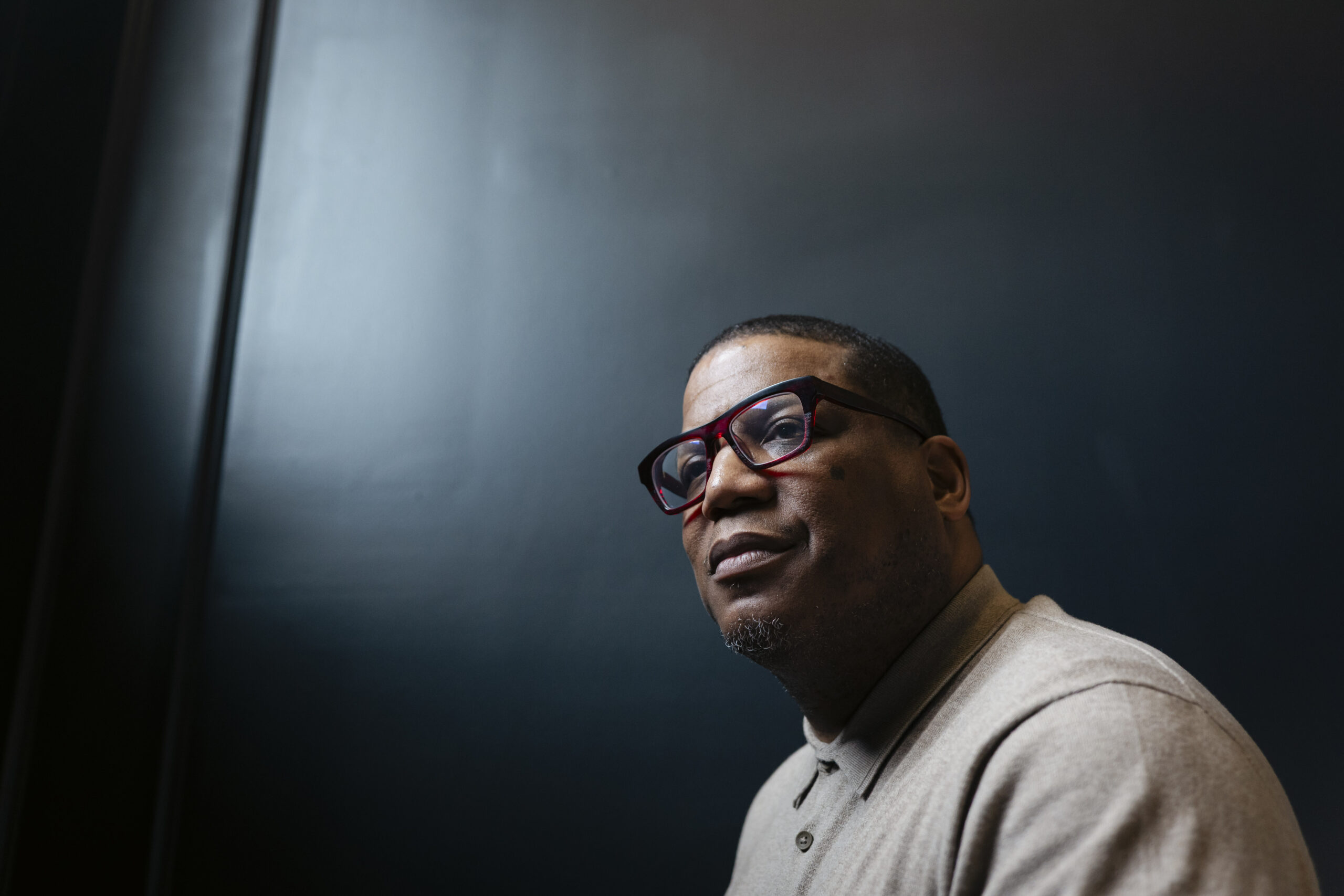
On the morning of May 18, Raki McGregor’s phone was relentless.
“This is why I can’t make no money,” he said, half-laughing while he looked down at the screen through his blue-framed glasses. He was trying, in that moment, to tell me about a growth doctors had found in his wife’s reproductive system. But calls and texts poured in.
One week earlier, McGregor used his considerable influence as the Black Political Caucus’s transportation chair to pressure Charlotte’s city council to rescind its support of the Interstate 77 toll lanes project. Now all eyes were on the regional transportation board, set to hold a decisive vote on May 20. Rumors swirled that some council members regretted their votes. McGregor saw it as his duty to keep them from flipping.
I’d come to his house to talk about that. Here was a former Novant Health executive, a former executive in residence representing the Charlotte Executive Leadership Council, standing firmly opposed to a project supported by the same business community that lifted him up.
Sitting in a recliner in his living room, McGregor was convinced he’d fallen out of favor with former fellow executives. He wouldn’t name them, but said some messages and calls were from prominent leaders in the business and public sectors, hoping to convince him to change his mind.
“These are powerful people, man,” he said. “It’s crazy to me how ‘no’ is not an acceptable answer to some people.”
Logan Cyrus and I made two visits to the McGregor house this past spring, on May 18 and June 1, before he became the centerpiece of scandals involving the local school system. The interviews totaled about five hours, during which McGregor talked at length about I-77, the school system, his family, and his wife’s business. He also spoke haltingly about his wife, Kim, and the unidentified mass in her uterus. She was scheduled for a hysterectomy on June 3.
His most consistent grievances, in those days before Kim’s health became a major concern and before the schools controversy, were about money and power.
“This work that I’ve been doing for I-77, I don’t need to make any money off of it, but it can’t be something that takes money outside of my house,” he said. The paid work he’d given up to do it “has cost me more than 90% of the people make a year. … The establishment has people that are working around the clock, getting paid full time, working against you. It’s impossible for someone to sustain their standing of living and do this.”
Two weeks later, when the school board announced its suspension of superintendent Crystal Hill, I called McGregor immediately. He answered and said he’d call me back, but didn’t. Over the next four months, I spoke to him once — a brief hello at a Tuesday Morning Breakfast Forum in July.
From late September through mid-October, my calls and texts went unanswered, as he and Kim became the subjects of daily headlines. Superintendent Hill named them more than 60 times in a blockbuster memo she sent to the school board in September, alleging that board chair Stephanie Sneed helped arrange a subcontract that paid Raki’s consulting firm $30,000 a month, without Hill and most of the board knowing. The FBI, SBI, DPI, and the state auditor are now investigating the school system’s finances and governance.
On September 21, Raki said he would call me around 11 a.m. the next day. He didn’t. And that night, the 22nd, in a 5-4 vote, the school board fired Hill.
On Saturday, October 17, I was in the outfield at my kid’s tee ball game when my phone buzzed. It was Raki McGregor, asking if I had time to speak. I called him, and he apologized for going dark, then explained why. We eventually set up an on-the-record interview, on Tuesday, October 27. This time, Kim joined him on the couch. So did their two grown children, Myles and Sydney — and the family’s attorney, Harold Cogdell, listened from the kitchen.
They answered some questions about their role in the schools drama, and declined to answer others. At one point, when Raki started to answer a question about who approached him to try to change his I-77 position, Cogdell waved him off from across the room.
The reason for Raki McGregor’s recent silence, he says, is not about CMS or the investigations. Instead it’s because of what’s been happening inside his house. Kim’s mass is cancer, and it’s spread. For four months she received worsening diagnoses, until a recent appointment gave them hope.
What follows draws on all three visits: a fuller picture of the man whose name has become toxic to touch, of his family, and how his thinking has changed. Where records or other people’s accounts differ, I’ve said so.
McGregor, it should be noted up front, hasn’t been charged with a crime, nor have any board members. When I asked him Tuesday whether investigators have contacted him, he and Cogdell shook their heads to say they weren’t going to answer that.
***
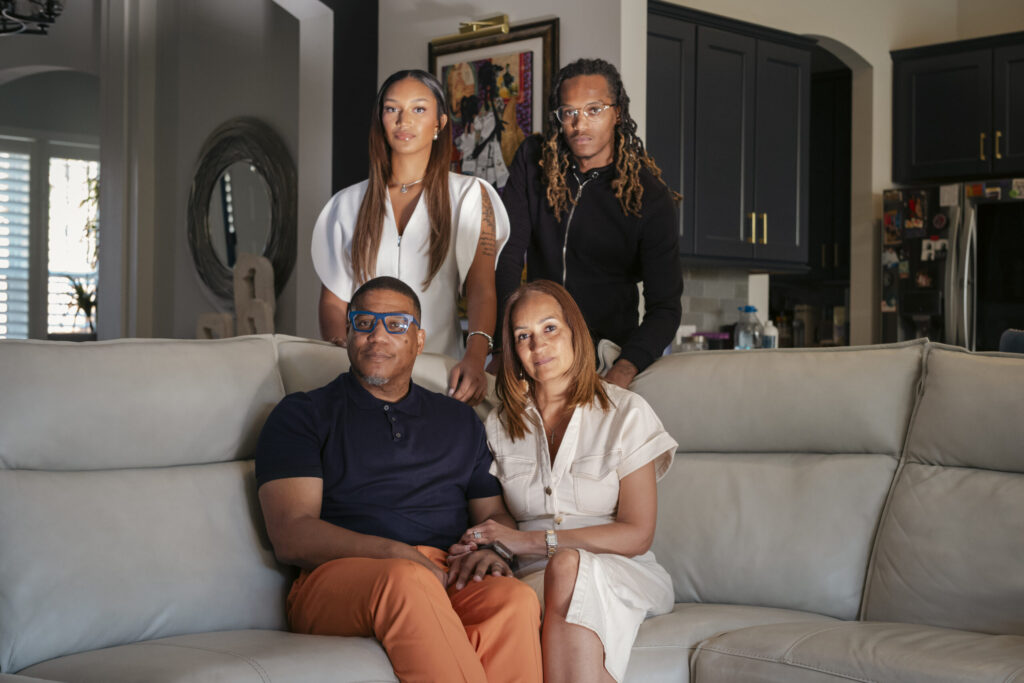
Raki and Kim met in the summer of 1988 in the food court at Four Seasons Mall in Greensboro, where she worked at a cinnamon roll stand and he was a shift manager at Taco Bell. He was a senior at Dudley High; she was a sophomore. Her mother had just remarried and moved her away from Charlotte, where her family was prominent in the historically Black McCrorey Heights neighborhood.
They dated for a little bit in high school, broke up, and then reconnected in college at N.C. A&T. They’ve been married for 31 years.
But their upbringings were very different.
Raki was two years old when his grandfather, James McGregor Shabazz, was assassinated in New Jersey in 1973. James 3X, as Shabazz was known, was a Black Muslim leader who led a Newark mosque that, according to the book The Dead Are Arising, planned and carried out the assassination of Malcolm X in 1965.
Raki’s father, Raymond, was the oldest of Shabazz’s 13 children. Raymond testified during trial that his mother had received a call two weeks before the assassination, telling her that her husband would be murdered on the exact date it occurred.
The family fled New Jersey and returned to North Carolina, where James 3X had grown up. Raki’s dad graduated from Fayetteville State, but couldn’t find a job, so he moved to Greensboro and worked at Dunkin’ Donuts, before getting into the insurance business.
“My dad didn’t have the tools to deal with what he was experiencing,” Raki told me. “That became trauma-informed for me.”
Myles, Raki’s son, is now in his late 20s, but he started researching his great-grandfather at 13 after watching the Spike Lee movie Malcolm X.
“I just made sure I’m aware,” Myles said, “and move accordingly.”
Kim, meanwhile, spent her first 15 years in McCrorey Heights, hearing tales of the neighborhood’s civil rights legends. Her grandfather, William Oliver, was an educator and vice principal who was appointed to the Park and Recreation commission by Fred Alexander, Charlotte’s first Black city councilman of the 20th century.
In 1966, Kim’s aunt, Diane Oliver, a blossoming young writer whose work appeared in prominent literary magazines, was killed in a motorcycle accident in Iowa, just days before she was to receive her master’s degree.
Diane’s death still reverberates throughout west Charlotte, where many elders today bring it up first, before any of the latest schools fiasco, if you mention Kim McGregor’s name to them.
After raising their two children mostly in Huntersville, Raki and Kim moved back to McCrorey Heights a few years ago. Raki says they tried to save Kim’s grandparents’ house, but it was in disrepair, so they tore it down and built a new home on the lot.
That’s where we were sitting for all three of our conversations, on the same land where Kim’s grandmother was famous for teaching piano lessons.
***
In February 2014, an ice storm left more than 700,000 customers in the Philadelphia area without power, including the McGregors.
At that point, Raki had worked in corporate technology for about 15 years. In 2012, he joined Independence Blue Cross, which required a move to Philly. He says he worked 100 hours a week there and barely saw his kids. But the ice storm brought him an epiphany.
He remembers going out with Myles to look for firewood. Myles, a cold and frustrated teenager, blurted out, “Dad, let’s get Mom and Syd, and let’s just go home.” To Charlotte, Myles meant.
“Son, it’s not that simple,” Raki replied, but then he started looking for ways to do that.
“The wealth I was generating was astronomical,” Raki told me. “What it was costing me was priceless.”
They moved back to Huntersville in the spring of 2014. A few months later, Raki landed at a consulting firm that had a contract with Novant Health, which hired him as a vice president in 2016. Trailblazing physician Ophelia Garmon-Brown asked that Raki join her community-health team.
“That’s when I said I’m not going back to corporate space,” he said. “I’m going to focus on giving back.”
Kim had been a school counselor since 1999, hired first at then-Vance High by Ann Clark, who would later become superintendent. After Philadelphia, Kim became a counselor at Mallard Creek Elementary and David Cox Road Elementary. Suddenly she found herself counseling 725 students; the recommended ratio is 250 to 1.
In 2019, the year Sydney graduated from Mallard Creek High, Kim started SYDKIMYL — her name sandwiched between the first three letters of her kids’ names.
In 2020, Mecklenburg County signed her for a 25-student pilot teaching social-emotional skills at emergency foster-care facilities. The county expanded the partnership during COVID, and she offered virtual counseling. Within a few years, Kim told me, SYDKIMYL was reaching about 2,000 to 2,500 students a week. SYDKIMYL was invoicing the county for about $500,000 to $600,000 a year.
In 2024, Kim worked with former New Hanover County Superintendent Charles Foust to launch a leadership-training arm of her business. That’s how she got her first contract directly with the school system: CMS hired her to train leaders at a handful of Title I schools rated F on the state report card. That grew to 12 schools within months, she said. The initial contract was for $325,000 for the five schools; in March 2025, the board voted 5-3 to amend it to $500,000 to cover the additional work, she said.
“I think this is what confuses people,” Kim said Tuesday. “I did not do SEL [social emotional learning for students] under a CMS contract. Ever.”
***
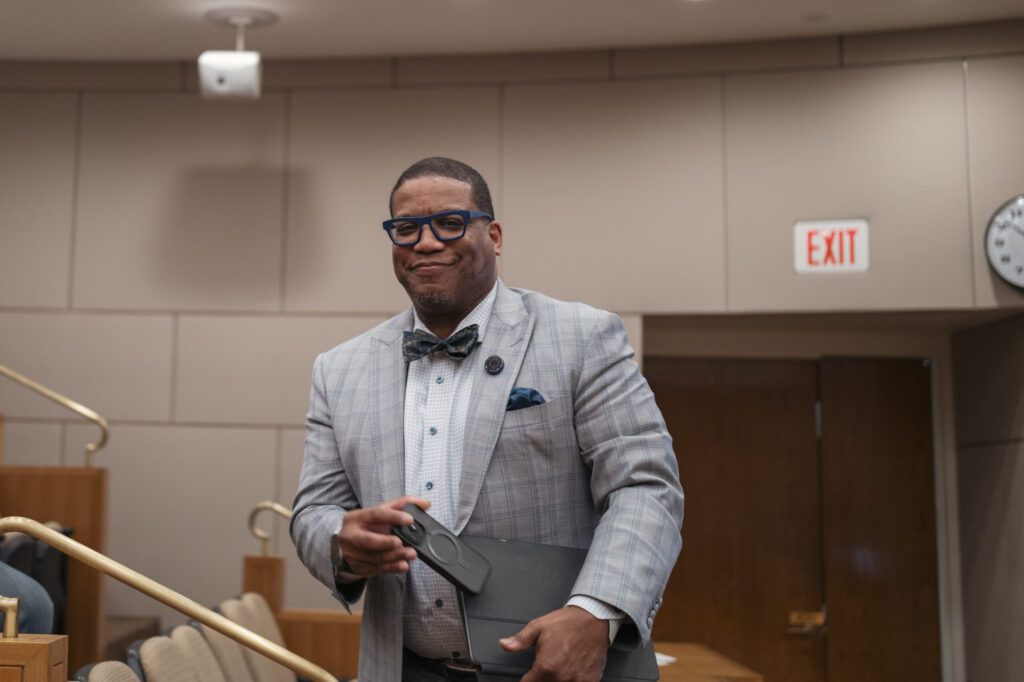
Coming out of the pandemic, the sharp drop in CMS test scores caught the attention of the Charlotte Executive Leadership Council, which includes about 40 CEOs from Charlotte’s largest companies.
In 2022, CELC formed a public-private partnership with the CMS Foundation and the school district, to help leverage CELC’s expertise across private industry and higher education. The group has now placed more than 20 executives in residence, which they refer to as EnRs, in CMS. The CMS Foundation, the system’s nonprofit arm, manages the partnership. Since the beginning, CELC representatives tell me, they have only worked on issues CMS asked for help with. CMS also handles the background checks in accordance with its own regulations. (Several CELC members, and Atrium Health, are among the Optimist’s founding supporters, but they didn’t review or have input on this story.)
Raki McGregor had just been promoted to senior vice president when his Novant boss, Carl Armato, recommended him for a key EnR role as coordinator of the others. Raki said yes, with the expectation that he’d do it for 12 to 18 months, and an agreement that Novant would pay his salary — which he told me was significantly more than anything a school system could pay.
“My intent was to do it for 12 months, check the box, and then come back to Novant,” he told me. But he became passionate about the schools work and wanted to stick with it.
During his first year, McGregor says he was the person who brought Hill, who was interim superintendent at the time, to meet with CELC. He wasn’t shy about telling board members they should hire her full time, which they did in May 2023. “I advocated for Dr. Hill every single day,” Raki said.
“I knew she had something extraordinary,” Raki told me on June 1, just weeks before her suspension. “When Dr. Hill speaks about the academic journey and the strategy around how to get our youth progressively better than where they are, she’s fantastic.”
The CMS Foundation’s most recent annual report, 2024-25, highlights how the EnR program has helped streamline Pre-K enrollment, expand tutoring programs, and recruit and retain staff and faculty. The partnership also led to the formation of Meaningful Medicine, funded by a $10 million grant from Bank of America to Atrium Health Foundation, to roll out virtual care to 120 CMS locations.
Around 2023, McGregor and Hill raised the issue of affordable housing for teachers as one of the system’s most glaring challenges. CELC developed a teacher housing roadmap, studying how other cities solved for it.
Raki told me Tuesday that he’s been frustrated by how his work in CMS has been portrayed since Hill’s firing: “No one has asked me about outcomes,” he said. “No one has said, ‘What did y’all deliver?’ There’s a whole story, as you know, that are in reports, of what’s been delivered. But we’re not talking about that. What we’re talking about is, ‘is there a conflict of interest?’ … I’m not going to apologize for doing what I think was best for students.”
Still, when he considered extending his time with CMS beyond Novant’s commitment, Raki became worried about losing the salary he’d grown used to.
“My wife said, ‘That’s exactly what the school system needs. It needs you,’” he told me. “I was like, okay, I know what it needs, but last time I saw the type of money you spend, I need some income in this house.”
He left Novant in June 2024. And this is where things became complicated.
Raki said repeatedly Tuesday that he has never been a CMS employee, and that he has never had an independent contract with the district. At one point, his attorney, Cogdell, chimed in to make sure I heard it: “Have you been paid directly from CMS?” And Raki said, “Never.”
After leaving Novant, he technically became a contracted employee of SYDKIMYL. CMS signed another contract with SYDKIMYL in September 2024 that would pay the company $13,000 a month, for 10 months. Raki’s name is listed as a “contractor supervisor,” but the payments went to SYDKIMYL first.
What isn’t widely known is that CELC agreed to match the CMS payment, adding another $13,000 a month, the McGregors told me. “They didn’t split the 13,” Raki said. “They both paid 13.” Meaning SYDKIMYL received $26,000 a month for his work.
CELC executive director Blair Stanford confirmed that detail in a call on Friday, saying that “CMS requested that CELC lean in that way. That is accurate.” The payment came through the Foundation For The Carolinas, which houses CELC, and went to SYDKIMYL.
The timeline conflicts with something Kim told the Observer in May 2025. “The work that I’m doing with CMS doesn’t have anything to do with my husband,” she said. At that moment, according to her account to me on Tuesday, one CMS contract was for her husband.
In the 2025 budget cycle, county leadership raised concerns about the value of SYDKIMYL’s work and the potential conflict of interest.
“It didn’t seem to make sense that we should be funding all of that. So we made the decision at that point — it felt like a conflict of interest — so we ended up eliminating the contracts out of the budget process,” former county manager Dena Diorio told WFAE’s Steve Harrison. Diorio also said that Raki threatened to sue her.
I didn’t ask him about the Diorio exchange, but in June he described a period when, in his words, he “came off my square.”
“My wife is about seeing the best in the most vulnerable of us, and when she was attacked, I was attacked — not directly, I’m always, you know, a target; you can’t go wrong doing right — but she was attacked … and what I did was something that I don’t normally do. I came off my square,” Raki told me on June 1. “I was in fighting mode. … And that afforded them the opportunity to begin to splinter people who had supported me previously.”
In July 2025, the Ledger broke a story that Raki was campaigning for candidates to replace school board members who’d raised concerns about the SYDKIMYL contract. Hill’s memo said that the story made her uncomfortable with the “potential and perceived conflicts of interest involving SYDKIMYL.” She told Raki that the contract would not be renewed, and said she called board chair Sneed, who “was not supportive” of the decision.
Raki’s version of that matches. “I was told that the contract wasn’t going to be renewed because I was in support of certain candidates for the school board.”
I asked him on Tuesday if, knowing what he knows now, he’d still endorse the candidates. He didn’t hesitate.
“Yes,” he said. It wasn’t because those members opposed SYDKIMYL’s contract, he said, but because they were “not in alignment with what the superintendent, and the goals and guardrails that the board has set up.”
Kim shared with me a document showing SYDKIMYL’s accomplishments, which I checked against state report cards. Of the 12 schools she worked with, nine met or exceeded the state’s growth standard, seven exceeded it, and seven improved a letter grade, in 2024-2025. That was the same year that CMS as a whole posted its best accountability scores in years. In August 2025, the district gave SYDKIMYL a smaller contract to continue the coaching work through January 2026, then didn’t renew it. Hill’s memo says middle school assistant superintendents felt like they no longer needed the support.
“Why is the service stopping if we’re doing, you know, a great job?” Kim asked on Tuesday. “The principals, the teachers, they love what we were doing. They love the outcomes. So that’s why I’m just saying: At some point, it just was not about the kids anymore.”
Raki added, “I just don’t want you to think everyone [hired by CMS] brings outcomes and results. … But Kim brought that every semester.”
Hill’s memo says that the board’s own lawyers reviewed the conflict complaints in 2025 and found none.
In any case, when the contract for Raki’s work ended with the close of the fiscal year on June 30, 2025, he was unmoored. Losing the position, he said, “was deeply hurtful. It was devastating.”
He says he stopped hearing from CEOs who’d previously praised his work. He was pained by that when we spoke earlier this year. But by Tuesday, his tone changed. “When it comes to the CELC and the work that they sponsored and afforded me the opportunity to align with my gifts and talents, I couldn’t be more thankful,” he said. When I asked if he’d heard from the CELC lately, he said, “No,” but said he didn’t take it as abandonment. “CELC has complex issues that they’re trying to solve. … They have other things to be concerned about than Raki.”
While he was coming to terms with his fall from the Charlotte corporate sun, Raki took his no-budge stance on I-77. He objected to the initial designs, which would’ve displaced residents in McCrorey Heights, the historic neighborhood his in-laws helped build.
As we were talking about 77 earlier this year, I asked Raki if he “was losing friends,” and he shot back.
“No, no, no, no. I’m not losing friends. I’ve lost friends,” he said. “Put all this on the record: I have lost friends. And I didn’t seek to lose anyone. I sought to understand. And I sought for them to understand me. … I believe there are those who I called friends that I misunderstood what the relationship was in the first place. Let me, it’s important that I say that, because I saw them as friends until I truly understood the definition of what a friend was.”
***
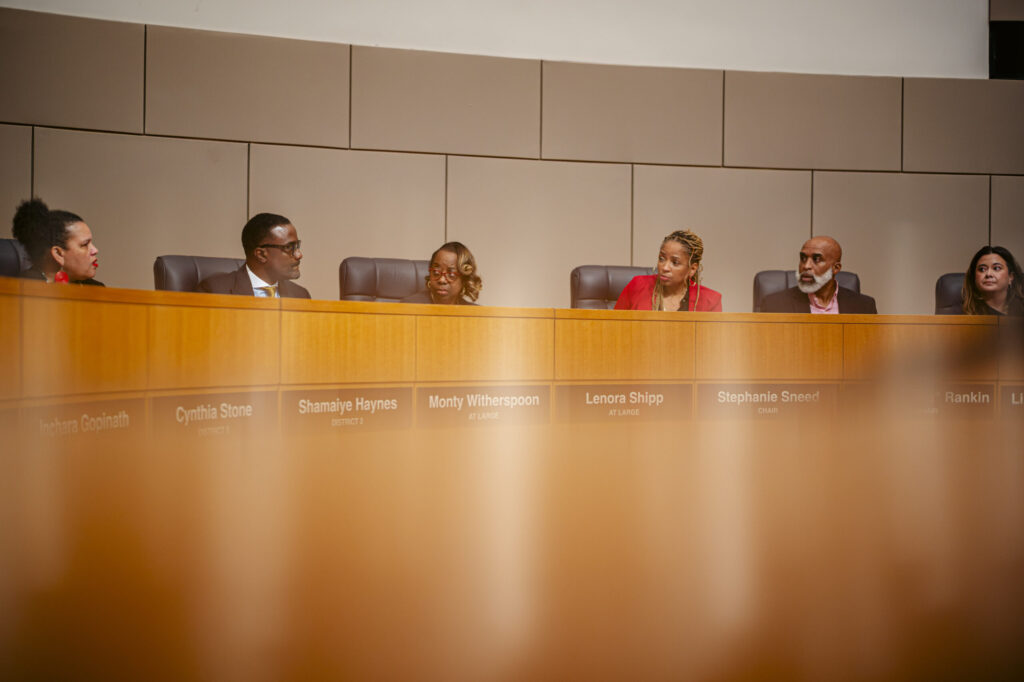
What I didn’t know while talking to Raki five months ago, of course, was what Hill would put into writing in September: that while he was telling me the fight had cost him “more than 90% of the people make a year,” Sneed had signed a contract with a law firm working on a teacher housing project that routed $30,000 a month to Raki’s firm.
In May, Raki connected me with Sneed and the recently retired CMS executive Nancy Brightwell, suggesting that the school system’s affordable housing initiative would make for a great story. Brightwell deferred credit in a short May text thread: “Chair Sneed has been a true visionary in this work, and Raki the chief architect,” she wrote.
Raki’s account of how the affordable housing project came to be, as he told it Tuesday with his attorney listening, goes like this: In late 2023, Hill and then-board chair Elyse Dashew met with him to talk about building a housing model for the district. As real estate prices catapulted, teachers couldn’t afford to live close to Charlotte schools. Raki knew nothing about housing, he told me, but he researched how other counties around the state and country had handled it.
Raki says he convened weekly Friday calls with staff from CMS, the city, and the county. He remembers a county commissioner on one call applauding, saying it was about time someone did this. He says he looked more closely at how Buncombe County had done a similar project, found the Raleigh law firm Poyner Spruill had handled the legal work, and contacted them.
Raki told me the city was the first to contract with Poyner Spruill. A city spokesperson gave me a slightly different version of that, saying that the city’s housing staff were looking for ways to collaborate with CMS and the county, and they found that Poyner Spruill had done similar work and agreed to come on. Point being, Poyner Spruill didn’t just appear in Charlotte out of thin air with the CMS contract earlier this year.
True Homes committed to building a share of the housing at cost. And the Truist Charitable Fund set aside money to help with $30,000 in down payment assistance for qualifying teachers.
This is where public documents and Raki’s account diverge. On February 4 of this year, CMS entered a 30-day bridge contract with Poyner Spruill for legal work on the housing project, including a $30,000 monthly consultant fee. Signers from CMS were Sneed, along with the district’s acting general counsel and its CFO, who signed on the line reserved for the superintendent or her designee. Two days later Poyner Spruill hired Raki’s consulting firm Qonnect.
Hill said in her memo that she was unaware of the contract, and added her thoughts on McGregor’s involvement: “To my knowledge, and that of my staff, Mr. McGregor has not provided any meaningful input or assistance with the At Home in CMS initiative since his Executive In Residence contract ended on June 30, 2025.”
When I put that to Raki on Tuesday, that Hill’s memo says this was all done without her knowledge, he said, “No comment on that, man.” From the kitchen, Cogdell said, “You can’t comment on what somebody knew.” I asked whether the arrangement was meant to go around her. They didn’t answer that either. But Cogdell said he’d send me a contract in which I’d “recognize some names.” He didn’t send anything as of deadline.
On March 6, the CMS-Poyner Spruill contract was extended to February 2027 with the same signatures. McGregor signed an amended agreement with Poyner Spruill on March 25, through February 28, 2027. On Tuesday, when I asked how long the agreement ran, McGregor said, “I think it was for four months.”
CMS told the Ledger it has no records of anything Raki produced. The February 6 letter may explain why: It says all of Qonnect’s communications are confidential and “made solely for the purpose of assisting counsel.” I asked Raki what the $30,000 a month bought. “Whatever it takes to get it over the finish line,” he said. “It took collaboration; it took partnership.”
Cogdell, his attorney, suggested Raki’s role was more “project management.” Someone had to bring together the city, the county, CMS, the bank, the homebuilder, and the attorneys, Raki said. “A lot of this stuff is not tangible,” Raki said. “It’s helping people see it through.”
While all this was happening earlier this year, Hill and Sneed engaged in a public dispute over the 2026-27 operating budget. Hill’s memo said Sneed asked her not to include $4.5 million in supplements to the longest-tenured teachers, and that during budget revisions, someone added a $1 million line for local SEL contractors, which she believed was meant for SYDKIMYL.
Two weeks after the budget passed, the board voted unanimously to lease seven acres of Garinger High property to a nonprofit — for $100, for 99 years — and to build about 100 units for educators, using $1 million in city funding for pre-construction costs. Raki mentioned the Garinger project as one of the things he was proudest of in his time with CMS. He called the vote “overwhelmingly emotional” for him.
On June 5, Raki signed another agreement with Poyner Spruill for “strategic advisory, influence advisory, and related services” on a compliance assessment of the district, which would pay his firm up to $132,000 through September 30. Raki said he wasn’t paid that money.
On June 17, the board announced Hill’s suspension.
On August 11, the school board voted in closed session to bring Hill back to the superintendent role. That same day, according to Hill’s memo, Sneed emailed CFO Kelly Kluttz to check on the status of a $30,000 invoice, and Kluttz responded that she couldn’t find the contract or purchase order. Kluttz forwarded the exchange to Hill the next day.
A month later, Hill released her memo. Nine days later the city paused the $1 million it committed to the teacher housing project at Garinger.
On Sunday, September 20, I texted Raki to ask if we could talk that week. He wrote back that his Monday was busy, but he’d try. He texted again on Monday evening to say he’d try me Tuesday. I wouldn’t hear from him for four weeks.
As it happens, that same Monday night, Charlotte’s city council voted 7-4 to put the Interstate 77 project back in the pipeline, overturning Raki’s efforts from that spring. This time, he was noticeably absent from the chamber. He’d resigned from the BPC’s transportation committee several weeks earlier, he said, because of Kim. “Had nothing to do with any of [the school board] stuff,” he told me. He is proud, still, that the community benefits for I-77 jumped from $100 million to $300 million.
Then, that Tuesday, the school board fired Hill, the superintendent McGregor personally endorsed for the job three years ago.
When I asked Raki whether he still had a relationship with Hill as of this past February, he said, “No.”
***
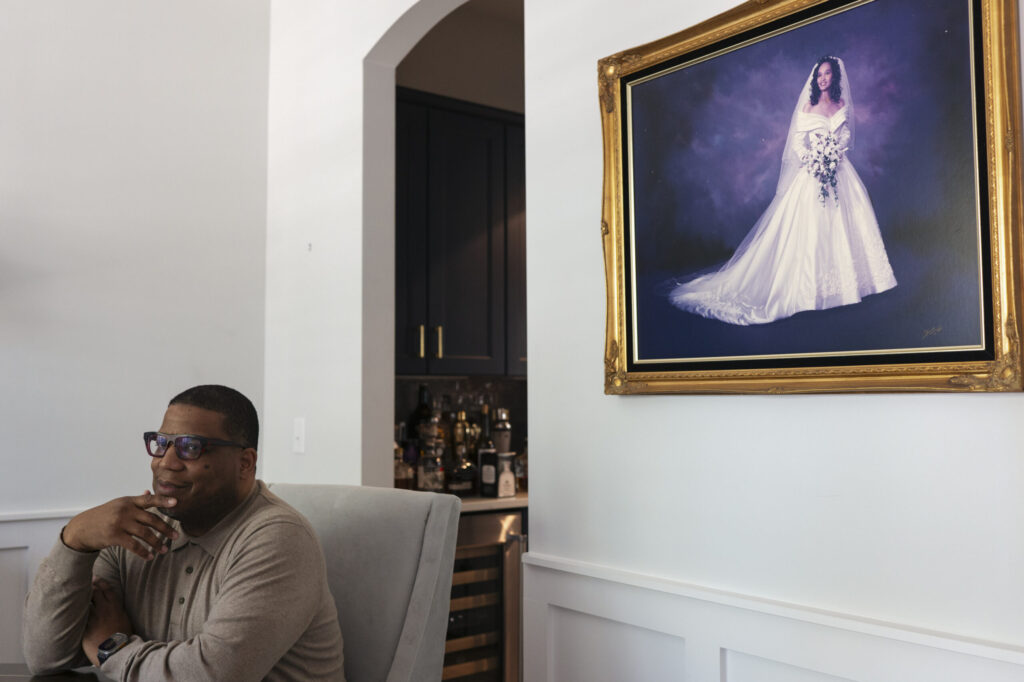
During our conversations, Raki talked a lot about trust. In fact, he told me that the first conversation with me was one where he needed to decide if he could trust me. Until now, I’ve honored the one request Raki made of me earlier this year, that I not write about Kim’s health.
Kim decided to share it. This spring, she felt discomfort after her annual physical, then went in for a scan that showed the mass in her uterus. She scheduled a hysterectomy for June 3. When her gynecologic oncologist went in for that procedure, they found cancer on her ovaries, fallopian tubes, and omentum. Doctors eventually found more cancer around her appendix and intestines.
Three to four weeks later, pathology came back with a clear diagnosis of appendiceal cancer. It’s extremely rare, literally 1 or 2 in a million. Kim started chemo the first week of July, and had treatments every 14 days. She spent three hours in the chair for treatment, then 46 hours at home with a pump. On October 7, she went in for surgery to remove her appendix and whatever cancer remained. But the surgeon found more cancer and halted the procedure.
When she came to, she asked the surgeon, “You didn’t take my appendix out?” He told her, “No, we’re going to come up with another plan.”
The week of October 12, I started writing this story, figuring I’d never hear from Raki again. I finished it on Friday, October 16, excluding everything about Kim’s health, and planned to publish it on Sunday the 18th. The next morning, Saturday, Raki texted out of the blue. He said he would be willing to talk on the record, but needed time. The family spent the week of October 19 in Winston-Salem at Atrium Health Wake Forest Baptist, where a surgeon who specializes in appendiceal cancer works.
Doctors there ran more scans, and now they believe they’ve at least seen all the cancer. Just after Thanksgiving, she’ll have a procedure called HIPEC, in which surgeons will remove what they can see and then circulate heated chemotherapy through her abdomen. And, Kim said, “They will finally take out my appendix that I’ve been begging to take out.”
She told me she’s comfortable talking about the cancer now because she has some certainty, a clear plan.
“The reason I’m fine with sharing this with you is because I plan on advocating for appendiceal cancer,” she said. “This is going to be part of my why.”
***
Since 2020, before Raki was an executive in residence and back when SYDKIMYL was a mostly anonymous startup, the McGregor family has gathered each week for Taco Tuesday. Myles started the tradition at his grandmother’s house. Sydney was a constant until she appeared on the most recent season of Netflix’s “Temptation Island.” She now lives in Los Angeles as a content creator.
Myles runs a luxury transportation business. That’s how I first was introduced to the McGregor family, back in early 2023, when I worked on a story about how one of Myles’s top clients is former Bank of America CEO Hugh McColl, who helped fund the Optimist’s start and who remains an adviser to Myles.
Myles tells me the past four months have forced him to grow up fast. In a side conversation he joked that he now feels like Simba in the Lion King. “It makes you more appreciative,” Myles said. “Everybody’s hurting, but I say I’m gonna be hurting either way. So might as well be hurting and being positive and knowing that there’s a blessing in it.”
Kim added that the past five months have taught her to “block out the noise. I know it’s happening, but guess what? I can’t worry about that right now because I’m focused on me and my health and getting to the other side of this.”
As for Raki, the person I met with in May and June was, as I put it to him, on fire. He answered calls, talked fast and loud. He questioned Charlotte’s corporate friendliness, and the logic of his “fight” with the business community over a highway.
I suggested to him on Tuesday that it seemed he achieved a Novant salary that afforded him luxury, and that he spent two years thrashing around trying to keep that lifestyle. He nodded, then corrected me.
“It wasn’t that I should still be making more,” he said. “I am a businessman. I have a business acumen, and I believe in return on investment. … If somebody would look at the outcomes and the results, and the impact that was made, the gains extraordinarily outweigh the investment.”
Raki was far less defensive this time.
“It has matured me,” Raki said of Kim’s cancer. “I am now a spouse, and I have transitioned into a caregiver.” Kim jumped in and said Raki’s grown “more patient.”
In June, he talked for three hours about money. When I asked about that on Tuesday, he said, “I still need that. But if God asks me, ‘Hey, Raki, you asked me to make sure that your wife is cured’ — nothing else matters.”
Kim’s surgery date is December 1, a Tuesday. Taco night.
***

For most of his career, Raki kept an empty chair in every meeting he ran, “for those who weren’t sitting in the room that I was responsible for speaking on behalf of,” he told me. “I held myself accountable to that for the last 23 years.”
“I truly want to leave this world better than I found it,” he said. “And if we’re keeping score, we are getting our butts kicked. The score is a whole lot to a little right now.”
Kim has told him for years that he should step away from the fights. In June, he said, “I’m fighting for peace. And I don’t mean — actually, it’s selfish. I’m fighting for peace for me, and I can’t find it, because the people that have been around me are not peaceful individuals.”
Near the end of our first conversation, I asked him who he thought was worth trusting in Charlotte. He said he needed to pause for a minute before answering, then said, “I tell my son, ‘I trust you, Myles. I don’t trust who you might tell.’”
Then he added, “I don’t know who I can trust anymore. … I don’t want to be let down by anybody else. It’s a lonely thing, man, to fight this fight.”
By October, he said Tuesday, he had left all the fights. The BPC, the council chamber, the boards, and all the calls. He became the empty chair in the room. In his absence, city council voted to put the toll lanes back, the school board fired the superintendent, and the EnR program goes on without him. This time, his phone didn’t buzz. Instead he placed it on the coffee table beside mine, so he’d have his own recording.
At the end, I asked him why his lawyer had waved him off from answering a question earlier.
“Because he knows I have no ill will toward anyone,” Raki said. “I told you I was a caregiver to my wife. I can’t talk to you about what it is to be a caregiver yet, because I’m literally going through the transformation.”
Then Cogdell asked, “Is it hurtful? Did you and Kim put your time, your energy, your efforts, your talents where you thought you could make a difference?”
“It’s very hurtful,” Raki said. “And it also lets me know that I have to be careful about the judgment I pass.”
Keep reading …
Relevant documents:
Superintendent Crystal Hill’s full memo
CMS bridge contract with Poyner Spruill (February 4, 2026)
Agreement between Poyner Spruill and Raki McGregor’s Qonnect (February 6, 2026)
Amendment to CMS contract with Poyner Spruill (March 6, 2026)
Amended Strategic Services Agreement between Poyner Spruill and Qonnect (March 25, 2026)
CMS-Poyner Spruill contract for compliance assessment (June 5, 2026)
New Strategic Services Agreement between PS and Qonnect (June 5, 2026)
CELC and CMS partnership overview