
Chicago, three Wednesdays ago …
On a misty morning 750 miles from home, my walk is haphazard.
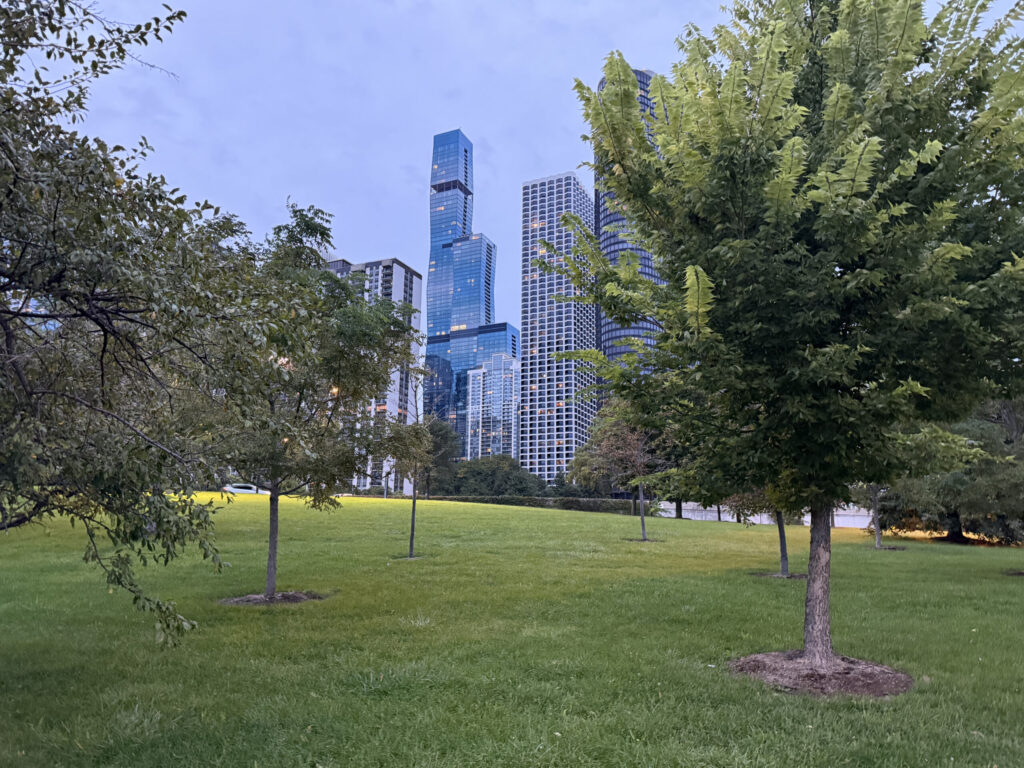
I start by finding water, because water always goes somewhere, then follow it toward the fuzzy, gray sunrise. The street dead-ends at an elevated pocket neighborhood, where a sidewalk steers to a pocket park that cascades down a 50-foot slope, dumping me out under a highway, and into the lakefront park.
It’s about 6:30 a.m. and my time is short, so I jog for a bit, around a yacht club and dozens of moored blowboats, before turning back toward the Chicago skyscrapers. I join runners in crossing a busy intersection, then see a sign for another park, and wander into it, because why not.
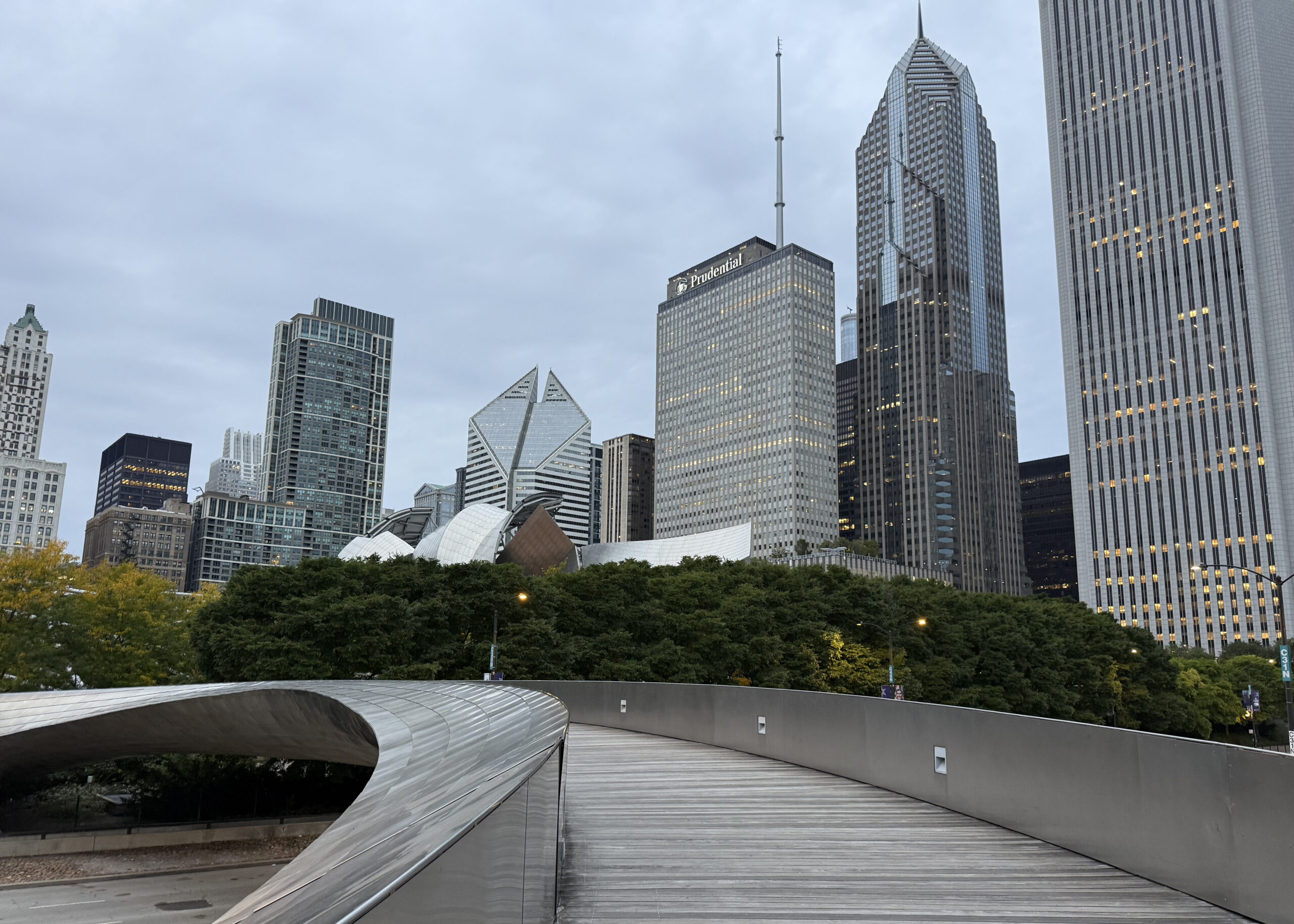
The park’s path turns into a bridge. I’ve never seen anything like this bridge. It’s a sculpture, and it’s a footbridge, and it’s a sound barrier, all at once. It’s more than 900 feet long, stainless steel on both sides, and it feels kind of like the hull of a boat when I’m inside of it, with a long wooden deck under my feet. I follow the winding path to the top, where it swings over six lanes of traffic, which I can barely hear.
What luck, I think. An accidental stroll, following a series of hints to turn this way or that, and now this bridge. I snap a few pictures and keep walking, wondering how “they” did that.
You know them, the faceless “they” who build everything and make every decision we like or hate. They, the ones who raised the skyscrapers and mapped the roads. We cuss them and we praise them, depending on our mood, and then we move on.
To a visitor like me, the BP Pedestrian Bridge seems like it’s always been there, as if created by the same glaciers that carved out Lake Michigan thousands of years ago. But great things, and great cities, aren’t built by accident.
***
Back home in Charlotte, this past Monday night …
The mayor looks at the clock.
“We’re at 6:24,” Rob Harrington says, reminding city council that they need to be in the chamber in six minutes. We’re upstairs at Charlotte’s government center, in a high-profile dinner meeting where council is previewing one of its most important decisions: a 10.5-year lease agreement with the major carriers at Charlotte Douglas International Airport.
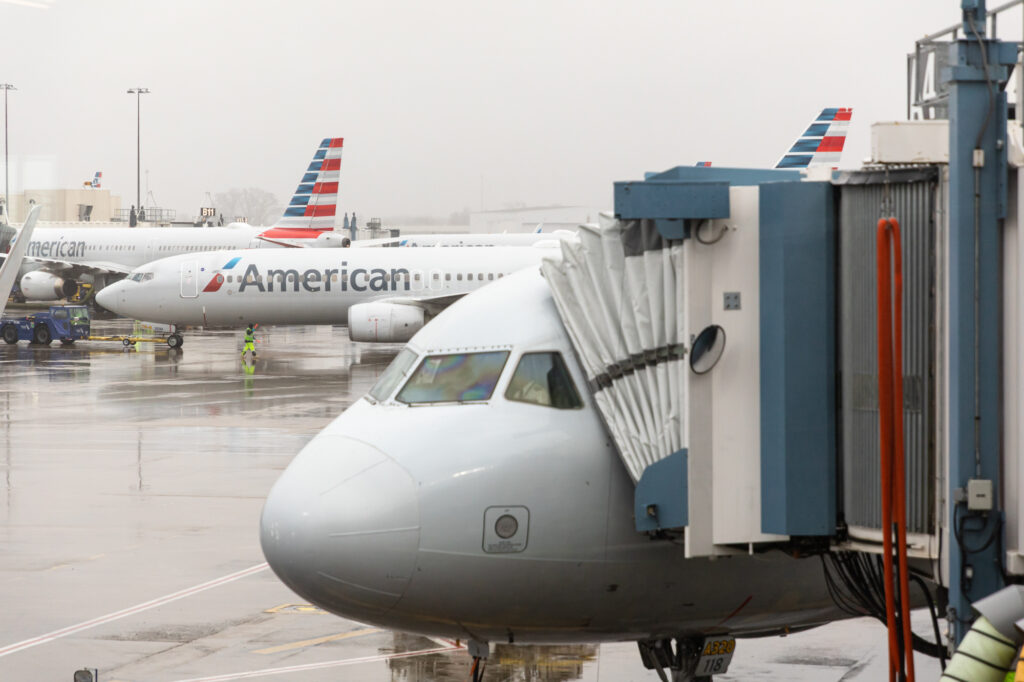
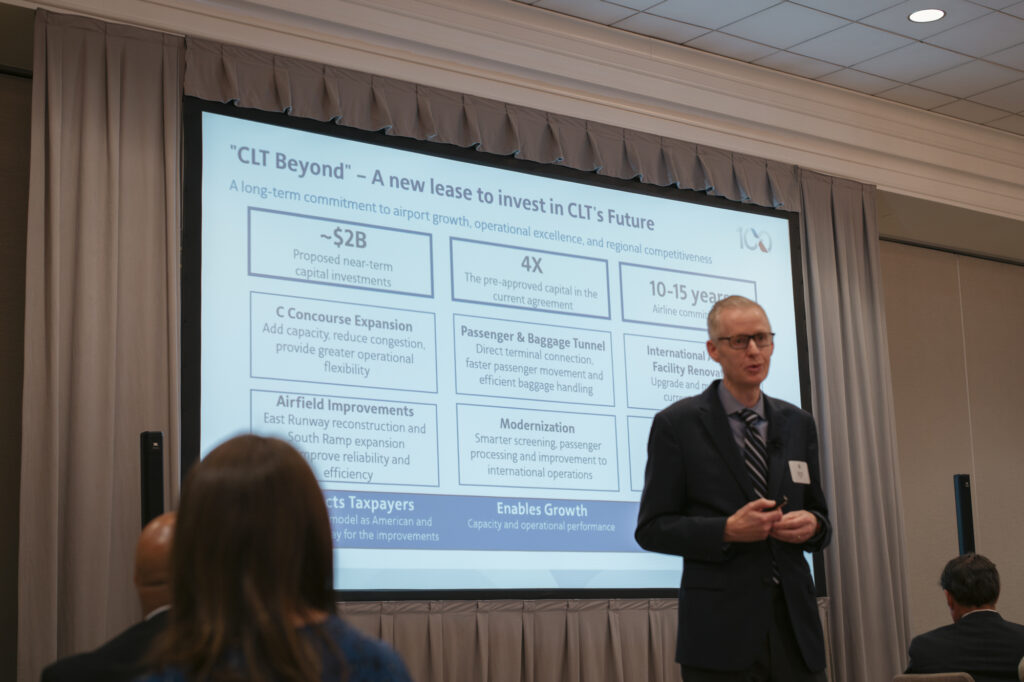
If they approve it, the airport will see an estimated $2.1 billion in capital improvements to the seventh-busiest airfield in the world over the next decade, new gates and a tunnel and a customs hall, all paid for by the airlines through fees they pay to use the airport. City staff has spent two years on the lease, and the plan is for it to take effect January 1, 2027. Council members have spent about an hour asking questions, some of them pointed, and airport leadership has agreed to make the lease public.
Council member Dimple Ajmera makes a motion to give council “at least 45 days” to review the lease. A few council members catch the “at least.” If they go beyond 45 days, the January 1 start date creeps closer. They talk over each other a little about the procedure. Finally they settle on making the motion “six weeks,” with a vote set for November 23. Harrington calls the vote. Six hands go up for it, five go up against it. It passes.
Then Harrington, 103 days into the job after being appointed to replace Vi Lyles in July, does something no Charlotte mayor has done in at least a dozen years: “With some trepidation,” he says, “I’m going to veto that motion.”
People toss wide eyes at each other. Someone behind me says, “I’ve never seen that before.”
That’s what “they” looks like. Boring and mind-numbingly procedural. (For some reason I always leave their meetings parched. Not sure what “they” do to the air in these meeting rooms.)
***
Back in Chicago, after the walk …
Robert McCutcheon, who runs the Charlotte Regional Business Alliance, looks out over a room of 140 of us who’ve come here to see how Chicago works and how it was built. The attendees include county and city staff, business leaders, foundation presidents, sports and entertainment executives, and local elected officials from the county and city and school board. I joined by invitation, and said yes because it seemed like a more efficient way to foster relationships than scheduling 139 coffees. Full disclosure: I paid for the flight and travel expenses, and the Alliance covered my room.
In the 1850s, McCutcheon tells us, Chicago had a drainage problem, so “they” raised the streets and the buildings four or five feet. In the late 1800s, the booming city was dumping its raw sewage into the Chicago River, which was polluting Lake Michigan, the city’s primary drinking water source. So “they” spent a decade building canals to reverse the river to flow away from the lake.
“Great cities don’t just happen,” McCutcheon says. “Someone has to decide that the problem will be solved. Someone has to find the money. Someone has to build the partnership. Someone has to be willing to look beyond the next budget cycle.”
After breakfast, we head to a post office that someone spent nearly a billion dollars on, to turn it into offices. And sure enough, in one of the two panel discussions is someone from the “they” who built the bridge I’d marveled at earlier in the morning.
Christine Zrinsky retired last month as executive director of the Millennium Park Foundation. She tells the story of how the park was born because Mayor Richard M. Daley used to sit in his dentist’s chair, which overlooked the lakefront and the railyards that separated it from pedestrians, and say, “This is our front yard. We’ve got to do something.”
Millennium Park cost more than $500 million, half from the city and half from about 125 people and companies who each put in more than $1 million. John Bryan, a Mississippi native who spent decades as CEO of the Sara Lee Corporation, was the lead fundraiser for the private money.
They hired some of the world’s top artists and designers to shape the park. One was architect Frank Gehry, who’d just completed his masterpiece, the Guggenheim Museum in Bilbao, Spain. Chicago wanted Gehry to design a concert pavilion. He’d never drawn up a bridge before, so city leaders offered him the opportunity. In other words, the bridge I walked across “was the carrot they dangled” in front of Gehry to get him involved in the larger project, as Zrinsky puts it.
Gehry created a bridge with sides that throw the noise from the road below up and away from the pavilion, where people sit on a lawn for free concerts. BP paid $5 million for naming rights to the bridge.
Millennium Park was scheduled to open in 2000. It ran over budget and was delayed four years, making it a source of discontent and national punchlines about government mismanagement. But it opened all at once in July 2004. Nearly everything that happens at the park is still free to the public, and the neighborhood around it is now the fastest-growing in Chicago.
Zrinsky remembers when someone said people would forget the delays in 20 years, and a reporter said that 20 years, in the life of a city, is like 20 minutes.
***
Back in Charlotte, Marriott City Center, this past Thursday …
Charlotte’s “bridge” these days is its airport.
Several presenters we saw in Chicago — from the CEO of Kraft Heinz to the CEO of TTX, which moved its headquarters to Charlotte two years ago — mentioned “a good airport” as the first thing a great city needs.
Chicago is three times our size, in terms of people and economy. But Charlotte’s growing faster, and the question underneath the whole trip was how long we have before we get there, if we ever do. Alliance board chair Dave Katz answered it in passing on the first night: “Charlotte’s growing so fast that we are going to be a city of 9 million people as well.” We’re at about 3 million now, in the region, and that happened fast. In 1950, Mecklenburg County had about 197,000 people, about the same as Guilford County’s 191,000. Today Mecklenburg has 1.2 million, and Guilford’s at 560,000. If the next 75 years look anything like the past 75, Katz isn’t wrong.
The airport will have a lot to say about future growth. And the man who has decided where American Airlines’ planes go since 2020 was in our city for lunch Thursday to speak on the airport’s potential. Brian Znotins, the chief network planner for American, told the World Affairs Council at the Marriott in Uptown that American’s hubs are like its kids, and “Charlotte is my favorite kid.” (Note: American announced Znotins’ forthcoming retirement the same day he was in Charlotte. We’ll have to see if his replacement, Nick Andersen, feels the same way about the airline’s “kids.”)
He put up a slide that showed San Antonio’s airport, which serves a metro area about the size of Charlotte’s, has 130 departures a day compared to our 650, and has 45 nonstop destinations to our 188. The difference, Znotins said, is that San Antonio isn’t a hub city for any airline, and Charlotte has American.
And the reason Charlotte’s airport is attractive, Znotins said, is simple money. We charge airlines about $2 per passenger to use the airport, while Dulles in Northern Virginia charges about $18.
Two weeks before Thursday’s luncheon, I was in Chicago listening to Znotins’ boss, American chief commercial officer Nat Pieper, who put the future of Charlotte’s airport a little more bluntly. The company will soon order 60 to 80 new wide-body jets.
“One of my responsibilities will be to figure out, where do I put those airplanes?” Pieper said. “I want to put some of them in Charlotte. We’ve got to have a facility. We’ve got to have long-term commitment on both sides that we know we’ll be able to have the framework, have the background, and have the infrastructure to be able to support those routes. … The next months to come are super critical for the future of us together.”
From this perspective, the airport is a no-brainer. Sign the lease. Sign it now. Sign another one in a decade. Forever and ever.
But there’s another perspective. On September 17, 55-year-old Colleen Coates showed up at her job as a cabin cleaner for contractor ABM, despite not feeling well, her colleagues said later. She died after collapsing on a hot jet bridge while waiting to clean an airplane, as the Observer reported.
Several council members brought up Coates in Monday’s dinner meeting. “The success of our airport,” Ajmera said, “must also be measured by how we treat our employees.” LaWana Mayfield said she wanted more Medic stations at the airport. Haley Gentry, the airport’s CEO, said that Medic responded to Coates in one minute, and that she was transported to a hospital in 25 to 28 minutes. Gentry added that the airport department has created a partnership committee for workforce development.
It’s complicated. While the city owns the airport, state laws limit what it can do in negotiations with private partners like airlines and contractors. But Gentry said her team’s working with the city’s workforce development office, and looking at potential partnerships, to establish a community health worker and other health care related services for airport workers.
It’s not my job to referee. But it’s true the airlines that serve our airport want to make it better, and invest billions of dollars into our city’s perpetual quest to become “world-class.” It’s also true, though, that workers who help move 118,000 people through the airport every day deserve to come home from the job. Both are right, and the good news is, nobody seems to be arguing that.
Council will vote on whether to override the veto, as required by city charter, in a special meeting Monday at 4 p.m. The six would need a seventh vote to override the mayor. The city sent out a statement from Harrington over the weekend saying that he plans to put the lease on the agenda for November 9, which splits the difference between the October 26 meeting staff suggested and the November 23 meeting the six council members voted for.
Hovering over all this is the fact that the state legislature, which has attempted to take over Charlotte’s airport before, convenes for a short session beginning on October 26, with more scheduled after the election.
***
Chicago, one last night …
I barely make the bus to dinner, after FaceTiming with my kids in the hotel room. I sit in the back and look out the window, then hear a voice, “Can I sit here?”
It’s Mayor Rob Harrington. We’ve not met, at least not one on one, until now. But he says he knows who I am and asks, “So where do you think our city is, right now? How do you think we’re doing?”
What a big question! And what a refreshing one, coming from the mayor. But sitting on a bus in a city that’s three times Charlotte’s size, which has done big things that seem almost impossible for our city at the moment, only makes the answer more complicated. I tell him my biggest concern is not actually with the city, but the school system, given all the chaos there over the past few months.
Then I suggest to him that his job, from my perspective, is to be a bridge. Between the political ambitions of council and the policy decisions our citizens need, between previous generations of Charlotte leaders and future ones, and on and on. He works at the same law firm, after all, as former mayor Richard Vinroot, whom I recently interviewed for our 8 Over 80 project. Vinroot, a Republican, is from the generation of Charlotte leaders who worked across differences to make big things happen, from landing an NFL franchise to building a transportation center to growing the skyline into what we see today.
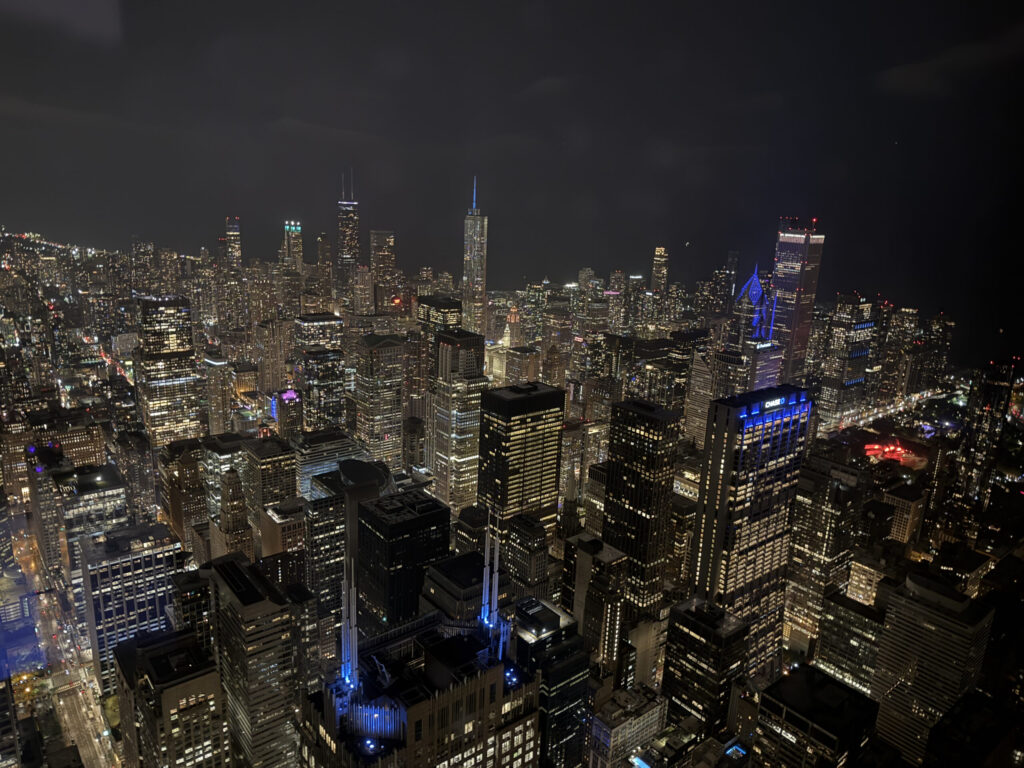
We get off the bus and head to the top of the Willis Tower, formerly the Sears Tower, for dinner. From up here we have 360-degree views of Chicago out the windows. Somewhere out there, 16 miles in the distance, is O’Hare Airport. Earlier in the day we’d heard from Dave Lundy, whose company is the latest in 30 years of attempts to build a decent train to it. The current Blue Line ride from the airport to downtown takes about 45 minutes. Lundy’s “O’Hare Flyer” would use abandoned freight tracks and make the trip 15 minutes.
“We just don’t build these in America,” Lundy told us, “and it’s time we start.”
Here we are in a city of more than 9 million people, only about 2 million fewer than in all of North Carolina, and probably the most comforting thing I’ve learned over three days is that, in spite of Chicago’s success and status, people are still fighting over its future.
“I think we’re at an interesting time,” I’d told our mayor on the bus.
And then I rambled on about the bridge that’s also a sculpture that’s also a sound wall, and how the people who cross it today only notice the view.