Photos by Logan, words by Michael
At bedtime, my 6-year-old has been asking me to tell him stories from “the olden days.”
One night he asked if, in the olden days, we had “TELEphones.” The “tele,” in his mind, distinguishes it from the ones we carry in our pockets today. I regaled him with tales of phone cords that stretched like slinkies from the kitchen to the living room, of the terror of calling a friend’s house without knowing who would answer, and of the embarrassment that fell over me whenever my dad would interrupt a call by picking up a telephone in another room.
Pure coincidence, but I used my “phone” recently to call photographer Logan Cyrus and asked what he was up to.
“Taking pictures of old pay phones,” he said. I’ve known him long enough to know not to ask for an explanation.
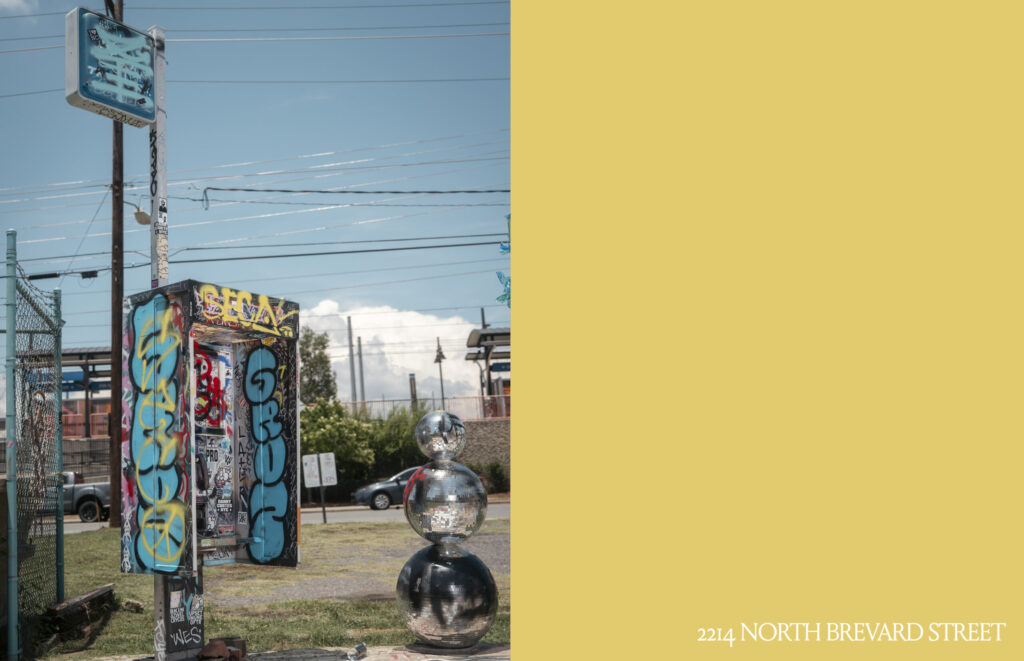
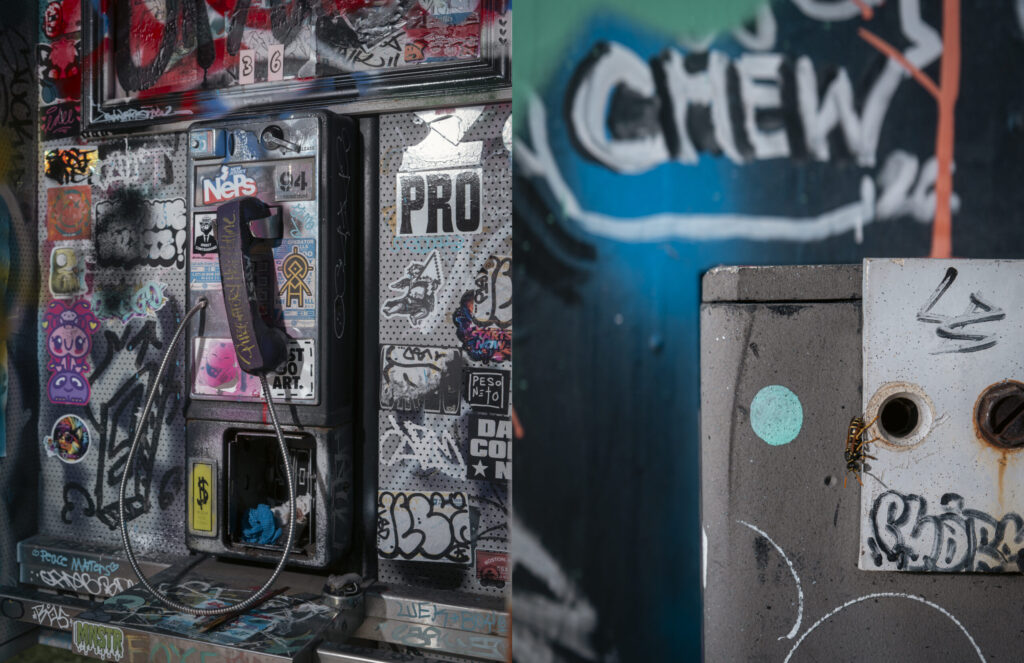
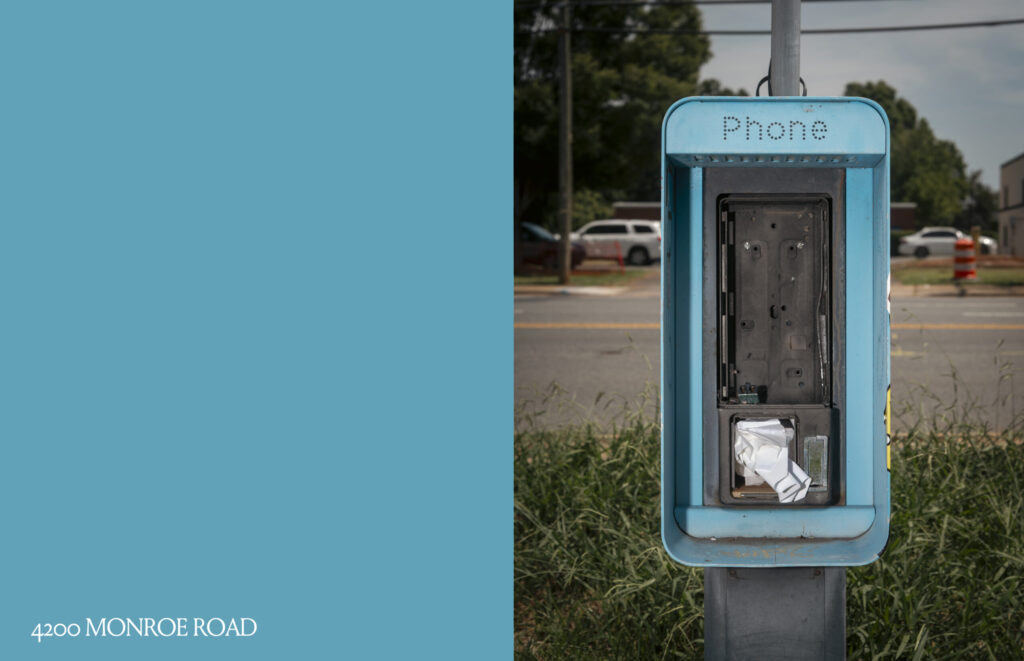
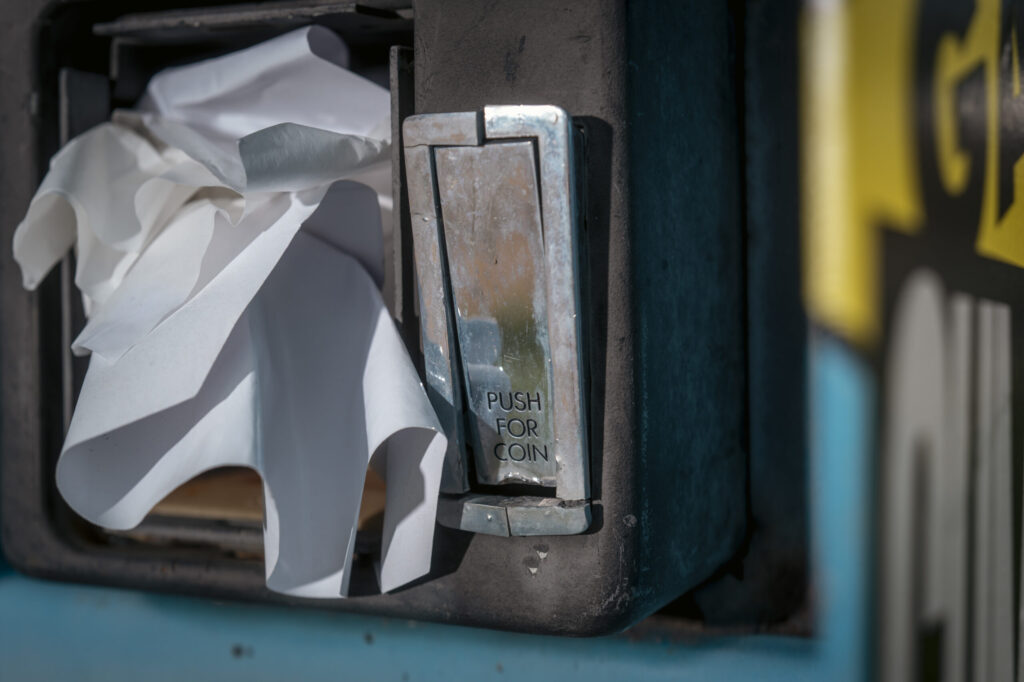
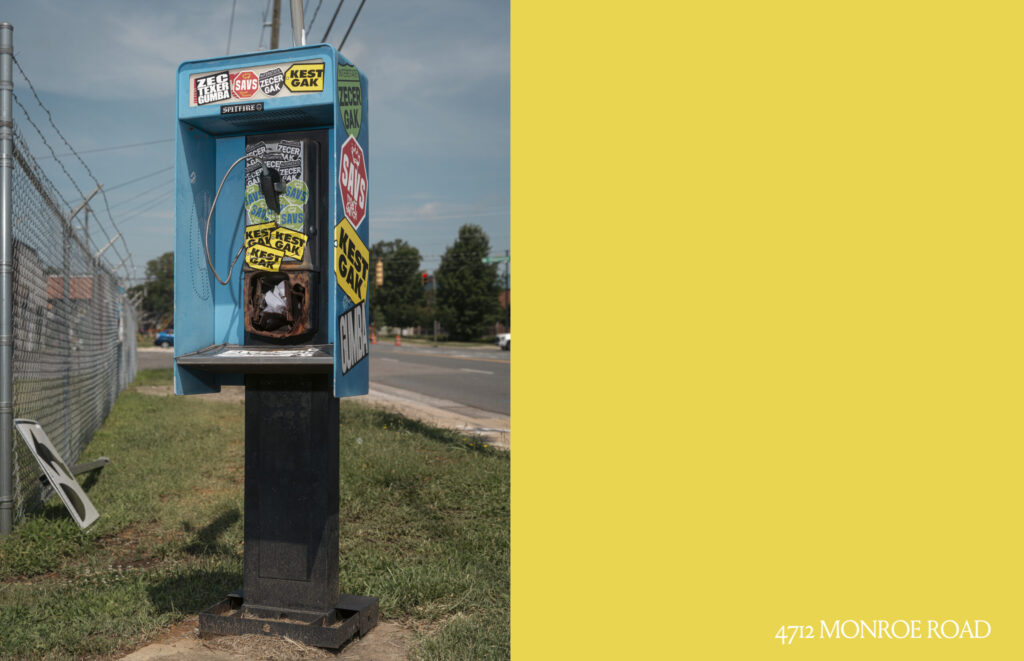
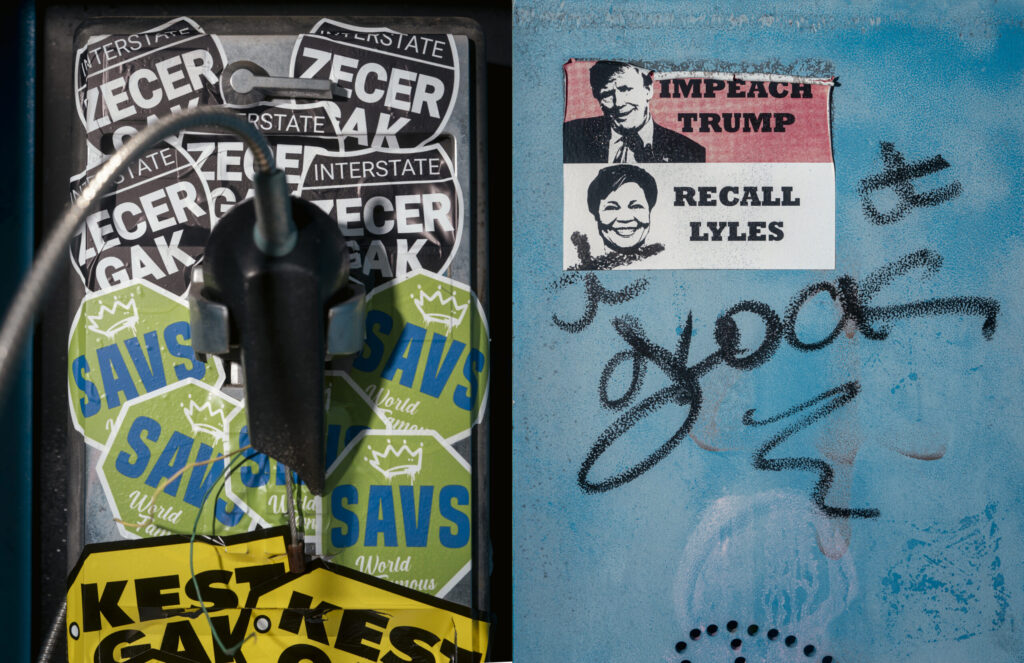
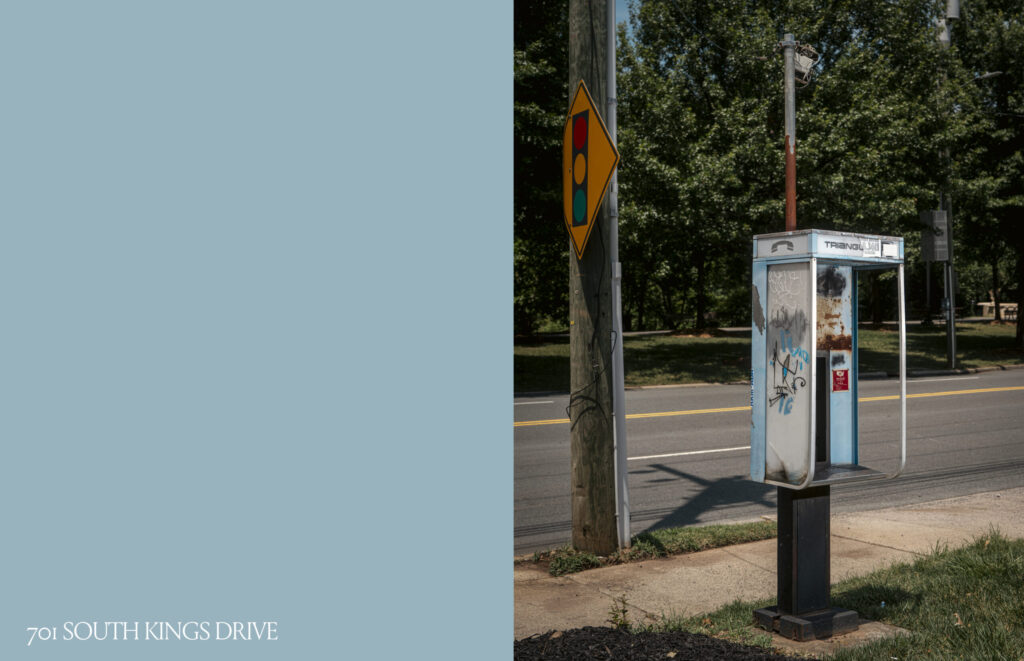
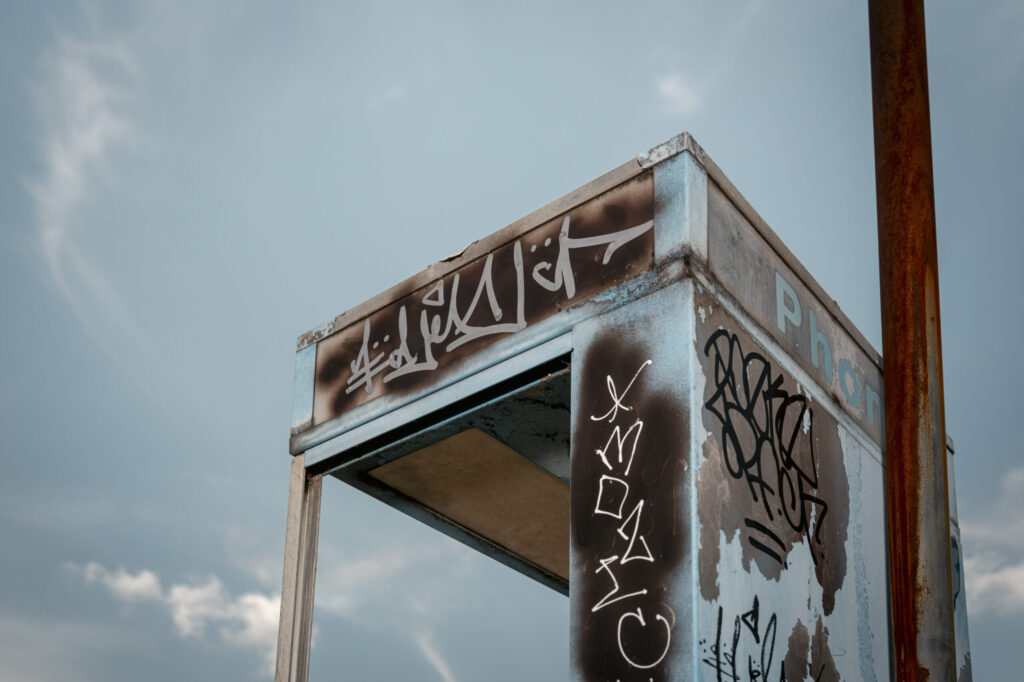
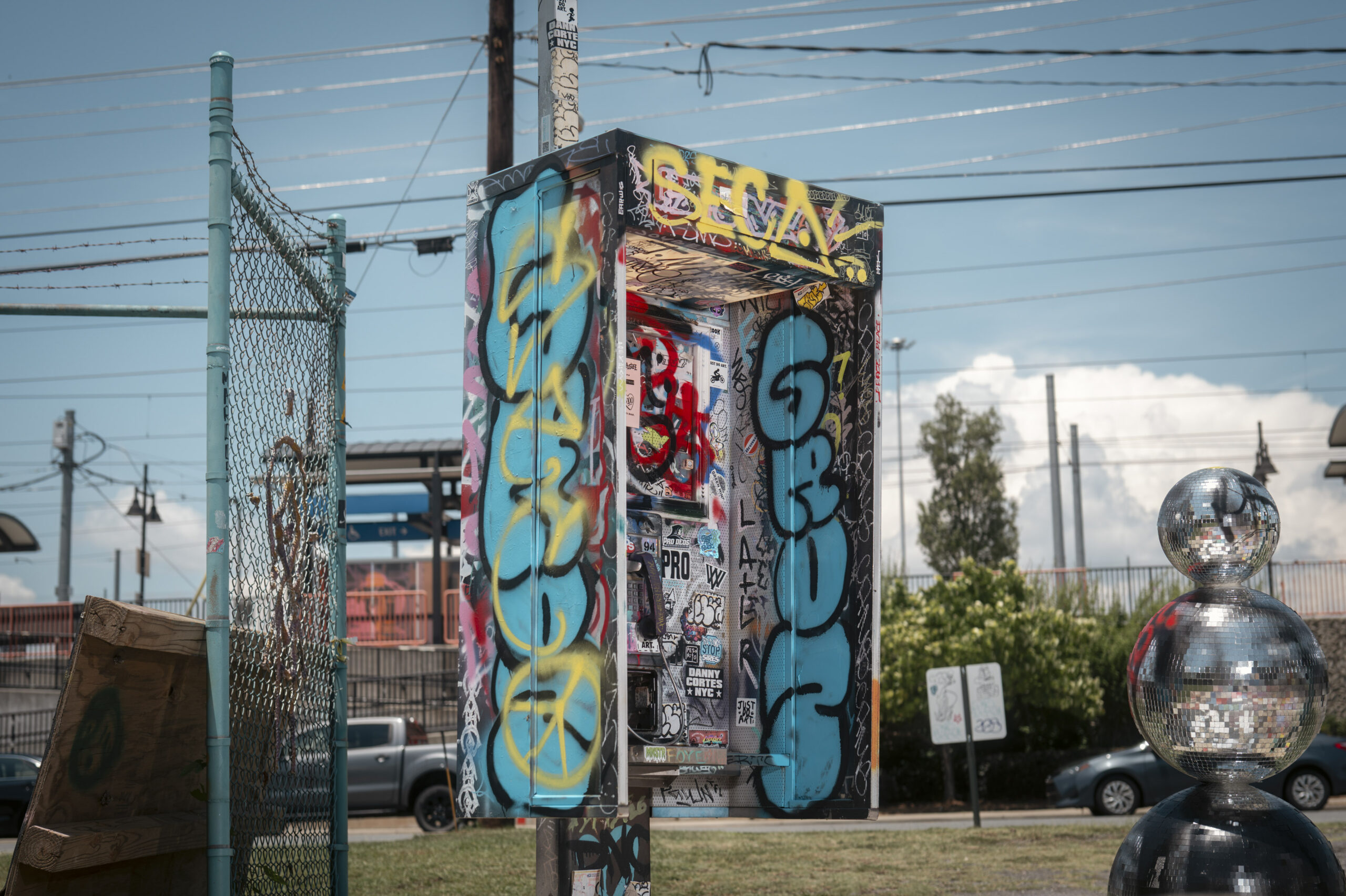
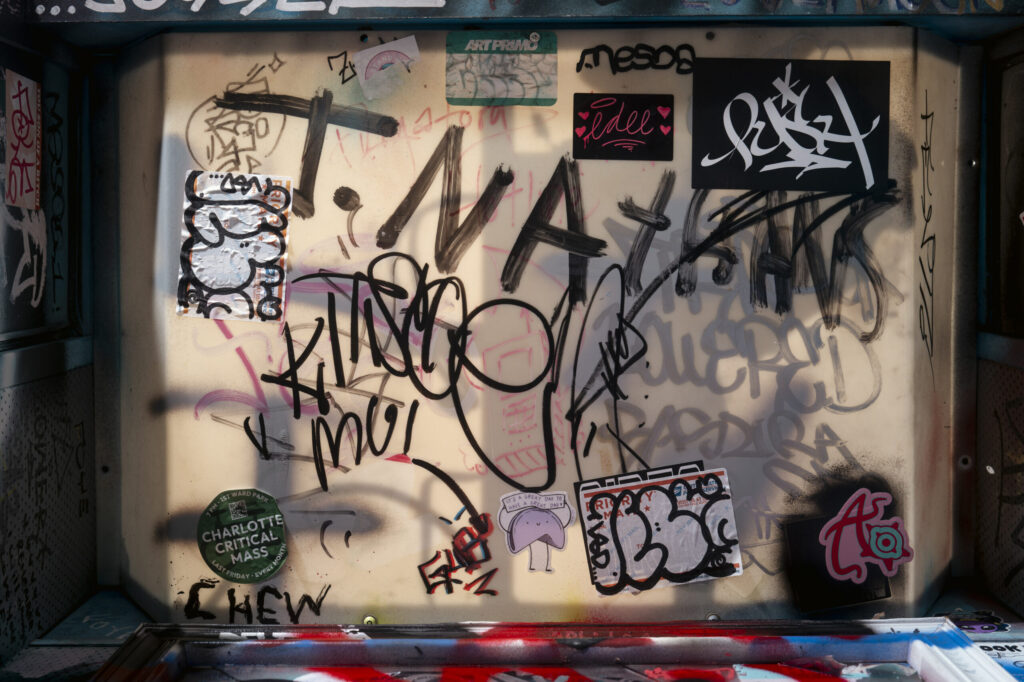
A few days later he sent me the pay phone photographs that follow. Some have been stickered and spray painted. Others, left alone. They don’t work, at least not in the traditional sense. But through graffiti and grit, many remain hubs for communication, for expression, for opining on the state of this or that. Put together, the photos offer small proof that no matter where technology tugs us, or how quickly platforms shift, people just want to be heard.
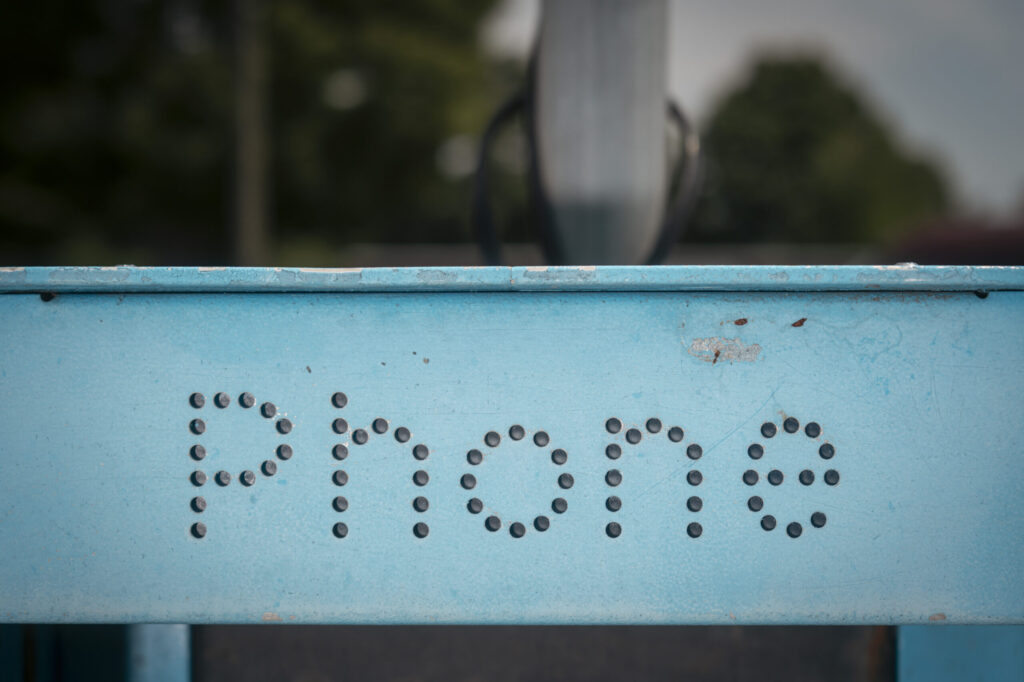
As I scrolled through the images, I couldn’t help but remember all the cultural references to pay phones. What, exactly, would be today’s cultural companion to the country breakup line: Here’s a quarter, call someone who cares? Where’s the 1990s band Primitive Radio Gods even supposed to stand? What could even trap Colin Farrell? Would Superman exist?
Locally, phone booths began to appear in The Charlotte Observer in the early 1900s. Cafes that had one advertised it in the newspaper, as an attraction: “Business Men Find the Denny Cafe,” one 1905 ad reads. “A well appointed place. Phone booth, public stenographer, and best of all an elegant bill of fare, with a filled pantry to back it up.”
The first phone booth in a Charlotte government building was installed in early 1921, when the commissioner of public works convinced the board of commissioners of its benefits by saying, “the telephone will be of great convenience for patrons of the auditorium who may have occasion to use a telephone while attending a meeting or gathering in the municipal building.”
Mayor John Wilson assured the public that the phone booth would be installed at no cost to the city, and that the city would get a cut of the profits from Southern Bell Telephone and Telegraph Company.
The peak decade for use of the term “phone booth” in the Observer’s archives was the 1970s. That was when Eastland Mall had a special holiday gift phone booth, where people could find information about Southern Bell products. SouthPark Mall’s pay phones drew crowds on Saturdays.
A phone booth in Kannapolis was used by “flimflammers” to con people out of money, using the old “Pigeon Drop” routine. They’d approach strangers to say they found tens of thousands of dollars in the booth, offer to split it with the stranger but only if they put up money as collateral. One elderly woman lost $10,000 in 1979.
Two things about that: We don’t use the word flimflammer enough anymore. And today’s online scams are, by comparison, profoundly lame.
So yes, Logan’s pictures of life from the pre-iPhone era caught my attention. Not just because folks have turned them into artwork, or because they simply look vintage. But because if you look closely, you can imagine the stories they hold — of frantic calls made after a car broke down, of heartfelt apologies and angry breakups, and of asking “the operator” to help you make a connection, human to human to human.
You know, back in the “olden days.”