
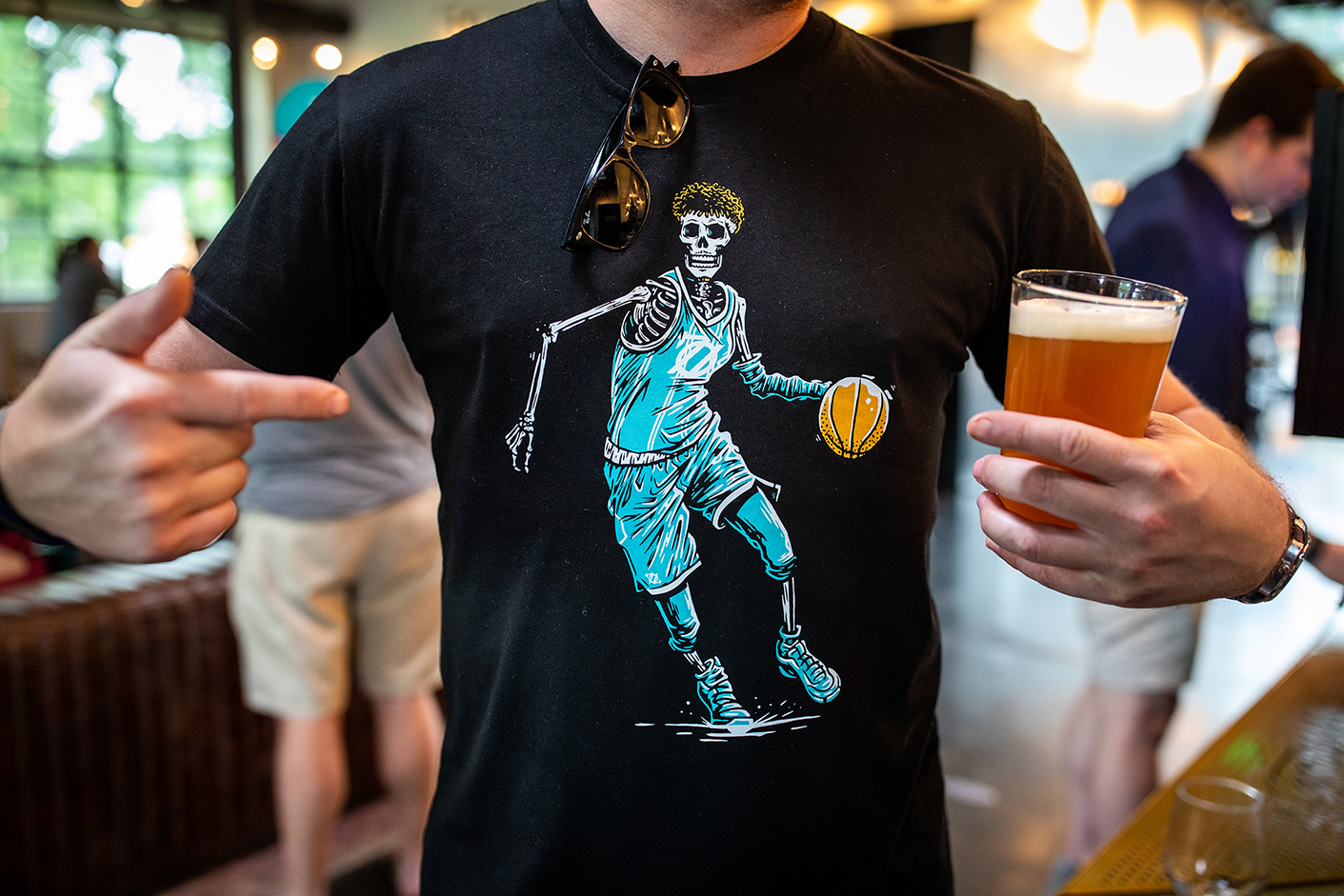
I don’t have a LaMelo Ball T-shirt, thankfully.
I do, however, have one that reads“Why Not?” It’s technically a reference to the 1989 Baltimore Orioles, who came within an eyelash of making the playoffs despite being one of the worst teams in baseball history the year before. That city branded that remarkable turnaround summer the “Why Not!?” season.
Maybe we need “Why Not?” shirts for Charlotte in 2026.
Why not swap out a mayor? Why not kill a highway? Why not suspend the schools superintendent without telling her why? Why not go bonkers over the Panthers making the playoffs despite a losing record? Why not meet up by the thousands to watch monks walk through? Why not have our biggest snowstorm in more than 20 years?
Why not watch our NBA team roll off a historic turnaround in a single season, going from a 4-14 start to nearly making the playoffs?
And then, well, after all that success, why not trade the star point guard from that team? And why not trade another veteran three days later?
News of the Hornets shipping LaMelo Ball to Minnesota ricocheted through Charlotte’s streets and text groups this past Thursday morning. NBA insiders and everyday fans were hot over who got the better end of the deal. Most agree, from an analytics standpoint, that the Hornets did, by getting a bunch of draft picks and a sharp-shooting big man in Naz Reid in return. (The Athletic said it was no contest, giving the Hornets an A- on the trade and Minnesota a D+.)
But analytics don’t measure emotions, and throughout our city, hearts were breaking wide open. I went straight to the Spectrum Center that morning, for no other reason than I didn’t know what else to do with my hands and feet. A sign outside the building still had Melo’s face on it. But the team store was closed, so I couldn’t see whether Ball’s jerseys were still up. It was eerie, in the best way. People cared. One fan was doing laps around the building in a Hornets sweatshirt, presumably because he didn’t know what else to do, either.
“I figured we’d trade Miles,” the guy told me, “but not Melo!” (Three days later, they traded Miles Bridges.)
I ran into WCNC’s Nick Carboni across the street, and he told me about the absolutely incredible interview he’d just done with two guys who’d stopped their car just to rant about losing Melo. “He made it beautiful to watch!” the passenger hollered.
Ball, drafted in 2020, was the most recognizable active athlete in the city. A new generation of young Charlotteans snatched up No. 1 Ball jerseys, marking a noticeable fashion shift from the 2010s, when homegrown star Steph Curry’s gear owned Charlotte kids’ closets. Ball’s puzzling behavior, erratic play, and reckless driving only added to the mystique.
He was also the latest big star, following previous residents Michael Jordan and Cam Newton, to live in “Charlotte’s most exclusive, sportsiest, bachelor-paddiest condos” above a Brazilian steakhouse in uptown, as Jeremy Markovich wrote in one of the Jeremyist of stories on Thursday.
We won’t know for years who won or lost the trade. But I’ll say this: the Hornets’ new lead-ownership duo of Gabe Plotkin and Rick Schnall has made all the right moves since they bought the team three summers ago. They’ve embedded the Hornets back into the community, contributing $1 million to Nourish Up last week to feed hungry families. On the floor, they have a patient, long-term plan to build a consistent winner. And if Melo has any weakness, it’s that he’s inconsistent.
So my cold take is that I trust the owners and front office know more than I do.
Still, try explaining that to my two boys. They’re 6 and 3. Melo’s a fun name to say, and he’s a fun player to watch. For our oldest, the trade marked an important occasion in a young fan’s life — he has one of those No. 1 Ball jerseys, and, as is the case with so many professional athletes’ jerseys, it’s now a historical artifact.
Get used to it, kid.
Meanwhile, my three-year-old’s assessment was this: “It’s sad we gave Wamewo Baw to another team. We have to get a new one from the store.”
For a slightly more informed assessment, I texted national NBA writer and Charlotte resident Tom Haberstroh. See below.
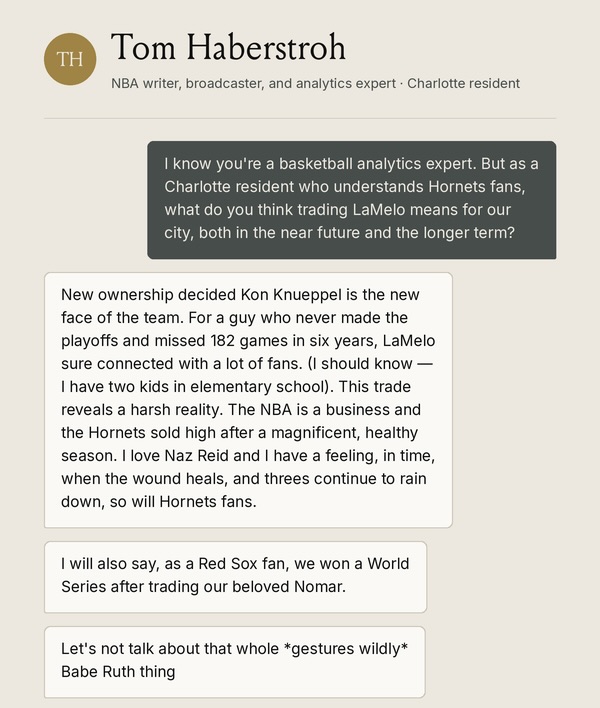
Translation for non-baseball fans: The Red Sox traded franchise face Nomar Garciaparra in July 2004 and three months later won their first World Series title in 86 years. That long drought started, though, around when the Red Sox sold their most famous player, Babe Ruth, to the Yankees.
Point is, trading LaMelo Ball and Miles Bridges could be really good for the Hornets or really not good! Or something in between.
Either way, in each trade they got a 2033 draft pick. For reference, rising sixth-graders this summer will graduate from high school in 2033.
While that seems like a long way off, hey, at least it’s not 86 years.