
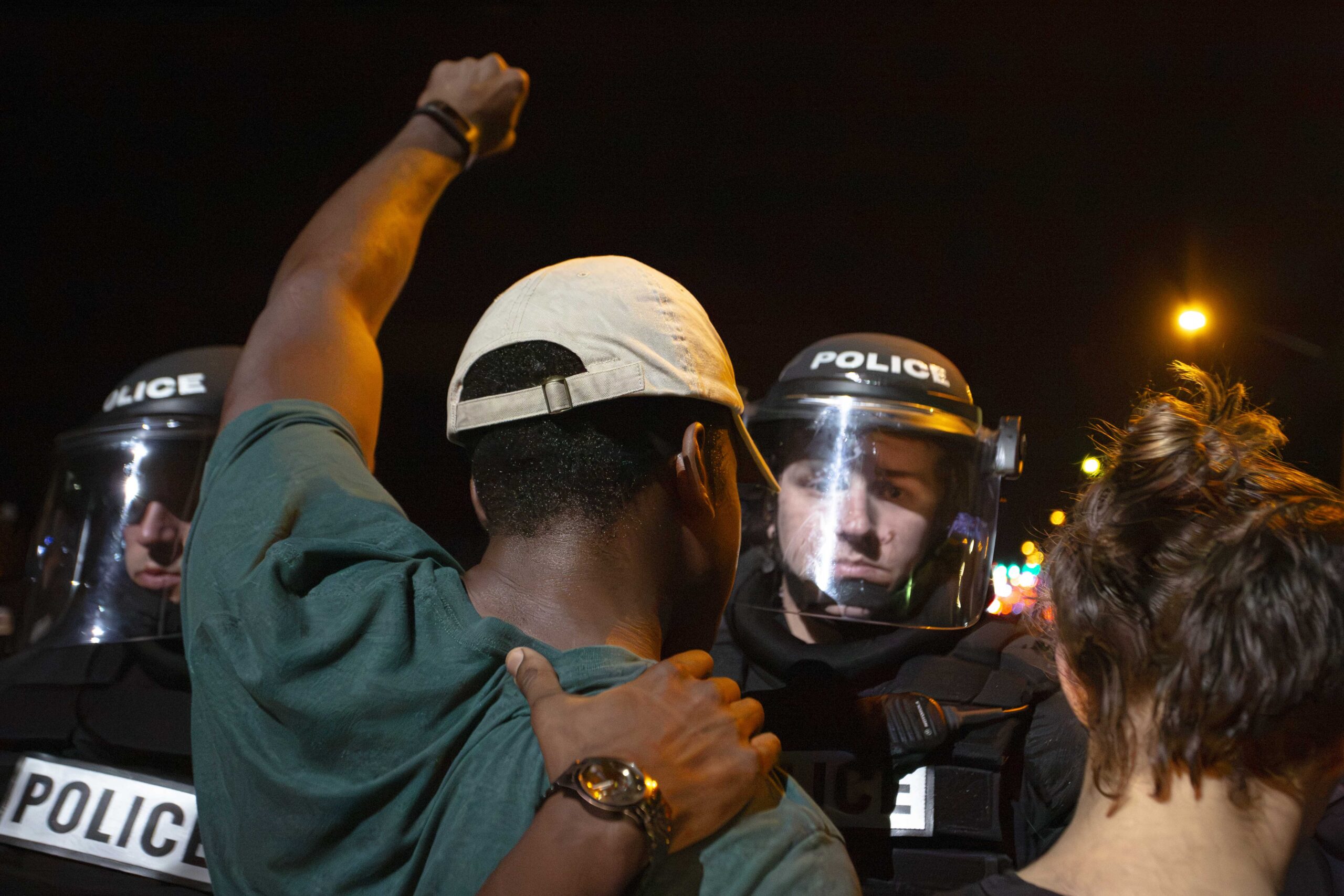
The shooter ran past my left shoulder at six seconds after 8:30 p.m.
He looked like any of the dozens of us fleeing the scrambled scene in front of the Omni Hotel on September 21, 2016, after the bang. On the sidewalk behind me, 26-year-old Justin Carr, a Charlotte native and Panthers fanatic whose girlfriend was eight months pregnant with their first child, was bleeding to death.
I ducked around the corner and onto College Street to regroup, only to see a CMPD vehicle cruise by with a chilling announcement that still rings clearly in my mind, 10 years later: “Someone has been shot. Clear the area. We cannot guarantee your safety.”
The perils of passive voice. Who shot this someone? I wondered. Where is the shooter? Is he in street clothes, or in uniform?
One day before all that, on September 20, 2016, Keith Lamont Scott was sitting in his SUV on Old Concord Road when Charlotte police officers encountered him while attempting to serve an unrelated warrant. Scott had a small blunt and a Colt .380 semiautomatic he’d purchased weeks earlier for $100 from a man in Gastonia, according to the DA’s report. The officers asked Scott to step out of the SUV. Eventually he did, and the officers circling him shouted for him to “drop the gun.” Scott’s wife, standing in the grass nearby, pleaded with police not to shoot him. But Scott didn’t respond, and instead made a movement that caused CMPD’s Brentley Vinson, a former Ardrey Kell football player, to fire and kill him.
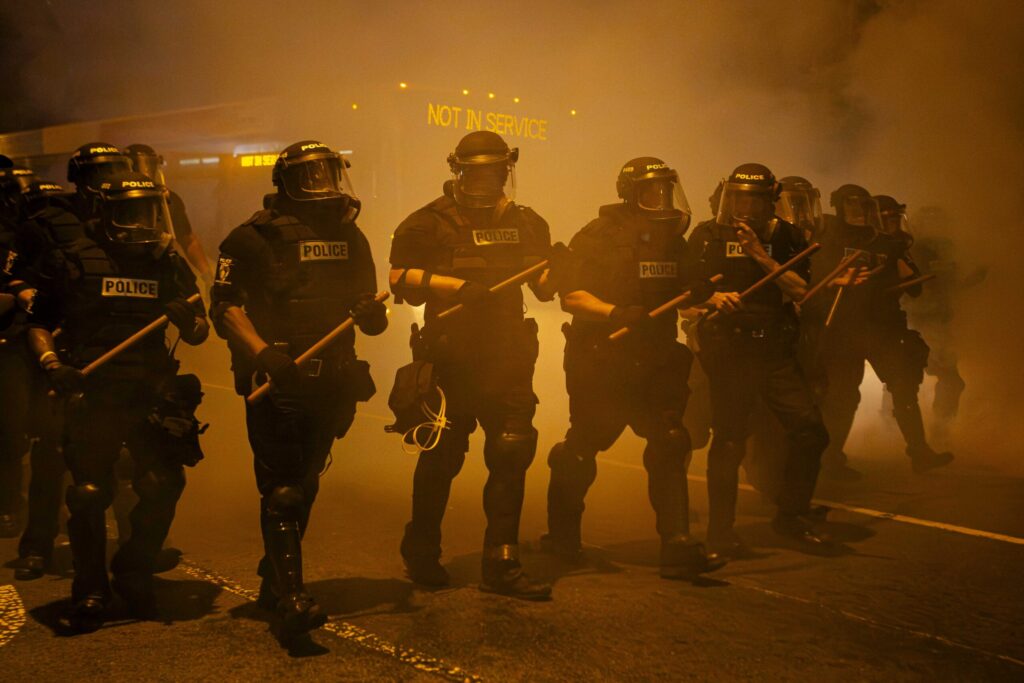
Scott’s daughter took to Facebook live and insisted he didn’t have a gun, that he was simply sitting in his car reading a book, waiting for his son’s school bus. Her video went viral, opening a window of doubt that sparked a week’s worth of protests and riots that transformed the city over the next decade.
In many ways, and for many people, there was a Charlotte before Keith Scott, and a Charlotte after Keith Scott.
The events of that week spurred a wave of police reforms, a political upheaval, a new era for breaking news in the iPhone age, and a reckoning for longtime community leaders who watched the city they built crack open on national television.
“You ask yourself, ‘How as a society did we treat people so badly?’” Hugh McColl once told me of his immediate reaction, when he watched coverage from a hotel room in Arkansas. “We’re guilty as charged.”
Remember, this all followed the sizzling American summer of 2016. In June of that year, a shooter killed 49 people in a nightclub in Orlando. On July 5, a Baton Rouge police officer killed a Black man named Alton Sterling outside of a convenience store. On July 6, a Minnesota officer killed Philando Castile during a traffic stop. On July 7, at a protest over those two killings, an angry sniper who served in Afghanistan killed five officers in Dallas.
Water flows to empty spaces, and opinions flow to information gaps.
That first night, the flood came to Old Concord Road. People kicked police cruisers, tossed rocks and full water bottles, set fire to Interstate 85, and busted the front windows of the Walmart in University City. I was the editor of Charlotte magazine at the time, and we published our first story, “Charlotte’s Violent Night,” written by Greg Lacour from the scene, at 4:45 a.m. the next day. I’ll never forget Greg’s first line: “Something about Tuesday night suggested, even insisted upon, a permanent loss of innocence,” he wrote.
And that was just the first night.
***
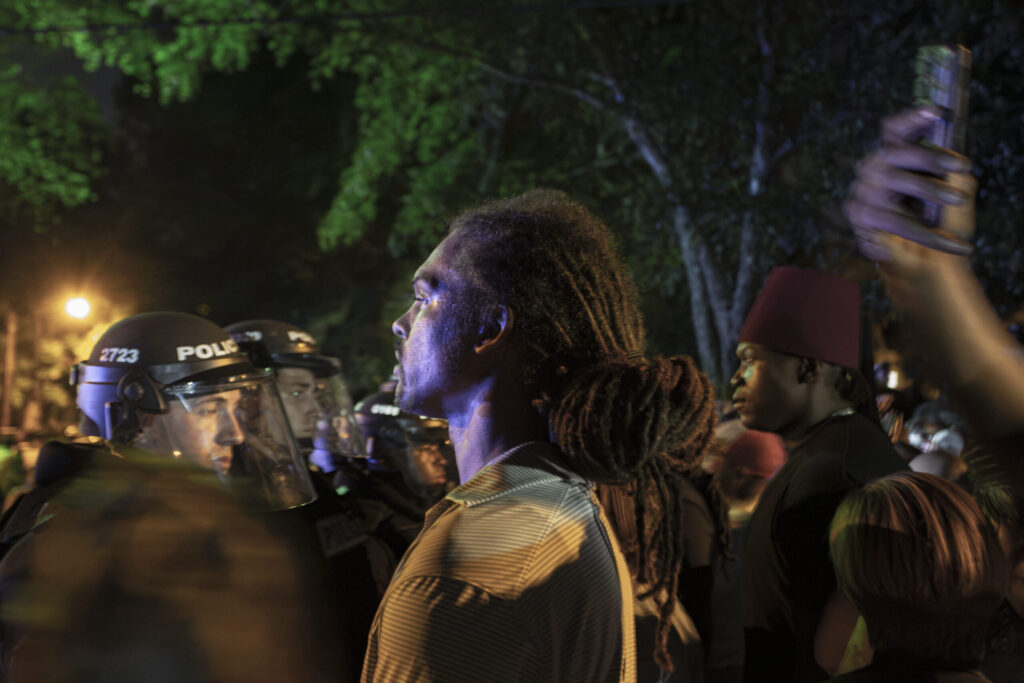
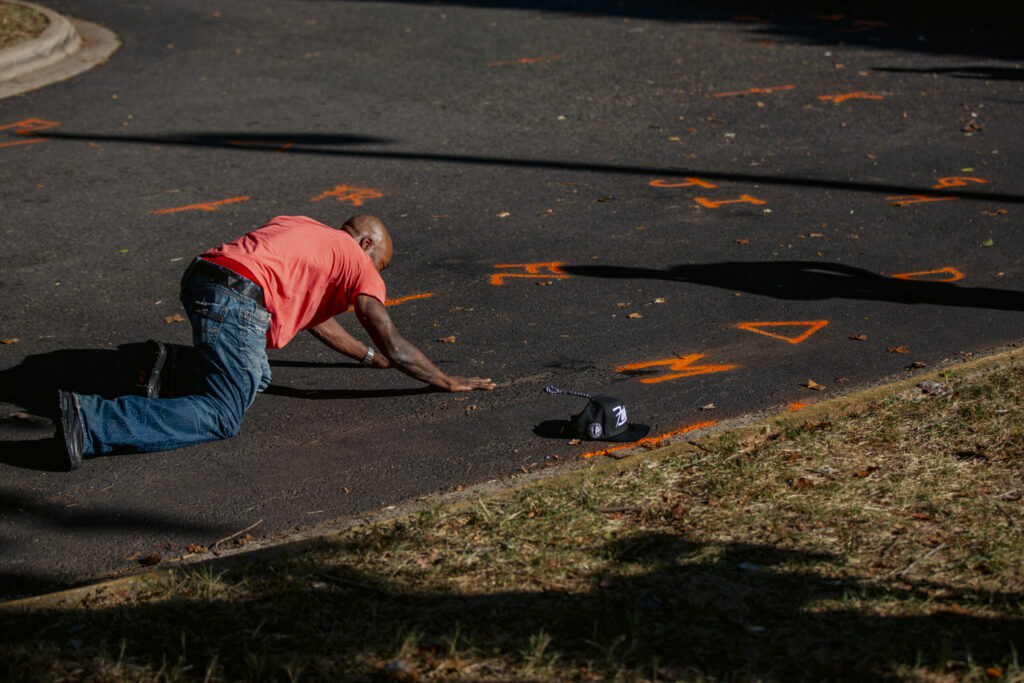
Marcus Jones had two big meetings on September 20, 2016.
That morning, he had his performance review for his job as city manager in Norfolk, Virginia. Then he caught a plane to Charlotte for two days of interviews for our city’s open manager position. He fell asleep early in his hotel room that night, while the first night of protests raged near University City.
He woke up the next morning, turned on CNN, and saw the city he was vying to lead at its darkest moment. When he went in for his second day of interviews that Wednesday, city councilors grilled him with real-time questions about how he’d handle a situation like the one they faced that day. He called his wife afterward and said, “I believe I’m supposed to be here.”
While Jones was going through those interviews, then-Mayor Jennifer Roberts held a press conference at the government center to acknowledge the community’s concerns over police violence, but also to ask people to protest peacefully.
I remember standing in the back of the scrum of television reporters, as usual, and seeing police chief Kerr Putney walk down the stairs.
Putney had become a police officer for one reason: When he was 10 years old, his father was found dead in a creek near Roanoke Rapids, and the police there didn’t give a damn. So he wore a uniform for 30 years, to bring justice and closure to people like him. I got to know this side of Putney in 2015, when our magazine named him one of our Charlotteans of the Year, for his work with barber Shaun Corbett on restoring trust between Black communities and police officers.
Two months before the Scott incident, in that hot summer of 2016, Putney delivered what I consider the most effective and firmest address of any public official in recent Charlotte history. This was after the ambush of the officers in Dallas, and the killings of Castile in Minnesota and Sterling in Baton Rouge.
“We’re different in Charlotte, y’all. And we’re a good kind of different,” Putney said. “In this profession we do have a racist, bigoted history. And that hurts me. … The reason we’re here today is because one of the viral videos from Minnesota, Mr. Castile, hurt me. It hurt our profession. We hide behind, ‘Well we don’t know all the facts.’ Well I don’t need to know the facts to see another dead Black body in the streets to say, that hurts me, that disappoints me. We have more work to do. … Even now when I see blue lights, it hits me in the stomach. I have (had) that reaction, since I was eight years old.
“But what you don’t know is, I’m sometimes more fearful when I put this uniform on.”
Now here we were in the government center, on the morning after one of Putney’s officers killed Keith Scott, with videos of riots telling us that we weren’t that different after all.
At the bottom of the stairs, Putney looked at me and winked, as if to say he had it under control.
***
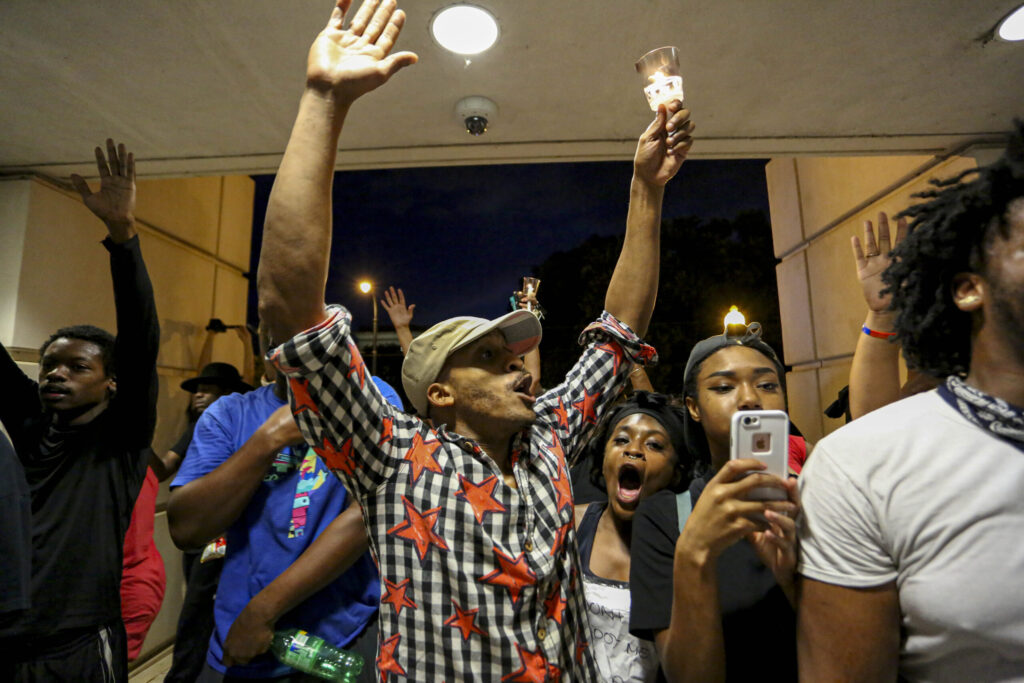
That evening, the second night of protests began with a peaceful demonstration at Marshall Park. But during the call-and-response chant of “Hands up! Don’t shoot!” I kept hearing a far more ominous response: “Hands up! Shoot back!”
The group split up after Marshall Park, with the peaceful “Don’t shoot!” people going east around the courthouse, and the “Shoot back!” crowd going west toward the heart of uptown. I followed the “Shoot back!” group. By 8 p.m., I was standing on the ground level of the former Epicentre as water bottles rained down from the Howl at the Moon, exploding on the sidewalk beside me.
At about 8:15, a man in a BMW eased through the crowd on Trade Street. A commotion followed. Photographer Logan Cyrus saw why: the BMW driver had his hand out the window, holding a pistol. Officers pulled him out of the car at the intersection where Charlotte was founded, Trade and Tryon.
Just down the hill from there, officers in riot gear set up shields in front of the Omni entrance. I was watching the hotel manager wave his arms wildly when I heard it, the bang.
At first I thought it was a crowd dispersing noisemaker. I turned to walk away. Only years later, when the Observer published this video, did I realize the man who turned out to be the shooter breezed past me in a white T-shirt.
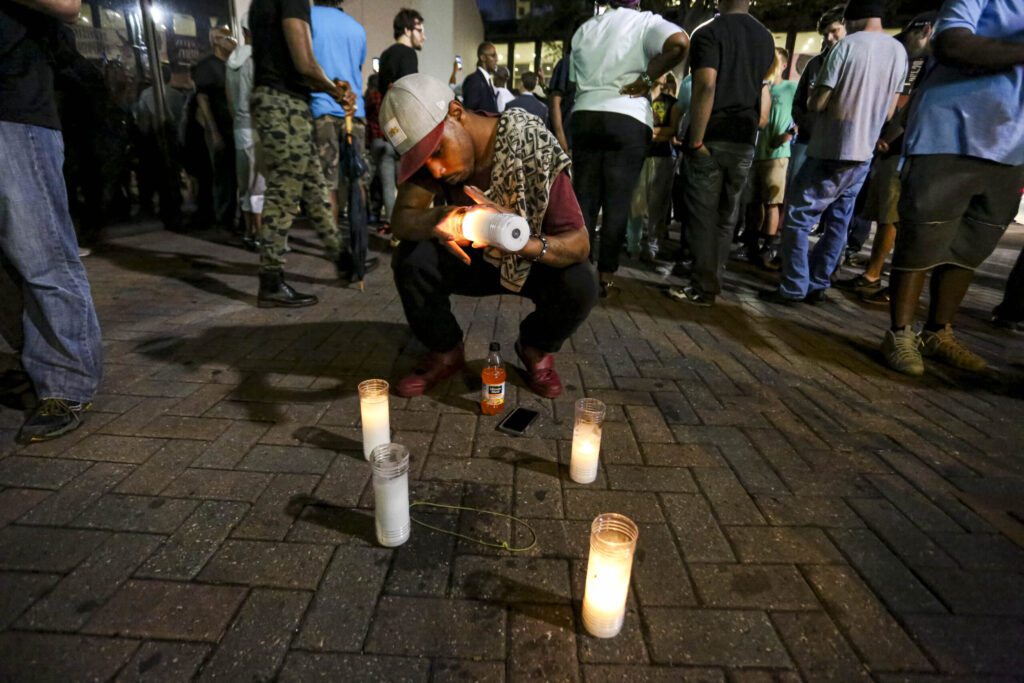
I knew that Logan, who was working for The New York Times that night, was behind me, somewhere. I tried to find the reporter from my Charlotte magazine team, Adam Rhew, but couldn’t. The night before, Adam had snapped an iPhone picture that appeared in publications around the world, of police officers in front of a CATS bus that flashed a “Not In Service” sign.
On College Street, I looked back toward the Omni entrance and saw five medics trying to bring a man back to life. Then the CMPD car came by, and the intercom blared those words:
“Someone has been shot. Clear the area. We cannot guarantee your safety.”
I walked toward Fourth Street and turned left. I looked up and noticed the Epicentre’s multi-story parking deck, sending another chill through me: What if this was another sniper situation, like Dallas? I wheeled around and started back to the scene, figuring it might actually be the safest place at this point.
That’s when I saw the green hat.
Logan Cyrus, one of my closest friends on earth, wore that Kermit-colored Pittsburgh Pirates hat every day. This is where I should say that Logan is a veteran who served two tours in Iraq as a Navy Corpsman, including one in the deadly campaign in Fallujah in 2004. He’s seen things nobody should.
But there on Fourth Street, even he was traumatized. His hands trembled around his camera, and his pupils were the size of the moon.
“They shot him,” he said. “I gotta file. He’s dead. I think he’s dead. I don’t know if he’s dead.”
I walked Logan back to his car. I took his keys and he sat in the passenger’s seat with his laptop. While we were crossing the Central Avenue bridge over Independence, he submitted a photo to his editor at the New York Times. It’s of several people trying to bring Justin Carr back to life. It ran on the Times’ front page the next morning. It ran, months later, as the centerpiece spread in the Times’ “The Year in Pictures” section. Time magazine named it one of the 100 top photos in the world from 2016.
Logan still doesn’t like to look at it or talk about it.
We stopped at the Elizabeth four-plex where I lived. I got out and Logan moved over to the driver’s seat, and I remember telling him, “Get home to your family and hug your baby boy.” His son had just turned 11 months old.
***
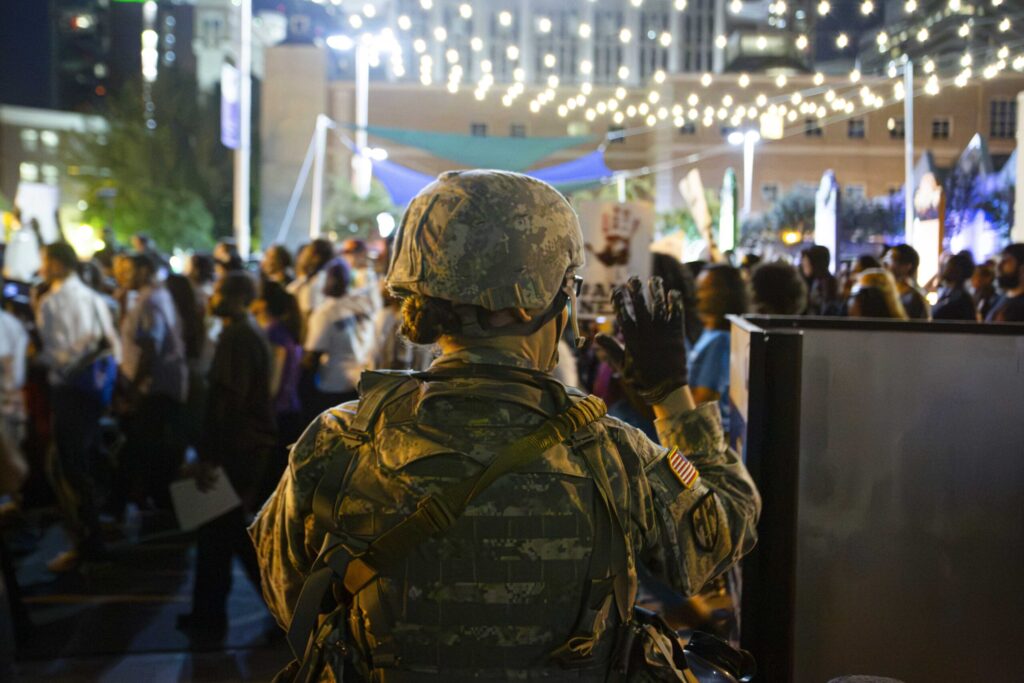
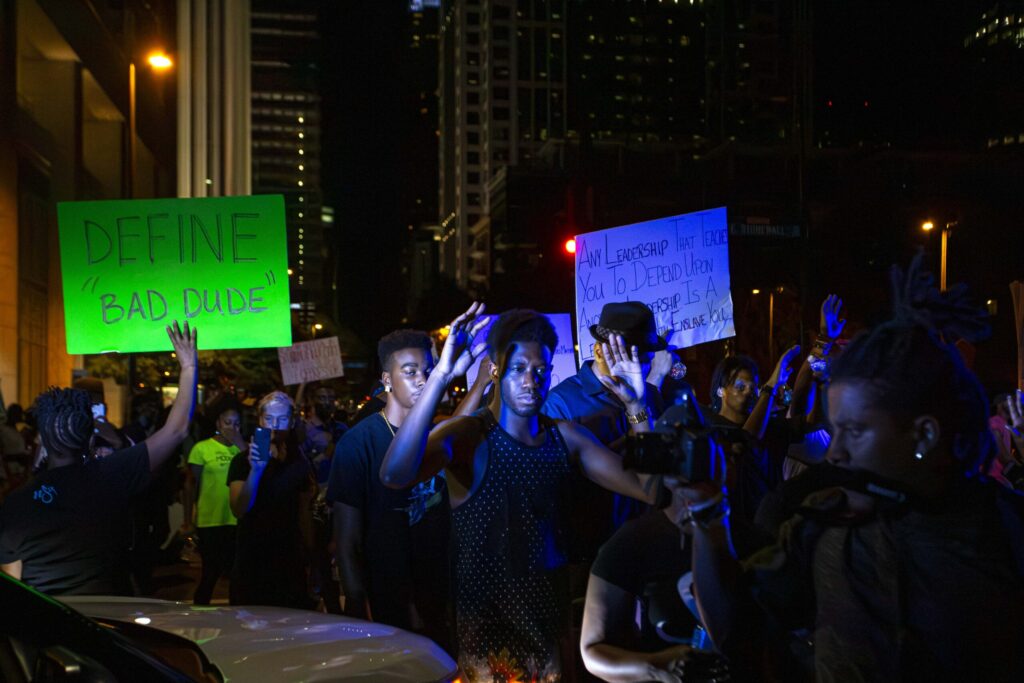
The third night was mostly peaceful. I remember a random protester asking me for a hug, and joking that made it “better than any other night I ever went out this late in Uptown.”
Still, each night ended up crossing the line to riots, with people standing on I-277 blocking traffic. By Saturday, a 91-degree afternoon, the demonstrations were organized enough that several prominent leaders, like Rep. Alma Adams, joined in the march.
By then, Putney, our Charlottean of the Year the previous year, had been ripped by media outlets near and far, and protesters portrayed his department as a modern extension of the 18th century slave patrols. People held up signs outside the police station that would’ve been unfathomable two months earlier: “Fire Kerr Putney.”
The Panthers played the Vikings at home that Sunday, and several people, including future city council member Braxton Winston, were arrested outside of the stadium. Charges against him were later dropped.
The following Monday, people stuffed into the government center to voice their anger at a city council meeting. The city council issued a “letter to the community,” but the mayor didn’t sign it. Roberts released her own statement, revealing a rift in leadership that would one day end with her being elected out of office.
By the end of October, it was clear that a political tidal wave was coming. A year later, voters elected six millennials to city council, lowering the body’s average age from 60 to 45. Vi Lyles defeated Roberts in the primary, and went on to become the first Black woman mayor in Charlotte history.
Lyles then spent eight years as a pragmatist leader who upheld the “Charlotte Way” values that built the town.
***
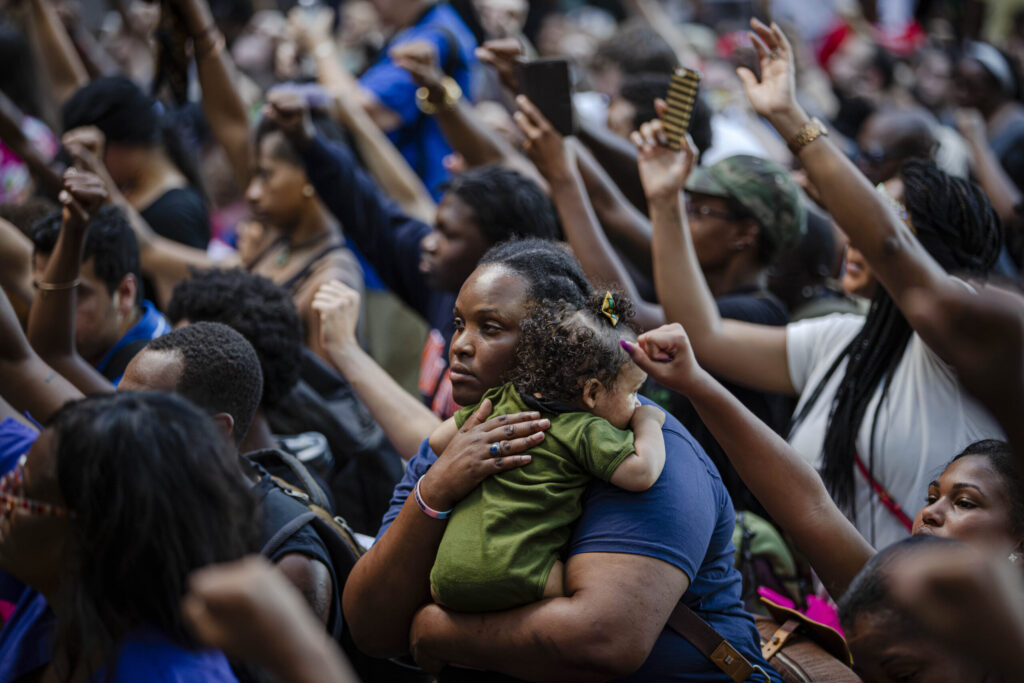
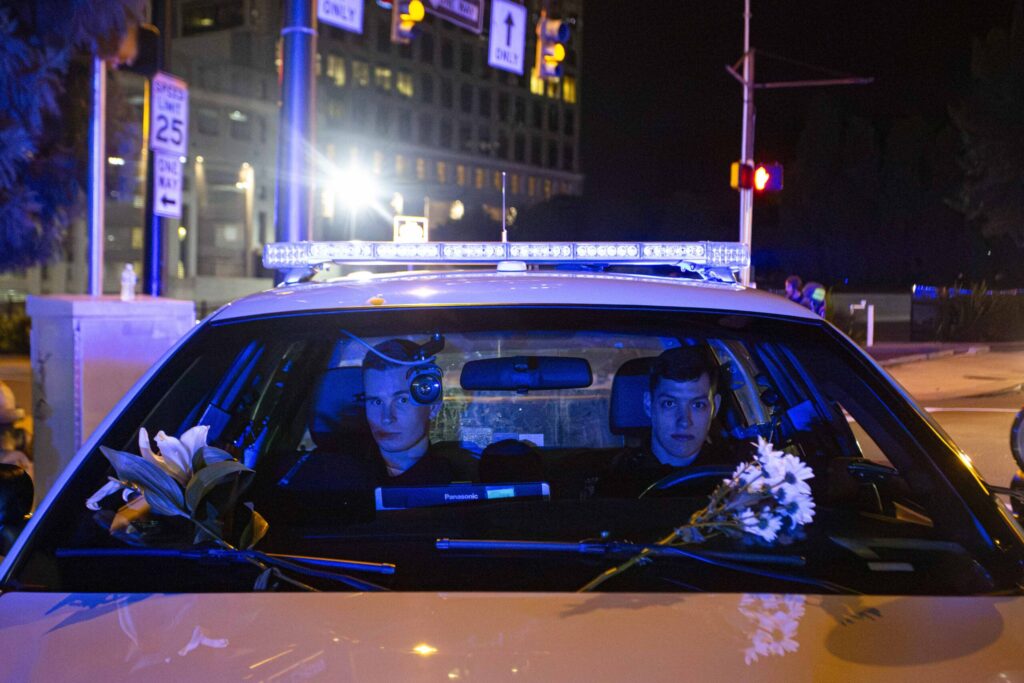
Vivian Carr called the Omni last week to see if they had any rooms available on September 21, 2026, the 10-year anniversary of the night her son was killed near the entrance.
She was almost relieved, she told me last week, that they didn’t have anything available. She’d promised herself 10 years ago that she wouldn’t ever enter the hotel. She still has trouble driving past it.
The man later convicted of Justin’s murder, Rayquan Borum, shot aimlessly that night. Braxton Winston was standing on the curb, just feet away, and saw Justin put his hand to his head and fall to the ground.
Any of us in the crowd could have been the recipient. Good fortune sometimes doesn’t feel good at all.
Justin decided to join the protests that night on a whim. He stopped by with a friend on his way to work the night shift at his job as a short-distance truck-driver. About an hour before he died, he’d called Vivian to say she should’ve been there. “It was peaceful!” he told her. Then it wasn’t.
As an ambulance rushed Justin to Carolinas Medical Center, a friend who was with him called his brother, Kenneth, who then called Vivian.
She was ushered into a private meeting room, where CMPD officers asked her questions that startled her. “Did Justin have any enemies?” she recalls. “No!” she shouted at them.
Doctors eventually let her into the room to see him, but he was non-responsive. She held his hand for several hours until they pronounced him deceased the next morning.
What would Justin Carr have done, if the bullet hadn’t hit him? is a question I still think about often.
Certainly he would’ve been a dad.
His son, who goes by Little Justin, was born one month after the Keith Scott protests. I still keep in touch with Vivian. A few years ago I profiled her for Charlotte Agenda, and Logan and I met Little Justin.
He’s now nearly 10, and the questions he asks about his dad get more difficult each year. Little Justin plays football and basketball, and a few weeks ago he wondered why all the other kids have their “daddys on the sideline” and he doesn’t, Vivian told me. He takes most of his questions now to his uncle, Justin’s brother, Vivian says.
“He’s kind of over the grandma thing,” she laughed. “He goes to his uncle, you know, for the ‘man’ questions.”
Some questions are impossible to answer. But here’s what people who were on that sidewalk, and around it, have done in the 10 years since.
Braxton Winston went on to become a city council member and now is president of the North Carolina AFL-CIO. Greg Jackson had gone down to the protests in a rage. He wound up forming a lasting bond with retired CMPD Major Mike Campagna, and started a nonprofit called Heal Charlotte.
Putney didn’t get fired. He stayed in the job until the summer of 2020, retiring just weeks after the next flood of protests broke out in Charlotte’s streets over the police killing of George Floyd in Minnesota.
Marcus Jones got the job, and his first day at work as Charlotte’s city manager was December 1, 2016. One day before that, then-district attorney Andrew Murray released his findings from the Scott case, and said he wouldn’t press charges against the officer. Protests again broke out that night, but they were more subdued. I still remember Winston standing face-to-face with Campagna, camera in hand.
Yesterday afternoon, Winston and Campagna shared a stage for a panel discussion around the 10-year anniversary, along with Jackson, Roberts, and Logan.
Toussaint Romain, who was the man in the white shirt standing between protesters and police in CNN’s coverage that week, has become a dear friend of mine and spent years traveling the country as a motivational speaker. Adam Rhew, meanwhile, has had twin boys, earned an MBA, and now runs SouthPark Community Partners.
Logan and I have gone on to start this publication. I’ve gotten married and had two boys of my own since then. Logan’s son is now in fifth grade, and he’ll be 11 next month, just a few days before Little Justin turns 10.
All these life riches we’ve found in the decade since the bang, because the bullet found Justin and not us.