

The city lights woke up her little girl.
Kandi Deitemeyer had driven five hours across North Carolina late that night in December 2016, leaving immediately after her last board meeting as president of College of The Albemarle in Elizabeth City, bound for Charlotte to take the helm of Central Piedmont Community College.
Behind the Deitemeyers were years of cancer treatments for their daughter, and memories of a community that carried them through hard times. Zoe was two years old when she was diagnosed with leukemia, but now, asleep in the back seat that night, she was an eight-year-old survivor. Kandi and her husband, Gary, wanted to give Zoe a city where she could build her own story, one that wasn’t centered on being the kid who had cancer.
Deitemeyer doesn’t like the words “resilience” or “challenges.” She prefers “transformation” and “opportunities.” They fluttered in and out of her thoughts as they drove through the night. She’d beaten out a field of 40 candidates to be named CPCC’s fourth president — a high-profile job in the community college landscape, and one of the most pivotal positions in a growing city with ever-changing workforce needs.
She intended to try to keep herself out of headlines, to keep work at work and home at home, in order to give Zoe cover to grow into whatever she wanted to be.
Just before 3 a.m., the Charlotte skyline appeared in the windshield. Zoe’s face scrunched and her eyes opened.
“Look at the big city,” Zoe said.
“Welcome home,” Kandi told her.
***
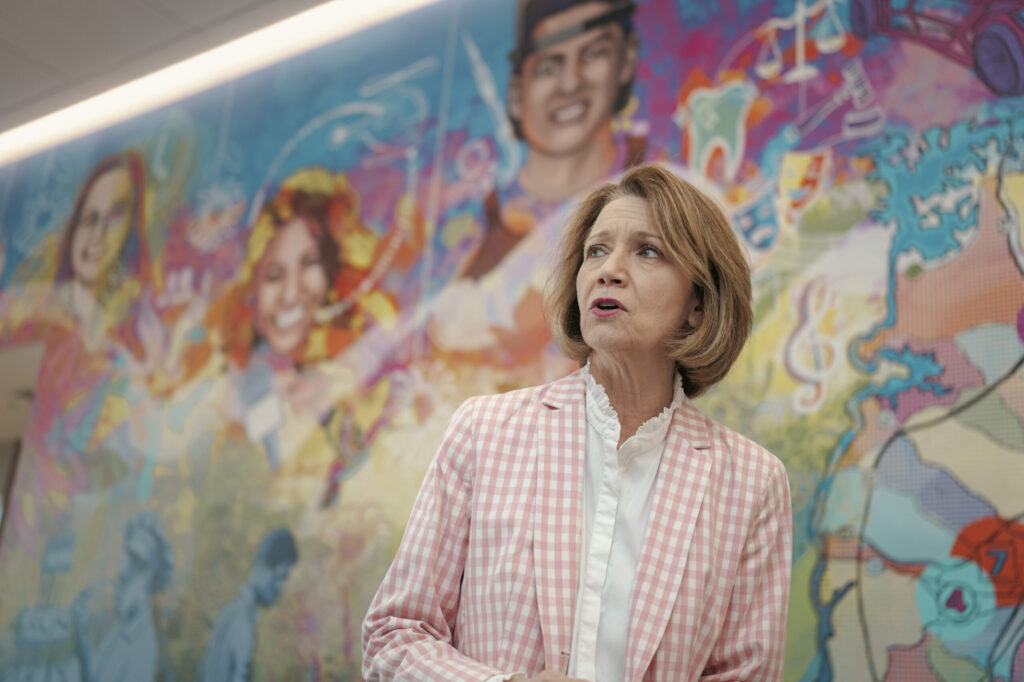
Nearly 10 years later, Kandi Deitemeyer — or Dr. D, as her team and students call her — is standing on a sidewalk that wraps CPCC’s quad with two security guards shadowing her. She doesn’t want to talk about them or why they’re here, but it’s no secret. For more than a year, she’s been badgered by activists who are upset over the college’s role in creating a new public safety training center in Matthews. We’ll get to that later, but it’s not the focus of this story.
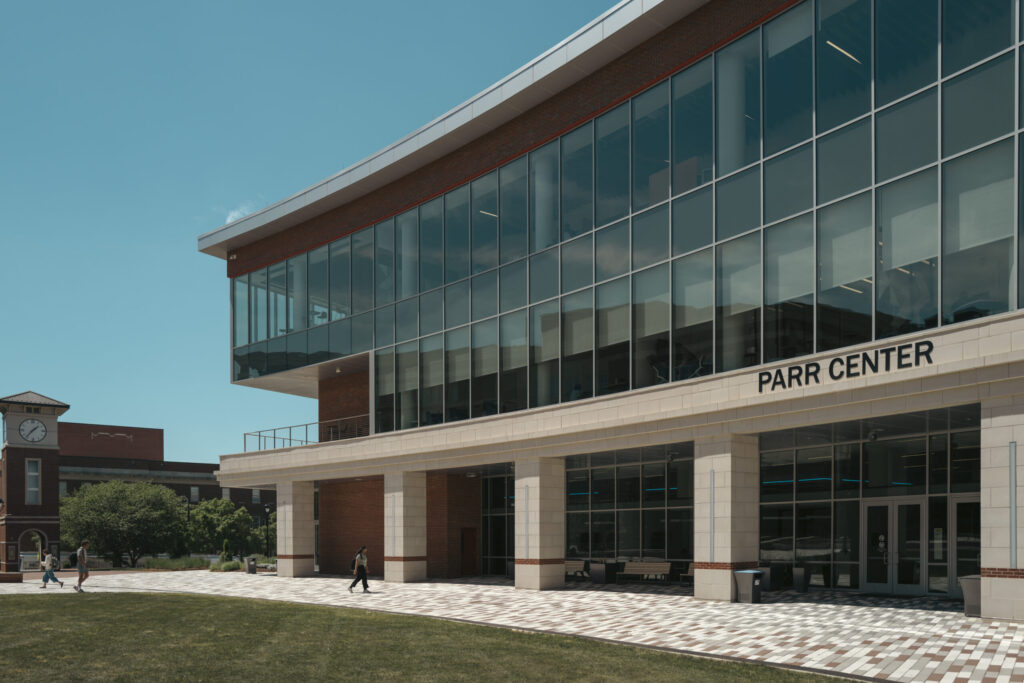
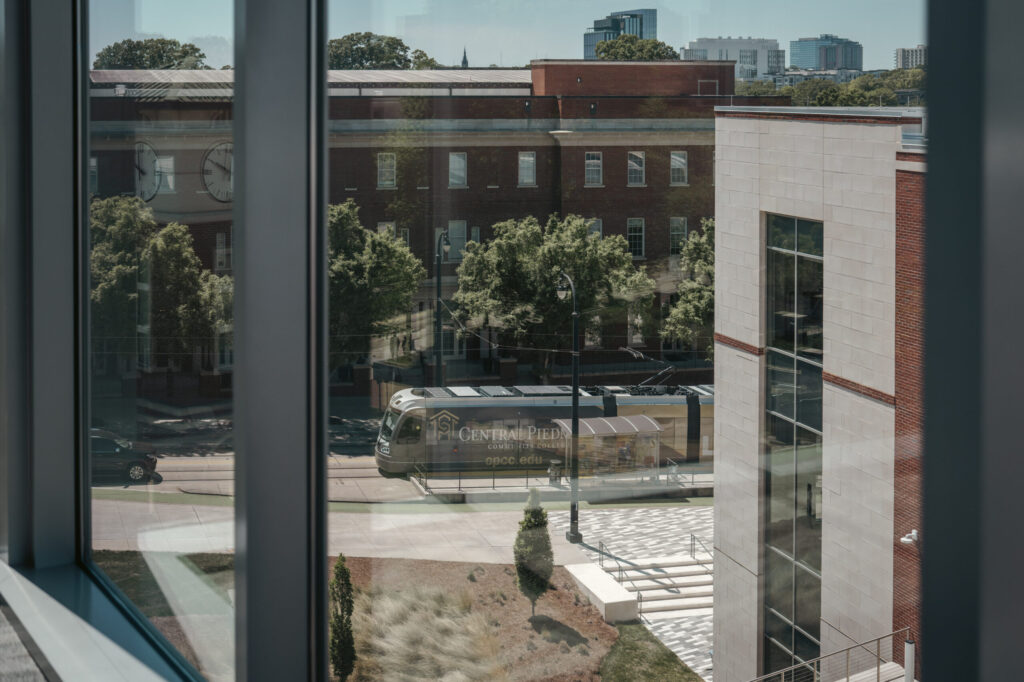
Because as her 10-year anniversary approaches, she’s one of Charlotte’s longest-serving leaders. Because CPCC has grown to more than 58,000 “unduplicated” students this academic year. Because the city surrounding her has jumped from about 820,000 residents when she arrived to about 980,000 now. Because CPCC has about 300 degree programs across 14 career fields. Because she’s created partnerships with four-year institutions that have helped build staircases to the future for working-class kids who might never have considered college. Because the physical landscape has transformed, too — most visibly with the $113.4 million Parr Center on the central campus, a four-story, sunlight-filled student center with a library and a cafeteria that offers wall-window views of the skyline.
In a city that prioritized economic mobility for the better part of the past decade, CPCC under Deitemeyer’s leadership has become one of the main slingshots for people from disadvantaged backgrounds.
A credit hour here still costs about $76, and the college has been hyper-focused on pragmatic programs that lead to jobs. That’s made it attractive to Gen Z students who fear that artificial intelligence will gobble up white-collar entry points.
CPCC’s biggest enrollment growth area is skilled trades — HVAC, plumbing, construction. That’s good news for a city that, according to the Observer, will soon need to fill 5,000 construction jobs to complete the projects created by last year’s $25 billion transportation referendum.
The college has also put significant resources into nursing and other healthcare fields, to help with shortages in those areas. Last fall I talked to Basira Ayazi, a 19-year-old who moved to the U.S. from Afghanistan in 2022 and enrolled in CPCC’s pre-dentistry program. Ayazi told me that students from her generation are “definitely thinking about the future ahead: Is this job going to be there when I graduate? Whether it’s four years or eight years or 12 years, we want to be employed in the future.”
Earlier this spring, a small-business consultant told me, “If I had to look back 20 years from now, my guess is we’re seeing a lot of blue-collar millionaires being made.”
I mentioned that quote to Deitemeyer on our walk around the quad, and she responded without blinking.
“I hope so,” she said. “I’m glad things are catching up. I always said I’d never retire unless the narrative around community college has changed.”
***
The youngest of five siblings, Deitemeyer was born in Florida but moved to Randolph County in North Carolina when she was in fifth grade. By then, her older siblings were out of the house and her closest sister was a year away from college.
Every bio and profile of Deitemeyer lists her as a Florida native, which is true, but her formative years were spent in rural North Carolina.
Her father worked construction jobs in Florida in her first decade, buying worn-out houses and moving his family in while he fixed them up. “I really don’t believe I ever lived in a house that didn’t have sawdust or paint or something going on. My parents were DIY or fixers way before all that was trending.”
Her dad and mom decided to move closer to her grandparents in High Point around 1980. Deitemeyer remembers driving up and seeing an unfinished basement in the ground, but no house. In three months over one summer, her father built the home himself, with the help of his family. It’s still there, about a mile from Caraway Speedway near Asheboro, along a now-paved narrow road with a little pond in the front yard.
“I can do anything you want, Michael,” she told me with a laugh. “I can lay tile. I can hang up trusses. I can fix up a car. But when I think about ‘home,’ that’s what I think about — my dad, because he taught us to be very self-sufficient and independent.”
Two days after she graduated from Southwestern Randolph High in 1986, her parents moved back to Florida. She enrolled in Polk Community College, with plans on becoming a broadcast television star. She completed her associate’s and went on to the University of South Florida. In her first semester there, a teacher suggested that she switch majors.
Why? Because she was about 30 to 40 pounds too heavy to be on television, he told her.
Deitemeyer, a devout Southern Baptist, is always careful and proper with the words she says publicly. She calls this interaction with the teacher an “intersection.” She didn’t argue with him, and didn’t consider how inappropriate the comment was. Instead she thought of her parents: She couldn’t disappoint her mother, and she had to graduate on time. So she went directly to the registrar’s office and changed her major.
After graduation she worked at Tampa College-Lakeland in Florida. She loved talking to prospective students and listening to their life goals. She’d meet a young person who wanted to be a nurse, and she’d ask, “How do you feel about blood? How do you feel about bodily fluids?” If the answers made them queasy, she’d help them find another path.
Four decades later, she’s thankful for that “intersection” because, she says, it gave her a new appreciation for the importance of word choices made by faculty and staff, and how one person’s views can become another person’s armor.
“I believe God was just changing the course of my life,” she says now. “Because what I really wanted to do was tell stories. … Now I get to talk about our amazing faculty and staff, and I’ve become the best storyteller of that. That is the gig of all gigs.”
***
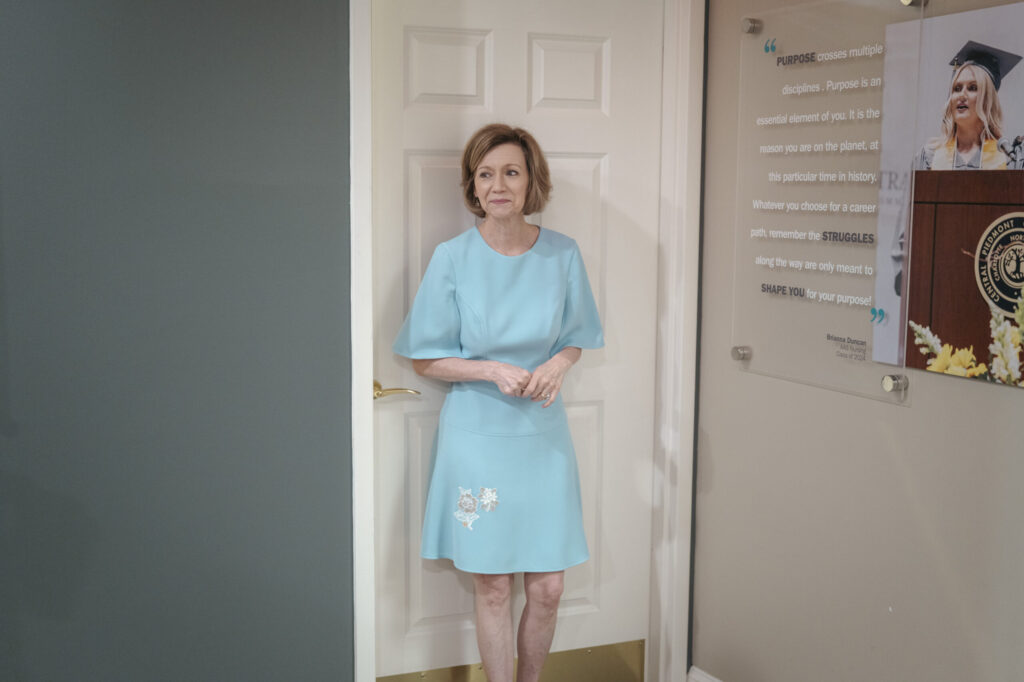
You can see that storytelling instinct on CPCC’s boardroom walls.
When she took over for beloved president Tony Zeiss in 2017, the walls were mostly artwork. She took them down and hung portraits of successful CPCC alums. On one wall, I noticed a portrait of Chris Coleman, a nationally renowned chef and cofounder of Built On Hospitality restaurant group. Next to his portrait was one of Sarah Baucom, cofounder of Girl Tribe, a woman-owned clothing brand that had a prominent display at the Truist Championship merch tent this weekend.
One reason she loves the room is that she sees her own story in the faces of the CPCC students. Her parents couldn’t afford to send her to college, so Polk CC was a lifeline, and now she’s here.
“This,” she told me, “is an unbelievable place that does unbelievable things in people’s lives.”
She’s now worked at five community colleges in her career, two as president. And considering the average tenure of a community college president has dropped to about 4-5 years, the fact that she’ll celebrate her 10th anniversary at CPCC in December is remarkable, according to people in her world.
And it’s especially surprising in a growing and increasingly needy place like Charlotte, where CPCC is the connective tissue for many companies and potential employee pools. Deitemeyer is a consistent face at community events, nurturing partnerships with CMS and the area’s four-year schools and CEOs. CPCC’s dual enrollment program grew to include nearly 6,000 high school students who earn college credits before receiving their diploma. And it’s a top pipeline for UNC Charlotte, sending more than 1,200 students there last year.
“She always says yes,” Charlotte Regional Business Alliance COO Tracy Dodson told me. “Anything we ask of her, she’s there.”
A few weeks ago, I had coffee with Road to Hire CEO Monique Perry-Graves, who was once on a path to become a community college president. Now she leads a nonprofit that works with CPCC and supports and trains kids from Title I schools to land in high-paying careers.
“I am blown away by her ability to navigate many competing stakeholders, from Raleigh to Charlotte and in between — across corporate, state, local — and keep it student-centered,” Perry-Graves told me. “To survive as president and still have the ability to influence and give people a strong education … it’s not common.”
***

Kandi and Gary Deitemeyer were married for 18 years before they had Zoe. She was 18 months old when Kandi landed her first president’s job at College of The Albemarle, which serves seven counties in the northeastern corner of North Carolina.
“Eighteen-hundred and sixty-two square miles,” Deitemeyer tells me of the college’s rural footprint. “I still remember that number.”
Ten months after moving to Elizabeth City, Zoe got the leukemia diagnosis. Gary, who Kandi calls the family architect and engineer, wore grooves in the pavement going back and forth, 55 miles each way, to The Children’s Hospital of the King’s Daughters in Norfolk, Virginia. Her treatments lasted three years. Like many parents in their situation, Kandi and Gary got involved with local organizations that helped kids with cancer. They held fundraisers and dinners and, as Deitemeyer puts it, “We did tell our story.”
That came with benefits and drawbacks. Yes, they quickly developed a network and a support system in an unfamiliar city. But as years wore on, Kandi began to feel like she was telling a story that wasn’t hers to tell. Zoe had grown to love dancing, and was good at it. So when the CPCC job opened in early 2016, Deitemeyer saw it as a “once-in-a-lifetime opportunity.” When she was named a finalist, the whole family came to town to visit, and Zoe seemed to love the activity of the city.
“Central Piedmont was always the crown jewel. It still is … and I believe that to my core,” she says. More than that, though, “It was an opportunity for us to turn the page, and I don’t want to say become anonymous, but to not be that family that had the kid that had cancer.”
Her predecessor, Zeiss, had been president for 23 years. He dressed up in costume to give tours of Charlotte’s history. He was as much a character of the campus as he was the president. Deitemeyer wanted to maintain a low profile, despite her high-profile position.
That’s not to say she doesn’t get out. If you’ve ever attended a major dinner or jobs announcement, she’s there, often having more intimate conversations and wallflying. She’s a skilled public speaker and can deliver a speech on short notice, as Dodson told me. But she’s never competing for attention. She’s never on social media, and rarely sits for interviews. Instead she focuses on honing the college’s strengths and growing alongside the community. Even in the 2.5 hours we spent together across two personal interviews for this story, she tried several times to shift the attention to her staff and students.
It’s hard to argue with the results. CPCC has seen five straight years of enrollment growth since the pandemic. She’s raised the college’s foundation holdings from $45 million in 2017 to $105 million today. She’s transformed the heart of the main campus in capital improvements.
But the successes have only raised her profile.
***
Around lunchtime on Wednesday this past week, a dozen or so protesters gathered along Elizabeth Avenue, handing out tacos during a “walk-out.” They asked passersby to join them as they shouted, “This community college is trying to build a Cop City with your taxpayer dollars.”
They were referring to the $118 million public safety training facility being built on 37 acres in Matthews, partially on land the college already owned at its Levine Campus, partially on land donated by Hendrick Automotive Group. When finished, the facility will train and serve police, fire, medics, and other departments. It’ll include, as The Charlotte Ledger noted last month, drone training, indoor firing ranges, an urban streetscape mimicking banks and convenience stores and hospitals and schools, along with a driving course for people to learn how to drive emergency vehicles.
The land’s been cleared and construction will start as soon as permitting is complete, CPCC says.
But the activists along Elizabeth Avenue on Wednesday don’t want it. They liken it to the police training center in Atlanta, where activists occupying a forest were met with a police raid that left one demonstrator shot and killed, and where dozens of protesters faced domestic terrorism charges. Social media pages for the organizers of the Charlotte protests have taken a more personal turn, sharing Deitemeyer’s address and her voting record. The demonstrators have shown up to board meetings and contractors’ offices with signs and chants. They even released live crickets last year at a Mecklenburg County commissioners meeting.
That’s why, on our walk around campus, Deitemeyer had the security detail she didn’t want to discuss.
She is happy to, however, defend the training center as a logical project for the community college, and a meaningful step forward for Charlotte. The idea was born several years ago, she told me, after public safety sector leaders mentioned to her that they didn’t have the training resources they needed in Mecklenburg County. Mecklenburg’s main first-responder training facility at the moment is off Shopton Road. It opened nearly 50 years ago, in 1977, the Ledger reported. Meanwhile, some branches of emergency services are being trained in places outside of Mecklenburg County.
That’s taxing on their time and morale, Deitemeyer and many officials believe.
“Our folks shouldn’t have to leave our district to go get the best training possible,” Deitemeyer told me. “We’re building the most comprehensive training facility possible … That is a testament to the people who are in service in fire and law enforcement, paramedic, etcetera, who know what they need in order to be the best at what they do.
“And isn’t that what we want as a community?”
The facility will also serve CATS and solid waste drivers learning to handle large vehicles, Deitemeyer says, and will include mental health programs for first responders, who have higher suicide rates than the general population.
The project hasn’t only been an activist fight. It’s funded overwhelmingly with Mecklenburg County tax dollars — roughly $116 million of the $118 million total — and a transparency lawsuit filed last year alleged that CPCC hadn’t been forthcoming with public records related to its planning, and that two residents asking questions had been banned from campus. The college settled that suit in June 2025, agreeing to improve its public records practices.
Public safety has also climbed on Charlotte’s list of priorities. New CMPD chief Estella Patterson has made filling vacancies a top goal. City manager Marcus Jones this past Monday proposed a budget with a 10 percent raise for CMPD officers and a 7 percent raise for Charlotte Fire, funded by a property tax increase dedicated to public safety. That will mean more officers who need more training.
Deitemeyer grew up in a house that chose its words carefully — “there was no deficit language,” she says — and her career has been about championing community colleges and the working-class people who attend them. The Community Lifeline project, as CPCC calls it, is nothing more than an extension of that. And the more questions I asked about it, the more direct she got.
“I’m not naive that there are people who have a different point of view, but I believe this is the right project at the right time for our community, and the college is the right partner to get it done,” she told me. “It’s past due. It’s not like we haven’t been doing law enforcement training or all this other training for 50-plus years.”
And later, after our walk around campus, she added: “I think I’ve proven in my leadership that if someone wants to have a conversation and a reasonable dialogue about something, I’ve been very open to do that. … We are great at listening and hearing, but not with people who don’t want to have a constructive conversation.”
Last week, I talked with Robert Dawkins, a longtime activist who’s sort of a dean of organizing in Charlotte. (In fact, he has a master’s degree in social justice.) He’s a regular needle in the side of business and political leaders, and he’s never shied away from a conflict. But when we got to the subject of CPCC’s training center in Matthews, near where he lives, he said he had no arrows to fire.
“I try not to piss off the young advocate. I try to stay out of their business and let them do it,” he said. “But it’s not Cop City. … I need for folks to be able to be trained in being police officers, and if the facility they got is old and you’re able to build a new one, that’s fine.
“Sometimes us on the activist side will buy into giving you a narrative, because we need to fire folks up. I don’t mind narratives, but the (Cop City) narrative don’t make sense.”
***
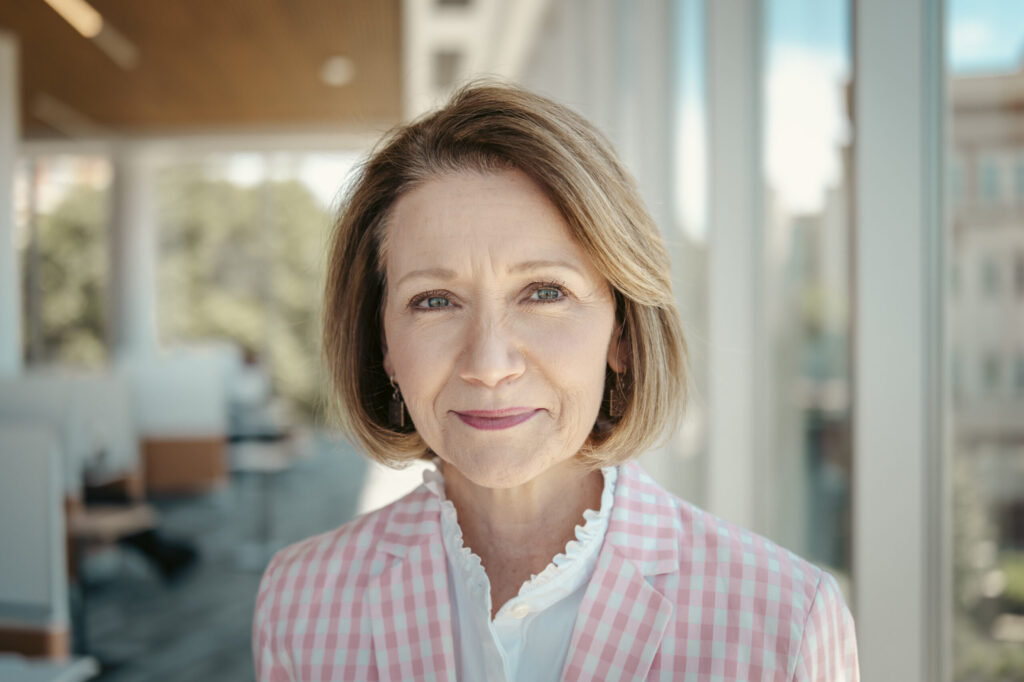
A few days after that late night drive into Charlotte 10 years ago, Deitemeyer and her family went to their first Christmas service at Hickory Grove Baptist Church. They’ve been members there ever since.
No matter how many … opportunities … she faces, or how many transformations she makes, Deitemeyer is most at ease talking about her faith. She believes everything she’s done — going back to hanging trusses in Randolph County and that “intersection” with the college teacher to this week’s graduation ceremony — is part of God’s lane for her, she says.
At one point in our conversations, I asked Deitemeyer who she leans on. She wouldn’t name anyone directly, saying, “I’m a ‘Don’t tell your stuff’ kind of girl,” but added:
“There’s a couple of people I would call, but it’s a short list. And you know that list is shorter, because it’s been a little longer over the years. It only takes one time to not be on the list.”
The list starts, of course, with the two people she lives with. Toward the end of our first conversation, I asked Dr. D about Gary. She said he knew about our interview and that, “he’s probably been praying for us for the past hour.”
The little girl in the back seat on that drive, meanwhile, will turn 18 years old this summer. That means Kandi and Gary have had 18 years of marriage without Zoe, and 18 years with her. So the college president, who’s 57 and plans to live to be 100, is considering what the next 18 years might bring.
“I look back on that and think about what I was available for,” she told me. “I didn’t want to be the mom that sat in the chair at the last minute and then looked at her on the stage and went, I’m here. I wanted to try to be as present as possible.”
Zoe, you should know, has thrived in Charlotte. She graduated early and is spending the year as part of Charlotte Ballet’s pre-professional program. Zoe’s ultimate goal is to be a nurse practitioner at The Children’s Hospital of the King’s Daughters in Norfolk, which saved her life. She’s been accepted into a four-year institution, but she hopes to do another round with the Ballet next year. If she does, she’ll also take classes at “the best community college in the country,” Deitemeyer says.
If that happens, Zoe could be sitting in an auditorium this August while Deitemeyer reveals a new vision statement to the college. Deitemeyer read it to me but asked me not to share it yet. I think I’m safe in saying it doesn’t include the words “resilient” or “challenges.” It certainly includes the word “transformative.”
That’s all to come. But first, this week, Deitemeyer will be on stage for her favorite event of each semester. The school will graduate 1,843 students on Thursday at Bojangles Coliseum. They have an average GPA of 3.41.
Deitemeyer will, as she has during each ceremony for 10 years, be on stage to shake every hand — one community college graduate to another.
Editor’s note: We corrected this piece to reflect that Deitemeyer has only one brother.