
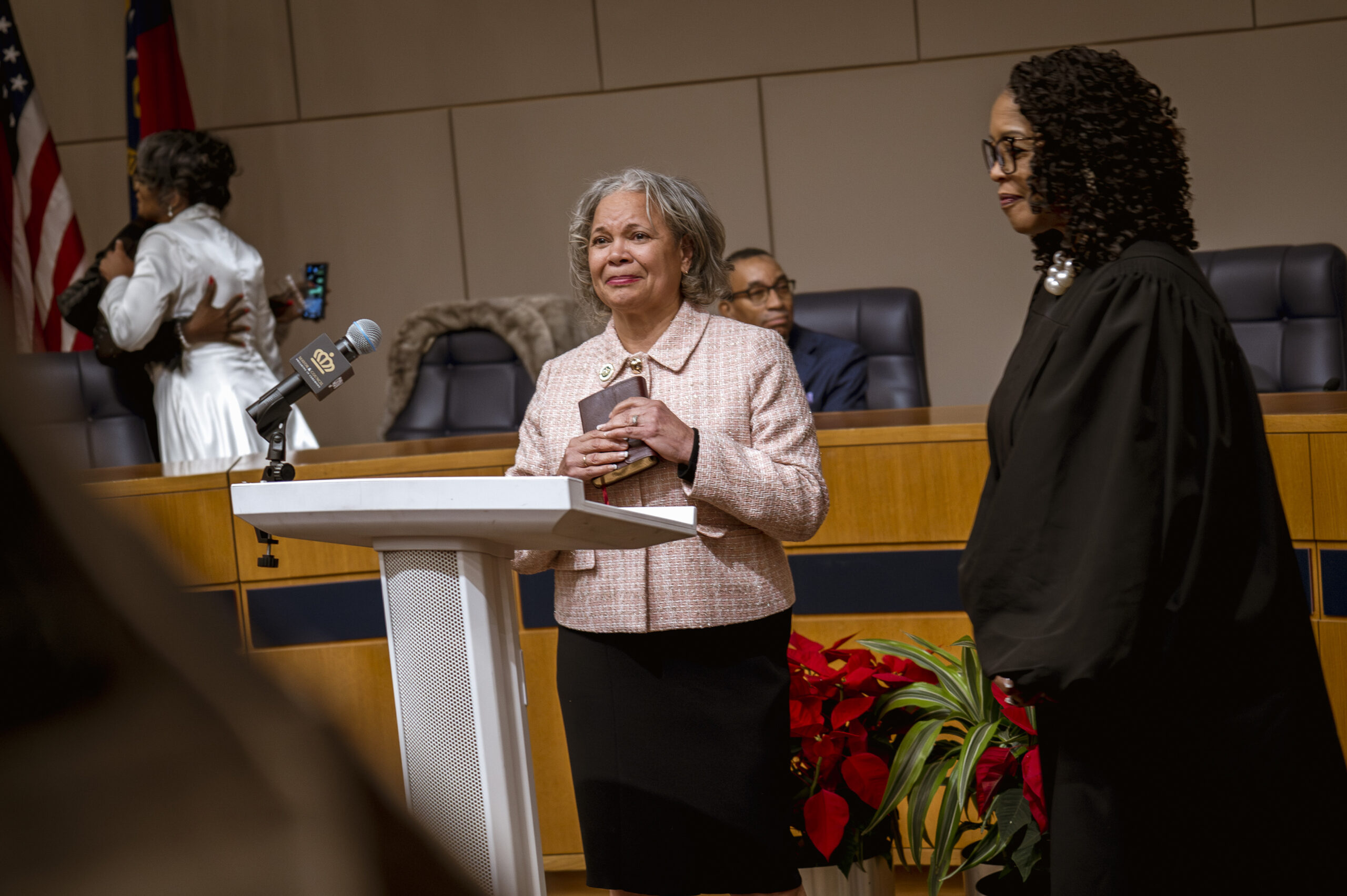
Vi Lyles tried to leave Charlotte as soon as she got here.
She arrived at Queens College in the fall of 1970, not long after the all-women’s school desegregated. Her white classmates dripped with wealth she’d never experienced as the daughter of a blue-collar tradesman in Columbia, South Carolina. At a mixer with Davidson College, Lyles got paired with a “liberal white guy” because Davidson didn’t have a Black man to match with her. She eventually became friends with the guy, but the loaded assumptions felt demeaning.
So she took a Greyhound bus home to Columbia. Her mother put her right back on it.
“She said to me, very clearly, ‘We don’t quit,’” Lyles told me last summer.
More than a half-century later, Lyles announced on Thursday that she’s finally, for real, done. She’ll resign as Charlotte’s mayor on June 30 after more than eight years in the office — and the better part of 40 years as either a city staffer or elected official. City council will select an interim mayor to finish her term, which ends in November 2027. A swarm of eager full-term replacements will likely begin launching their 2027 candidacies this month.
It all made for quite a rainy Thursday morning here.
Lyles said in a statement she was proud of the city’s progress, and that she wants to spend time with her grandchildren: “Like many of us, I have missed some moments with them and intend not to miss anymore!” The statement sounded Very Vi. I could hear her saying it, which was refreshing in an era of AI-polished statements. Her final decision to step down, people close to her told me on Thursday, was her own.
That’s true, if oversimplified. The full story is hers to tell whenever she’s ready, which could be never. Internet theories of course rained down yesterday, with folks taking grains of truth and turning them into conspiracies about why she stepped down. Far as I can tell, presumptions of ill intent are baseless.
I’ve talked to Lyles, 73, dozens of times in the past year and know lots of people who love her. She has, in recent months, become a sensitive and uncomfortable topic. When she makes public speeches and stumbles over words, her closest allies swallow hard and look down. She’s been absent from zoning meetings, as WFAE’s Steve Harrison reported. Now she’s facing a series of complex issues — in particular Interstate 77 toll roads and data centers — and hasn’t taken a strong and decisive leadership position on them.
Naturally, that leads to questions about why she ran for re-election last fall, only to resign six months later. But part of the answer goes back to that Greyhound bus. She’s a 73-year-old civil rights trailblazer who lost her first husband to suicide and her second to cancer — and still became mayor after that. And while yes, she mixes up names and dates these days, I think the more telling detail now is that she has high-resolution memories of her mother telling her, “We don’t quit.”
Lyles ran for re-election last year because projects she’d spent years working on were close to coming to fruition: the one-cent transportation referendum, the Housing Impact Fund’s $100 million raise, and any of the cascade of economic development announcements of the past six months. She wanted to see them through to the celebrations. The transportation package, in particular, she saw as part of her legacy. Many of her predecessors had defining achievements: Pat McCrory had the Blue Line; Anthony Foxx had the streetcar; Richard Vinroot brought the Panthers to town.
A month and a half after she filed for re-election, Iryna Zarutska was murdered on the light rail, spurring a national firestorm. Lyles, a grandmother of four, received death threats and began to travel everywhere with security. The question then wasn’t whether Lyles would win another term; it was more about why she would even want to.
In December 2008, McCrory, Charlotte’s longest-serving mayor, announced he wouldn’t run for re-election in 2009 by saying, “My heart wants to stay in this job forever, but my soul knows it’s time to move on.”
In April 2013, Foxx issued an early-morning statement on a Friday to say he wouldn’t run again, and told a reporter that night that, “I never intended to be mayor for life. … You come in with your priorities and you work hard to advance them. The city actually becomes a better, stronger place when there are more transitions, new ideas, and people come in and put fresh eyes on this great city of ours.”
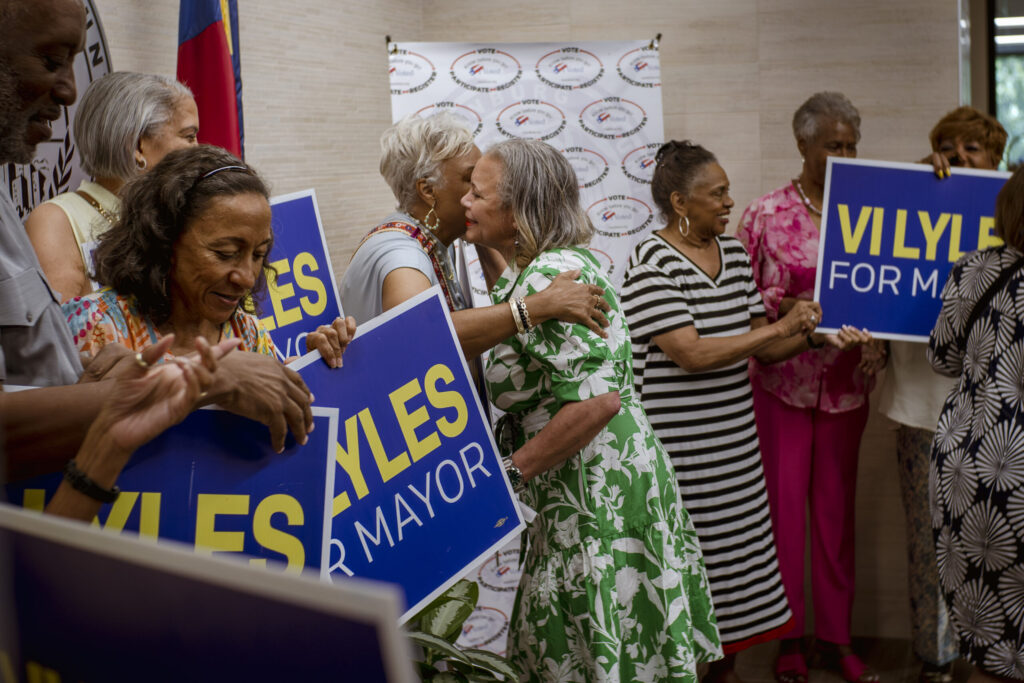
Lyles has, no matter your views on her, made a strong case to be considered among the most important characters in Charlotte’s history. She’s rebuilt bridges with Raleigh that were in flames when she took office. She’s championed efforts that have brought in billions for affordable housing and equity. Along the way she became politically untouchable, winning each re-election bid by more than 30 percentage points. Only McCrory served more terms, and he joined the chorus of praise for her on Thursday, despite being from the opposing political party.
I was in an interview on Thursday morning when my phone buzzed with the news. I thought back to November 7, 2017, the night Lyles was first elected. She told supporters at the Park Expo in east Charlotte that night, “You’ve proven that a woman whose father didn’t graduate from high school can become this city’s first female African-American mayor.” And now, exactly eight years and six months later, she was saying, “It is time for the next phase of my life, to spend more time with my grandchildren and for someone new to lead us forward.”
Even trailblazers run out of tread eventually.
The useful information for Charlotte citizens is that we operate under a strong-manager form of government, which means the city manager and his staff keep things like trash pickup and water running, no matter what happens on the political front. The structure is one of Charlotte’s safety nets. In early January 2025, I watched as my colleagues in Richmond, Virginia, which has a strong-mayor form of government, dealt with a water crisis that occurred in the first days of a mayoral transition — and let me tell you, it was a hot mess.
Charlotte is fine. We’ve been through early mayoral departures. In summer 2013, Foxx resigned to become the U.S. Transportation Secretary. In spring 2014, Patrick Cannon was arrested on corruption charges. Both led to breathless headlines questioning how the city would survive. Since then, all Charlotte’s done is add about 150,000 new residents, a professional soccer team, a light rail line to University City, a med school and a LaMelo. We’ve even elevated and ruined the dab.
Point being, Charlotte is, to an extent, a machine.
Still, Lyles’ departure turns up the house lights for a critical leadership scene change. She oversaw an unprecedented decade of growth in Charlotte, and Newton’s laws of politics are raising a reaction of people who want to tap the growth brakes.
Lyles is a Democrat, but despite what you might read on social media, she’s as far from a “leftist” as you might find these days. She’s a process person, and that can frustrate the hell out of activists and eager young colleagues. But eventually they’ve come to appreciate her methodical approach.
Not long after Lyles’ resignation announcement, former council member Braxton Winston — who ascended to office after being an activist in the streets — wrote about how Lyles helped him use his passion for change more effectively. Winston was part of a wave of millennial council members elected in 2017, the same year Lyles became mayor. A few weeks ago, Winston and I, both in our 40s now, were discussing the city and its ups and downs, when he said to me, “Do you sometimes feel like we’re just getting old?”
Not sure I’ve ever agreed with Braxton faster.
I thought about that question again on Thursday. Vi Lyles is 73, and no matter what you think of her choices and politics, she gave nearly all of her professional life to the Charlotte franchise. After being elected for a fifth term, time and age and health and family only made processing a new round of Charlotte controversies more difficult for her. She started missing shots she used to hit, while an impatient bunch of hopeful successors snuck closer to the rim for the rebound.
It’s no wonder she’s ready to cheer Charlotte on from the stands. And 56 years after that Greyhound ride back to the city she tried to leave, maybe we should just pass her a foam finger.
Editor’s note: We corrected this story to say that last year’s transportation referendum was a one-cent sales tax, not a half-cent.