
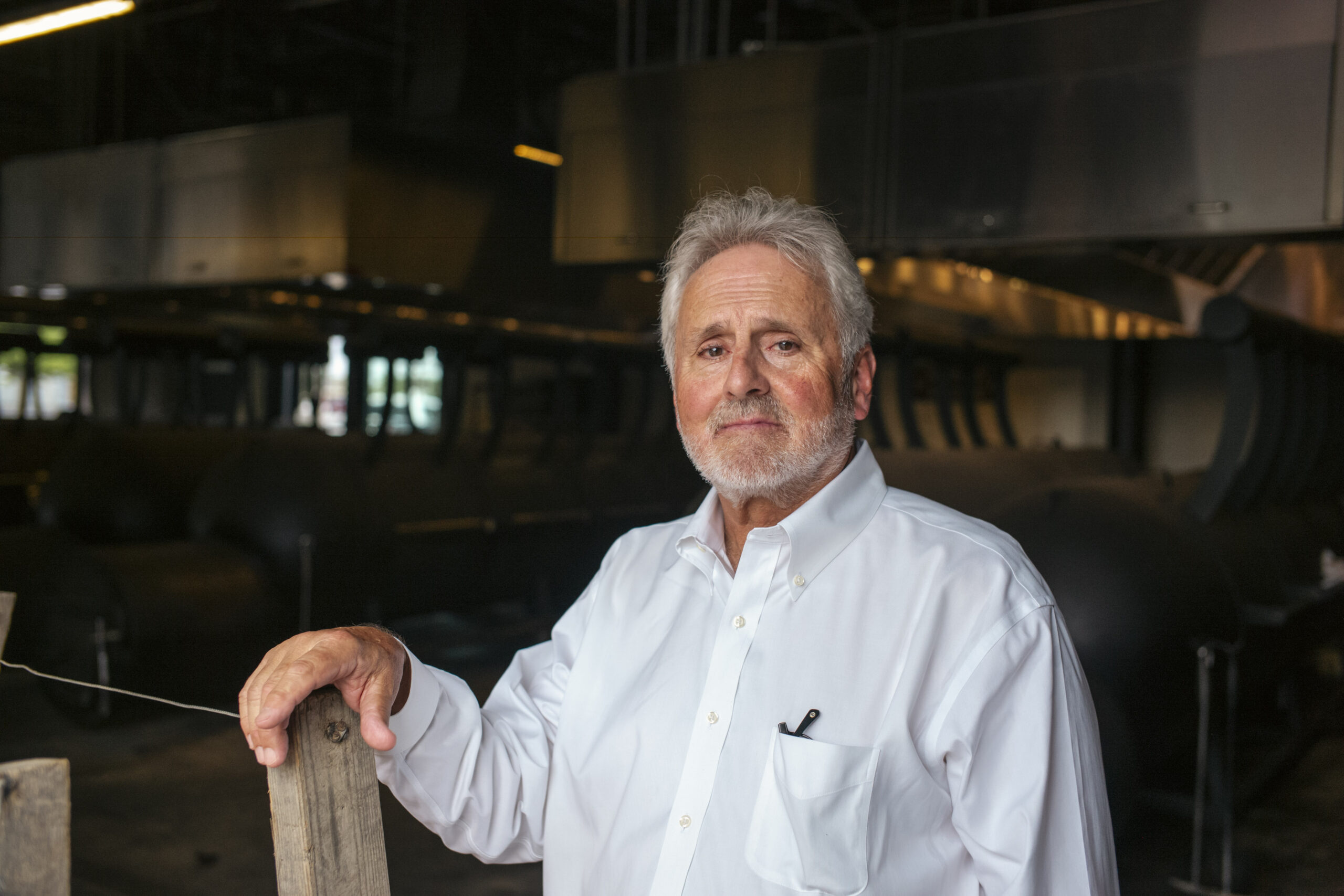
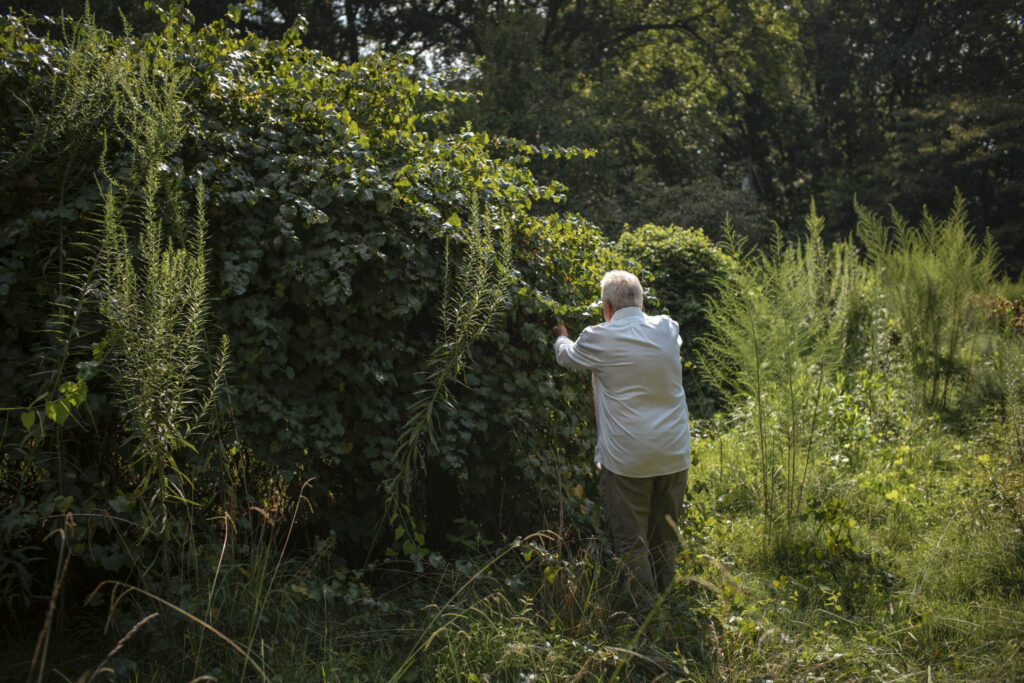
The squatters have been here. Jim Noble is walking us through the 13 acres off of Freedom Drive, out west where the road is still two lanes, where he wants to build 32 houses for people who have nowhere to live, when he hears a sign of trouble.
“What’s that? Water? You hear that?”
He looks to his right and sees water gushing from the foundation of one of the three houses still standing on the property. Victor Nicholson, the executive director of Noble’s Dream Center initiative, pushes through a briar patch to the front door. It’s open, and Nicholson sees that the stairs have become a waterfall. He turns on a flashlight and carefully climbs the staircase to find a busted pipe.
“You think somebody did it maliciously?” Noble asks.
“It’s all the way up in the attic,” Nicholson says. “So not sure.”
These types of discoveries have been common since the Charlotte Mecklenburg Dream Center bought the property in spring 2025. The day of closing, Noble says, a younger member of the family that lived on the land for decades was squatting here, pulling copper from the walls and selling what she could on Facebook.
“We offered her to get in the program,” Noble says. “Maybe someday.”
Noble, 71, has spent more than half his life looking into buildings and envisioning restaurants. He now has 16 of them, with names you know — Rooster’s, Noble Smoke, Bossy Beulah’s — between Charlotte and Winston-Salem. He’s easily one of the most successful restaurateurs in North Carolina.
Housing, though, is all new to him.
“I can build a restaurant,” he says, “but I’ve never gone in and taken land and converted it.”
In the next few months, he hopes to break ground on a $30 million campus that will include 32 six-bedroom, six-bathroom houses, a teaching kitchen, a woodworking shop, gardens, and room for between 200 and 500 people a year coming out of homelessness or addiction. They would go through a 12-month Christian discipleship program, because the Dream Center is a ministry and Noble is the pastor, and because he believes faith is what pulled his own family through its darkest year.
Some people object to the discipleship condition. Some object to the man setting it. In 2015, he joined nearly 100 faith and business leaders in signing a letter urging the city to vote down a nondiscrimination ordinance, the one that eventually triggered the legislature into enacting the HB2 law upon our state.
Noble hasn’t changed his mind. Not on religion. Not on the ordinance. When the Dream Center asked the city for $2 million toward the campus last fall, council member LaWana Mayfield said there was “no version of any alternative universe” in which she’d support any project connected to him. Council approved the money anyway, with council member Malcolm Graham saying, “Putting that aside, this is what we need.”
The need has only increased in the past year. For all the attention given to highways and other controversies in Charlotte this year, one unsettling trend has worsened, with little awareness.
The number of people experiencing homelessness in Mecklenburg County has skyrocketed from 2,289 in May to 3,023 in September, a 32% jump in four months, according to the Charlotte-Mecklenburg Housing Data snapshot. That “one number” is about what it was in the summer of 2020, during the pandemic, when hundreds of people created a “tent city” just north of Uptown. In fact, the “chronically homeless” population — those who’ve been homeless for more than a year — is far higher today (883) than during that first COVID summer (525).
So the city has put public money behind a polarizing restaurateur to house some of its most vulnerable residents. The people who object to him feel their objections deeply. The people who support him believe in him deeply.
I’ve spent years caught between the reasons to love Jim Noble and the reasons to protest him. Hell, when I was an undergrad at High Point University in the late 1990s, we held fraternity formals at his first restaurant, a fine-dining establishment that used to sit on Main Street there. Today, I know plenty of people who will never set foot in one of his restaurants. I know others who say the food’s too good to pass up, and others who defend him as one of the most generous business leaders in Charlotte.
For full transparency, my wife worked for a firm that handled Noble’s public relations for several years. She doesn’t now, and at my previous jobs I stayed out of coverage of him.
I spent about five hours with Noble this summer, including a sit-down interview in his office, a tour of his new bakery, and the Freedom Drive hike into the woods, in hopes of providing a more complete portrait.
All of … that … is on my mind as we stand next to the house with the busted pipe. Nicholson calls the plumber, and then we walk toward a shed where the previous owner kept plumbing and woodworking equipment. The lock’s been cut open, but nobody’s inside.
As we head back toward the truck, Noble says something that’s hard to argue with.
“You may not agree with our faith, maybe, but you want to help people get off the street, don’t you?” Noble says. “Don’t you want to feed people? Everybody wants to do that.”
***
The boy Jim Noble
Long before he was one of the most successful restaurateurs in one of the fastest-growing cities in America, Jim Noble was a little boy whose grandparents always had ham biscuits waiting for him at their home in High Point. He remembers that whenever he left their house, his great-grandfather demanded a kiss on the cheek.
“He had the prickliest face,” Noble says now.
His grandfather worked for a furniture company, caning chairs. He built a floral shop for his wife, Jim’s grandmother, on the property. Just behind that building they had a garden near a big oak tree. A friend gave him a German Johnson tomato plant in 1956, and he planted it that year, then saved the seeds to grow more every year after that. Late in life, he lost the seeds, but Jim, now grown, had saved some from old stock.
Most of their meals were vegetables back then: sliced tomatoes, cucumbers, butter beans, whatever they grew.
“We think we’ve invented something with farm to table,” Jim tells me. “That’s what humanity has done forever.”
On his father’s side, Jim’s grandfather had polio and a stutter when he was a kid. The story goes that he went to a meeting with a Pentecostal preacher when he was 15 or 16, back in the early 1900s, and the preacher “healed” him.
Jim’s father joined the Navy at the end of World War II, then came home to join his brother selling furniture. One day they were hitchhiking, and Jim’s father was rolling a cigarette, when a car flew by and blew the tobacco everywhere. In frustration, Jim’s dad said, “I ain’t gonna be poor anymore. I’m tired of this.”
“Sometimes in life, we have to make up our mind,” Jim tells me. “We’re going to change what we’re doing. We’re just going to have to. Too many people think everything happens, and they don’t have any say, (as if) they have no input in what the outcome of their life is. And actually, we have most all of it.”
Jim went to college at N.C. State and opened a bar with a few friends called Crazy Zack’s. He’d work until sunrise and sleep during the day. The year he was supposed to graduate, he came home with a 0.8 grade point average. His father looked at him and asked what happened, and Jim said, “I thought I was going to do better.” He graduated the following semester, in December 1977.
He traveled and sold furniture for his father and uncle after graduation, but hated it. “That’s about the most boring thing you can do is check into the hotel alone,” Jim says.
One Christmas, his family gave him a wok, and he cooked meals on that. Then he spent $40 on a copy of Julia Child’s Mastering the Art of French Cooking. He made one dinner of chicken fricassee, and said, “I never tasted food like this.”
He traveled to California, where his sister lived, and toured Napa Valley. He noticed people pairing food with wine, something nobody in North Carolina really did back then, and said to himself, “That’s it. That’s what I’m going after.” To this day, he says, he runs a food and wine business that happens to sell beer and cocktails.
He opened his first restaurant, J. Basul Noble, in 1983, a French restaurant in a furniture city. People said it would fail, but it didn’t. He rode the wave of the twice-a-year furniture market, which brought people all over the world. It became a special-occasion place for the people of High Point, where the best local restaurants were a hot dog joint called the Dog House, a diner called Alex’s House, and a Sir Pizza.
One secret was the bread, which he bought from a French couple in Greensboro every day. They closed and moved to Myrtle Beach without telling anyone. Noble made a quick call and took over the lease. Their baker, a Frenchman from Nice named Jacques, connected Noble with Olivier Froh, who sold French baking machines in Princeton, New Jersey. Three years later he expanded the restaurant into the downstairs space, and started baking bread in house.
Noble and Froh struck up a friendship. Froh’s family ran a bakery in Paris, and he moved to the United States in the early 1980s to sell ovens for Bongard, a company in the Alsace region of France. Noble bought small things from him over the years, sheeters and mixers, but kept telling Froh that one day he’d open a commercial bakery and place a big order.
Four decades and a lot of life passed before he made that call.
***
The baker Jim Noble
“Olivier!” Noble said to Olivier Froh in September 2025, after five successful years running Copain in a closet of a bakery in SouthPark. Several large clients, including Whole Foods, had inquired about buying and selling his bread for years, but he always had to turn them away because they didn’t have space.
“How long have we been talking about this bakery?” Noble asked Froh.
“Oh, Jim,” Froh replied in a French accent from his home in New Jersey, “forty years?”
“Well, we just signed the lease.”
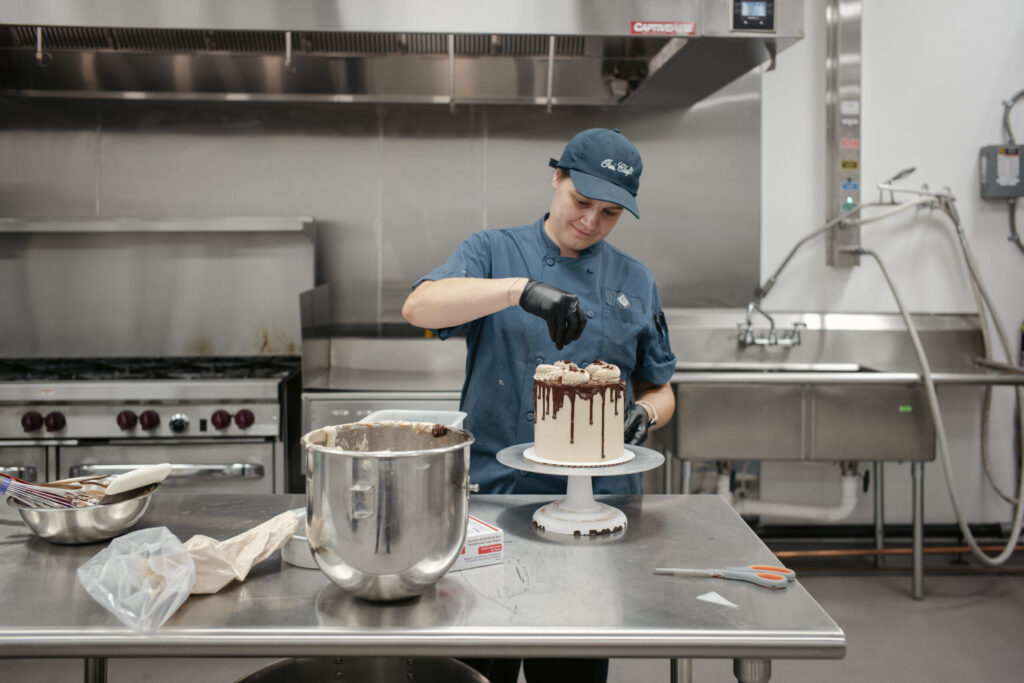
Noble found an 11,000-square-foot building on North Church Street at 24th, a former auto-parts shop. Froh got the floorplans and designed the bakery. When the equipment arrived this past April, he flew to Charlotte and spent three weeks here to help set it up.
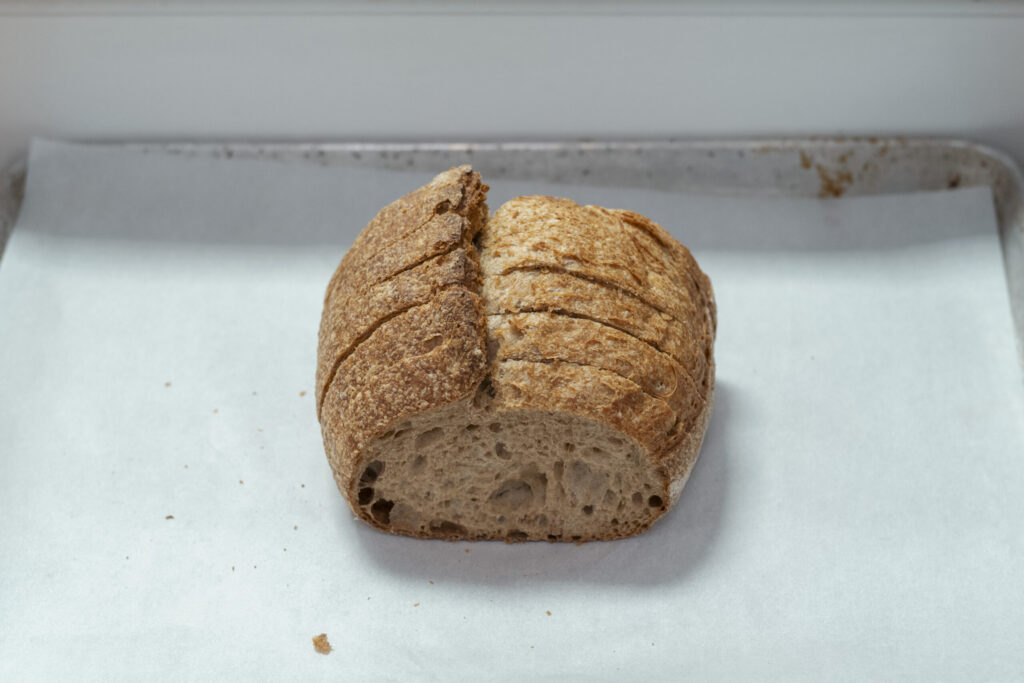
Every piece of bread in Noble’s restaurants, down to the pizza dough at The Jimmy and the buns at Bossy Beulah’s, now comes from here. They have about 13 other accounts where you can find their baked goods, including Maman, the new “New York” coffee shop in Plaza Midwood.
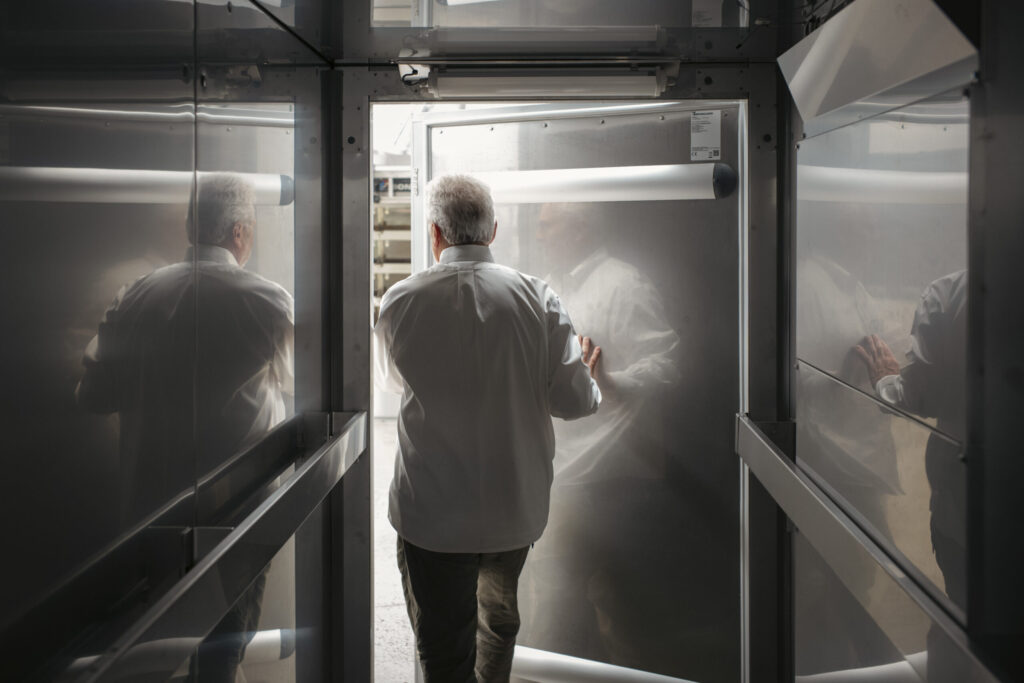
The bakery has a plug-in dock that rises and falls to meet a truck of any size, a dry storage area with 50-pound flour bags that staff lifts by hand, heavy-duty insulation and a modern ventilation system to help control the temperatures and humidity. The walk-in coolers and freezers have empty shelves for growth. It has a 300-quart spiral mixer that costs about the same as a car.
But the oven room is where Noble, now 40 years in the food business, breaks into his biggest smile. Here he has two Bongard steam-injected deck ovens, the largest the company makes.
“This is my dream,” he says.
When the building opened in late July and the first loaf came out, Noble opened a bottle of Pol Roger Winston Churchill champagne with about 20 of his team members to celebrate with him.
“You’re only gonna get that first loaf out one time,” he says.
***
The father Jim Noble
About two weeks before he got married in the late 1980s, he almost backed out. He’d been a bar owner who built the fanciest restaurant in an unfancy furniture town. He was full of himself.
“I was a scoundrel,” he tells me.
He told his father he was having second thoughts, and his dad said, “I can’t help you. You better go talk to a pastor or somebody.”
He said his vows and, later that year, he and Karen had their first child, Margot. The family life suited him enough that he stopped worrying about his old fraternity brothers calling him “whipped.”
After he opened Noble’s in Winston-Salem in 1992, Karen became pregnant again. Olivia was born in 1993. She was healthy for two weeks, then got sick. They took her to Brenner Children’s Hospital for tests. Somewhere in the weeks that followed, Jim remembers that Koerner Rombauer, the Napa winemaker, flew in to meet with him about his wine program. It was the kind of visit a young chef in Winston-Salem, North Carolina, waits years for. Noble barely saw him because he was at the hospital.
Doctors diagnosed Olivia with encephalitis, an inflammation of the brain. They spent 11 months traveling the country for treatments. One visit to a UNC doctor changed everything. “They gave us the worst report we ever heard,” Noble tells me.
“What was it?” I ask.
He looks back at me and says, “That if she kicks her feet or smiles again, you enjoy it. That’s all you got.”
On the way back to High Point from Chapel Hill that day, Jim remembers looking over to see Karen kicking the dashboard of their Chevy Suburban.
“I’m sure we’ve all gone through some trauma before,” he tells me, “but when something happens that’s really bad, it just, it just almost pulls from your inside, and makes your heart sick.”
“We didn’t have anything, a place to turn,” he adds.
Then someone dropped books in their mailbox. Jim opened one, and in his reading of it the message was: “No matter what you go through, I guarantee God’s got a promise to get you through it.”
“And I’m like, ‘Wait a minute, I’ve been in church all my life. If this is true … I can go to the Bible for myself and find out what it says,’ and it blew me away.”
He devoured the Bible after that. “And all of a sudden,” he says, “there’s hope for her. There’s hope for everybody.”
Around then a preacher he wanted to hear was coming to speak at St. Peter’s, a Black church in Winston-Salem. He and Karen went to see him, and they never left. They were one of about 20 white families in the congregation at the time, and the pastor, Bishop J.C. Hash, is still his pastor more than 30 years later. Noble calls him his spiritual father.
Jim and Karen conferred with Hash before they started their ministry and radio show. They conferred with him before they moved to Charlotte, and again before opening The King’s Kitchen, the nonprofit restaurant that employed unhoused and addicted people, and then returned its profits to the same community.
Jim then watched the rise of modern megachurches — “flat screen, smoke machines, and tight jeans,” as he puts it — and says of them, “I’m not knocking them, but it’s not about us. It’s not about a preacher. It’s about Him and his promises to us.”
He started seeing connections between those promises and the stories he heard growing up, like the one of his father and the tobacco blowing out of his hand while hitchhiking, and he found a message for his ministry that’s very Christian, but also slightly akin to stoicism: God gives you free will, and what you do from there is up to your own mind.
“You may think you have no hope, that there’s no chance for you — and if you do that, you’ll just roll up and put up with being homeless and on drugs and whatever,” Noble says. “But if you really want to change, I tell you, it’ll help you.”
Olivia is now 33 and still lives with her parents.
When I called him on Friday to run over some of the final details for this story, Jim said, “Hold on, I’m walking out the door. I need to say goodbye to Olivia.”
***
The pastor Jim Noble
On September 6, 2012, NPR’s “Here & Now” opened an afternoon segment with the sound of James Taylor singing in the background during the Democratic National Convention in Charlotte.
“We love listening to the rehearsals,” host Robin Young said on air, “but what we love most about covering conventions is getting out and meeting people, and being surprised. … Here in Charlotte, a story about a trendy restaurant raises a lot of questions about separation of church and state and the role of government in charities.”
She was talking about The King’s Kitchen, which was Karen’s idea. It opened in 2010, hiring people off the street to work. As part of the program, they were required to attend Sunday morning church services and went through faith-based fellowship and training.
Young asked Noble about government’s role in helping solve the homelessness problems in Charlotte, and Noble said, “The church community should be doing a lot of this work. If every church in this town adopted one or two people who are homeless, there wouldn’t be any more homeless people.”
I mention this because in our first conversation this summer, Noble said many of the same lines, the exact same way, that he said to Young in the audio from 2012. He remembers Young asking him, “What happens if somebody’s Muslim?” (She actually said, “someone who doesn’t have the same faith as you,” but the point holds.) And Noble gave me the same response in 2026, nearly word for word, that he gave to her 14 years ago.
“If you come here, all I have is faith in Christ,” Noble says. “And if you don’t have that, then I can’t, I can’t really help there. I mean, I’ll help you; I’ll feed you. But the rest of it’s not going to go along with what you believe. So I really don’t have much help there.”
Before we sat down, I made sure that Noble knew we’d have to talk about everything — the good work and the controversies. In our first conversation, I didn’t even have to ask. He was telling his life story, and then it naturally flowed into the narrative, right after the part where he talked about that NPR interview.
He did indeed sign that letter in 2015, he says. It was drafted by the conservative Christian legal group Alliance Defending Freedom in opposition to the Charlotte nondiscrimination ordinance that would’ve granted people the right to use the bathroom that matched their gender identity. Council rejected the ordinance in 2015, then passed it in 2016. About a month later, the state legislature passed HB2, which mandated that, in public buildings and schools, people use the bathroom that matches the sex listed on their birth certificate. That law put North Carolina in the national cultural crosshairs.
Noble has no regrets about signing the letter. His objection was the bathrooms, the fear behind the whole fight in 2016. In the decade since, though, no evidence has turned up to support it; peer-reviewed studies have found no rise in restroom crimes where transgender people are allowed in, and the people who report being harassed in public restrooms are transgender people themselves.
Noble still insists that he signed the letter back then as a pastor, not a restaurant owner. And the reason he makes the distinction, he says, is that as a business owner he doesn’t discriminate. He’s hired dozens of openly gay employees, and when I ask if he’s ever hired a transgender person, he says, “Well yeah.”
Then he told the story that he often tells, of how his entire front-of-house team at Noble’s in High Point was openly gay, and they were the “best front-of-house around.”
“Do I agree with lifestyles? I don’t agree with my wife all the time, but we sleep good at night,” he tells me now. “Just because you don’t agree with somebody doesn’t mean it’s a war.”
From there, Noble rolled right into his next great controversy, again without me bringing it up. In 2022, he got into a dispute with the business next door to Noble Smoke, Good Life at Enderly Park, over the parking lot between them. Good Life owner Robbie McNair Guzman told media outlets the parking had always been understood as shared; Noble says his lease said the lot was his. That March, the landlord, who owns both parcels, sent Guzman a letter saying parking on both should be treated as common, but then told a TV station that her customers parking there had been a courtesy, not a right. The story exploded. Guzman told reporters then that she lost more than $200,000, forcing her to close the business. She’s since reopened in Lower South End, miles away from him. (I didn’t interview Guzman for this story; her accounts were widely reported at the time.)
It wasn’t until months later, Noble says, that the landlord admitted to him that he’d told the other business they could park there. Noble says he responded, “Why didn’t you tell me?” Noble says he never wished ill upon anyone. But if anybody lost in the situation, at least financially, it was not him.
Noble knows that today, many people in town “think I’m just the most racial bigot.”
He insists he’s not, and says his actions and work, and the workforce he’s built through the years, all prove it. Indeed, if you go to his restaurants, the employees are diverse and, in the restaurant world where turnover is high, his teams are strikingly consistent.
The past 10 years of conversations around Jim Noble all boiled in the same pot last year when he asked the city for $2 million in Housing Trust Fund money to put toward the campus. He plans to fundraise for the rest of the $30 million project.
Mayfield, a Black woman who was the city’s first openly gay council member, told council in October 2025 that the Black-owned event venue “was run out because of this one businessman.” Then she voiced concerns about how the Dream Center focuses on people addicted to drugs and alcohol, while others “are not getting access to certain things, because they didn’t fit in certain boxes.” Other council members asked about how residents’ religious freedom would be protected.
In our conversations, I ask Noble plainly: “Say somebody is in a homeless situation and they come through the program, they’re hard workers, and if they don’t take to the religion the way you did, there’s still a place for them there?”
“I can’t make anyone go,” he says sharply. “All I can do is say, here’s an idea.”
“I’m not asking accusatory,” I respond, according to the tape. “I’m just trying to understand who gets helped.”
“Anybody that wants to make a change in their life,” he says, before adding, “and they want to get an opportunity for God to help them through that through discipleship. That’s the answer we have.”
The Dream Center, he notes, isn’t long-term housing. The program is 12 months, then provides a second year where people work while staying connected to the center, then a third year where they transition completely out into living on their own.
“If we have a program, but people end up in there for five and 10 years, we ain’t doing something right,” he says. “I’m not the answer to the problem; I’m just a messenger.”
***
The chef Jim Noble
One thing is for sure: In the 10 years since Noble became one of Charlotte’s most contentious characters, his business has taken off.
He plans to launch his 17th and 18th restaurants early next year, when Rooster’s and Copain open in Davidson. And just two weeks ago he announced that he’ll open a Rooster’s next summer at the redeveloped Green Park Inn in Blowing Rock.
Last week was a big one for the Charlotte restaurant scene. Seventeen of our restaurants were noted among the Michelin Guide’s 2026 selections at a ceremony in Nashville, and together they highlight the increasing diversity in our food scene. Counter- kept its star. Lang Van and The Story of Mi Cariño each received a Bib Gourmand for “good quality, good value.”
On the list of 14 “recommended” restaurants were two from Joe and Katy Kindred: Hello, Sailor and Kindred. Joe spent nearly 10 years working under Noble as the head chef at Rooster’s, where he won acclaim as Charlotte Magazine’s chef of the year, before building his own formidable restaurant group with his wife.
Noble didn’t have any spots on the list. In the five hours we spent together, he never said the word Michelin, or James Beard, or any of the other awards that our city aches to receive. Food and service are all that matter to him, he says.
“Being a chef is not really like what it is on TV,” he says. “We’re glorified blue-collar workers.”
He says young people who go to culinary school in hopes of running a kitchen right after graduation have been sold something. The only competition in a restaurant, he says, is with the clock, to get the food out right and on time.
In June 2005, the late poet, author, essayist and civil rights activist Maya Angelou held a reading at Noble’s SouthPark restaurant. Noble cooked the food, bringing out braised ribs and buttermilk biscuits, according to the Observer’s archived coverage of the event.
Noble remembers the event as “the coolest thing,” but the reason he brings it up to me is because of a quote that Angelou made famous: I’ve learned that people will forget what you said, people will forget what you did, but people will never forget how you made them feel.
“Our vision,” he tells me, “is to be known as one of the premier restaurant groups in the Southeast, known for two things: giving back to community and creating a great place to live. We don’t bat a thousand, but we try hard to take good care of everybody that works with us.”
My last visit with Noble was at Noble Smoke’s smokehouse. He drew up the plans for it on quarter-inch grid paper two years before he found the building that would house it. He now has six steel Texas-style smokers inside the 1,800-square-foot space, and they’re named after his family members. It also includes masonry barbecue pits for smoking pork shoulders.
The restaurant has the flags of North Carolina, Texas, France, and America hanging in the dining room. A counter has bronze plaques honoring the “legends” of barbecue, from the Monk family of Lexington Barbecue, to Adam Scott, who founded one of the state’s oldest Black-owned barbecue joints when he started selling it out of his Goldsboro home in 1917.
The brisket here cooks for 12 hours, then rests for 12 more. He focuses on pork shoulders, not whole hog, because they’re more consistent, he says. Before he opened, he visited the famed Austin spot Franklin Barbecue, then spent time with Wayne Monk of Lexington Barbecue. “I didn’t go to work there,” he says, “I went to school there.”
Noble Smoke was 25 years in the making when it opened in 2019. At the time, he had only four restaurants. Now he has 16, plus the commercial bakery.
And he employs nearly 1,000 people.
In our follow-up call Friday, I ask him why he hit the accelerator on his business in his 60s and early 70s.
“The opportunity to do it,” he says. “Plus the team we got. I’m thinking beyond my time in it.”
***
The builder Jim Noble
As we ride away from the Dream Center land, Noble tells me the story of the executive director who’d checked out the leaky pipe in the house.
After college, Victor Nicholson worked for the YMCA up north. He became a single father to his daughter. On the afternoon of our visit in late August, Nicholson tells me he’d just dropped her off at college that morning.
When Nicholson and Noble talked about the job with the Dream Center during the interview process, Nicholson asked point blank: Do you take single fathers with kids?
Noble said yes, and Nicholson responded, “Good, because I was homeless one time.” Years ago, Nicholson’s mother got sick, and he had to choose between paying her medical bills and paying his rent. He chose the medical bills.
“Nobody ever decides when they’re growing up, I want to be homeless,” Noble says. “I think a lot of our population is probably one or two paychecks away from that if they’re not careful.”
Noble’s own son was once on that ledge. Around 2014 he was, in his father’s words, “cutting up and acting crazy.” Noble says that Frank Harrison, the Coca-Cola Consolidated CEO who co-founded Open Eyes ministry with his late son, connected him with a recovery program he knew about in Chattanooga. The clients there work on a farm during their recovery, before moving into duplexes in the city. Noble’s son is now past the program and doing well, he says.
“We all have something in here sometimes that’s hurt,” he says, pointing at his chest. “Some of it’s more visible than others. The homeless situation is pretty visible, but they’re walking past people who have holes in their hearts as big as they do.”
Noble wants to add a farming element to the Dream Center’s programs, when the Freedom Drive site is complete.
On our walk through the land, the shed with the cut lock is full of the previous owner’s woodworking equipment, sanders and molders and a rip saw. Noble plans to incorporate the tools in the program, offering people lessons on how to use them to see if it sparks a career idea.
We stand still for a few minutes and look across the property. The previous owner’s father once took dynamite to a wet creek bottom in the front yard, to fix drainage issues. My wife’s grandparents once lived a quarter-mile away, just three driveways down on the other side of Freedom, and I tried to fact-check the dynamite story with her uncle over the weekend. He said he didn’t remember that, but laughed and said it sounded like something they would do.
One benefit of this property, Noble says, is that it has a bus stop right out front, to allow people easy access to the Dream Center.
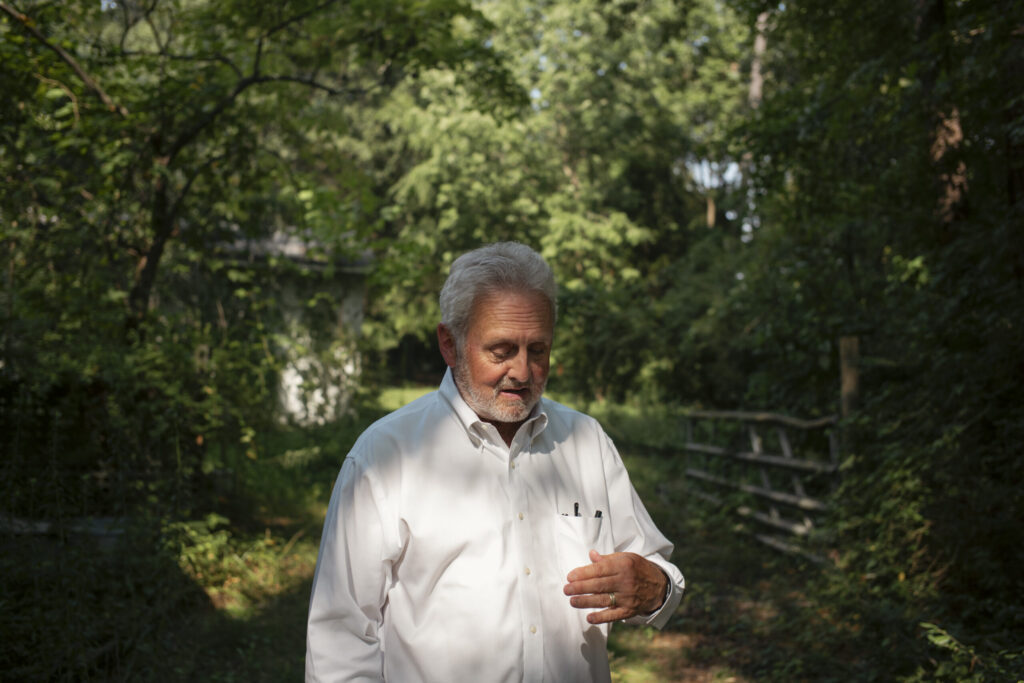
In the clearing near the shed, Noble imagines the garden that will one day grow there, the houses that will come down and the campus that will go up. He can see it as clearly as he saw the smokehouse just a few miles down the road. Logan Cyrus, the Optimist’s photographer, stops him for a minute for a picture. I tell Noble and Nicholson that maybe one day we’ll come out here and compare the photos from today with the photos from the finished Dream Center.
“Yeah,” Nicholson says. “Before and after.”
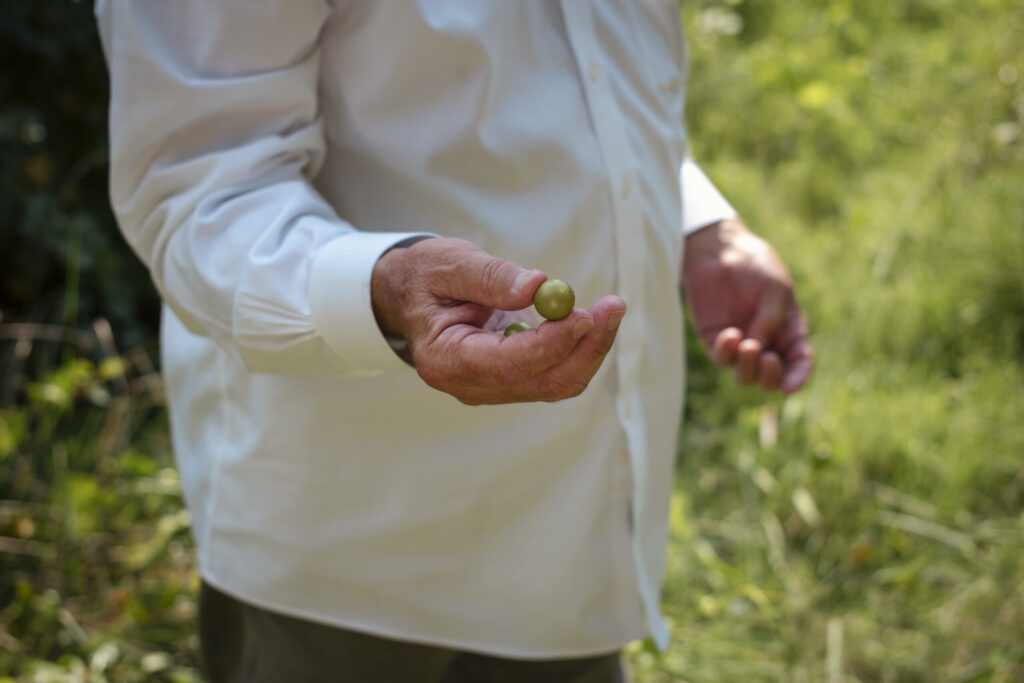
Around then, Noble turns and picks a muscadine grape from a vine and tells me to take a bite.
I do, and he says, “That sweet enough for you?”