
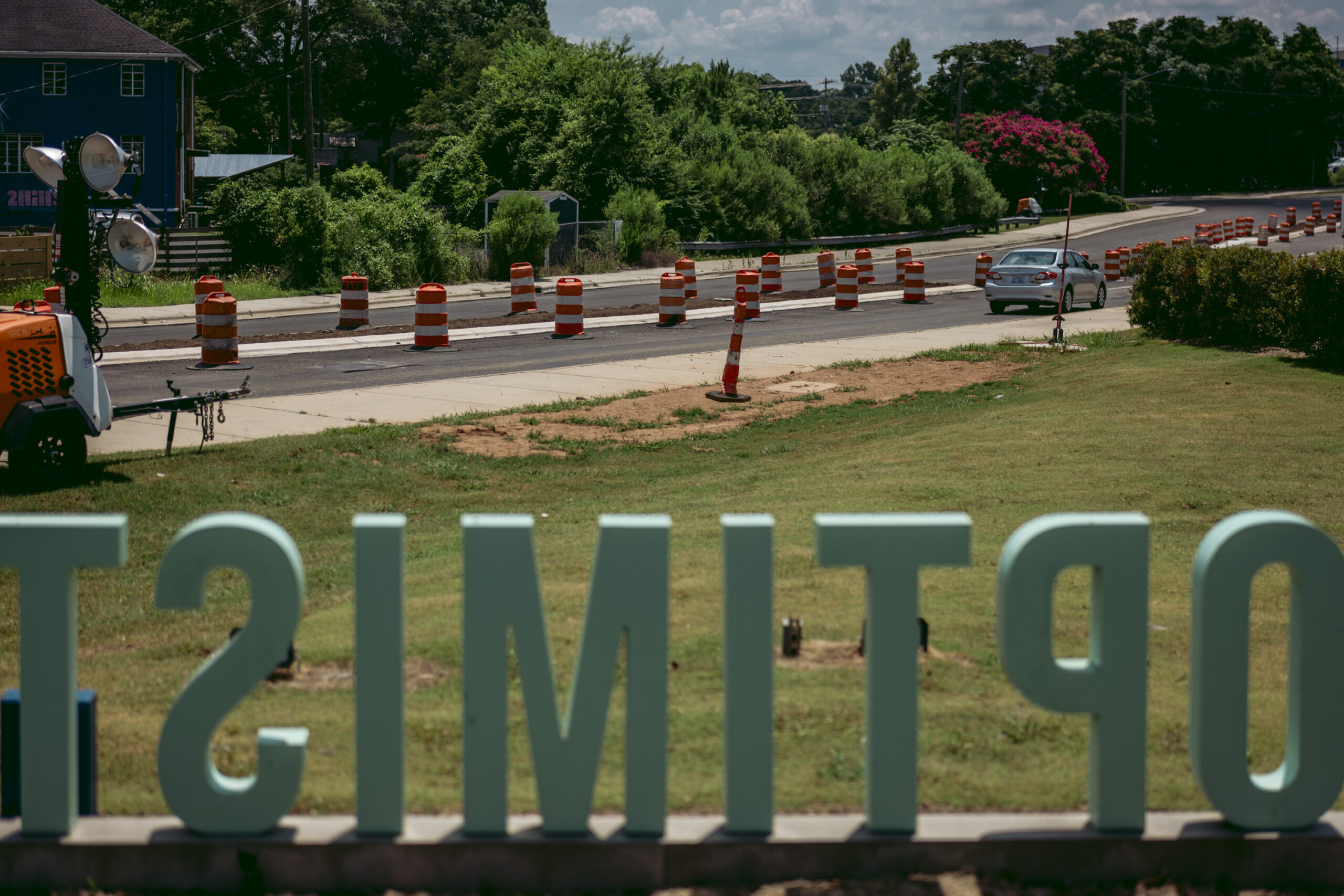
A few weeks ago a reader responded to my column on the recent school board mess with a reasonable assessment on their dwindling hope for our city.
They said they saw institutions that aren’t functioning properly — specifically naming the school board, city council, and judicial system — and wondered if I might consider changing this publication’s name to the Charlotte Realist. It was a pill of an email to read, because this person, who asked not to be named, was clearly someone who’s smart, and someone who’s trying.
“Are you still an optimist?” they asked. “I’m certainly not.”
I get it. For starters, the school board situation is infuriating. They’ve done incalculable damage to the broader perception of public education, and many seem too proud to admit it. City council’s delivered its share of chaos this year. And the county commission, apparently not wanting to be forgotten, didn’t help matters with last week’s Discovery Place conversation.
But here I am again, backing into an optimistic take: Dear frustrated reader, you are not alone.
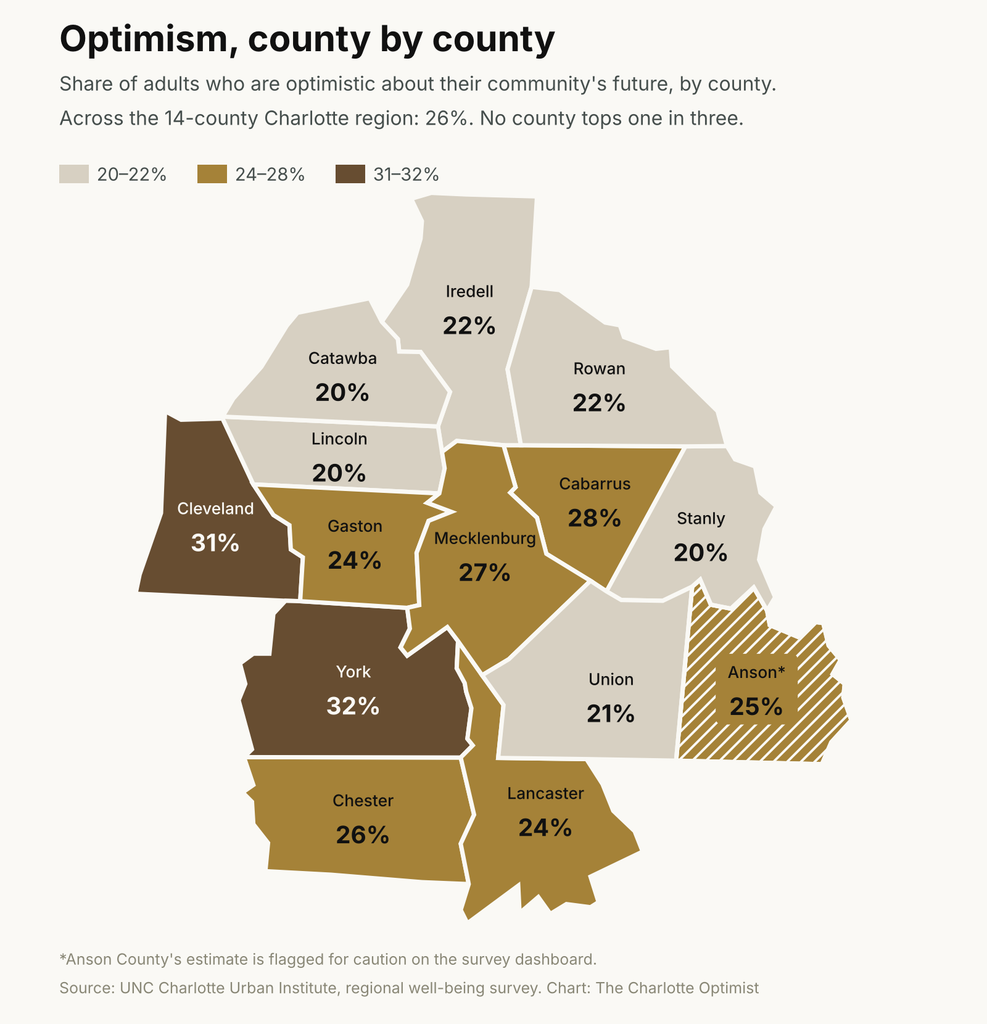
UNC Charlotte’s Urban Institute unveiled a landmark regional well-being survey last Wednesday, and it shows that only 26% of people in our region are optimistic about its future. In other words, the most popular mindset in our region is to not be optimistic. May that comfort you, reader. And rest in peace to my business model!
More seriously, here’s what I believe. Optimism is not a static trait, like eye color or height. It’s an action and activity. It’s something you can bring to the world if you exercise it, like a muscle. And the most effective workout is the intentional practice of gratitude.
Optimism is, indeed, harder to summon these days, especially in a media and political environment that’s rewarded by making you feel worse. I think of it like this: Charlotte has excellent drinking water for a city our size — a random tidbit I know because my wife’s well-drilling cousin, who obsesses over water quality, sings Charlotte’s praises. But that’s not exactly a headline-grabber.
Which brings me back to the Urban Institute study, which I previewed over the summer with the team that produced it. The 4,000-person, scientific survey is a one-of-a-kind examination of the overall well-being of our 14-county region, broken down by demographics and income levels and homeowner status. The top-line headlines, as published in Axios and WFAE, are that our region is pretty happy overall, and that homeowners are more likely to be happy than others. That’s good.
But the survey’s given me a different puzzle, because of two findings deeper in the report that seem to contradict each other:
- Most people in our region like their lives here.
- Very few believe our communities will get better going forward.
To put numbers on it, residents across the region rate their life satisfaction at an average of 7.4 out of 10, which is higher than the national average of 6.8. People in Lincoln County are at the top, at 8 out of 10, which must have something to do with the crab cakes. Mecklenburg is at 7.5.
But across the region, only 26% are optimistic about the future. And Lincoln, our most satisfied county, is tied for least optimistic at 20%.
The disparities get even stranger when you toss in money.
Life satisfaction scores climb like a staircase as income goes up. Households making less than $15,000 a year rate their lives at 6.5 out of 10, while households making more than $150,000 are at 8.2.
But optimism doesn’t climb at all. In fact, in the lowest income group, 26% expect their community to improve in the future, and in the highest, 23% do. The difference is within the survey’s margin of error, but it’s a safe takeaway to say that our poorest residents are as optimistic as our wealthiest. And whether you have $3 million in your bank account or $3, we’re all looking for happiness.
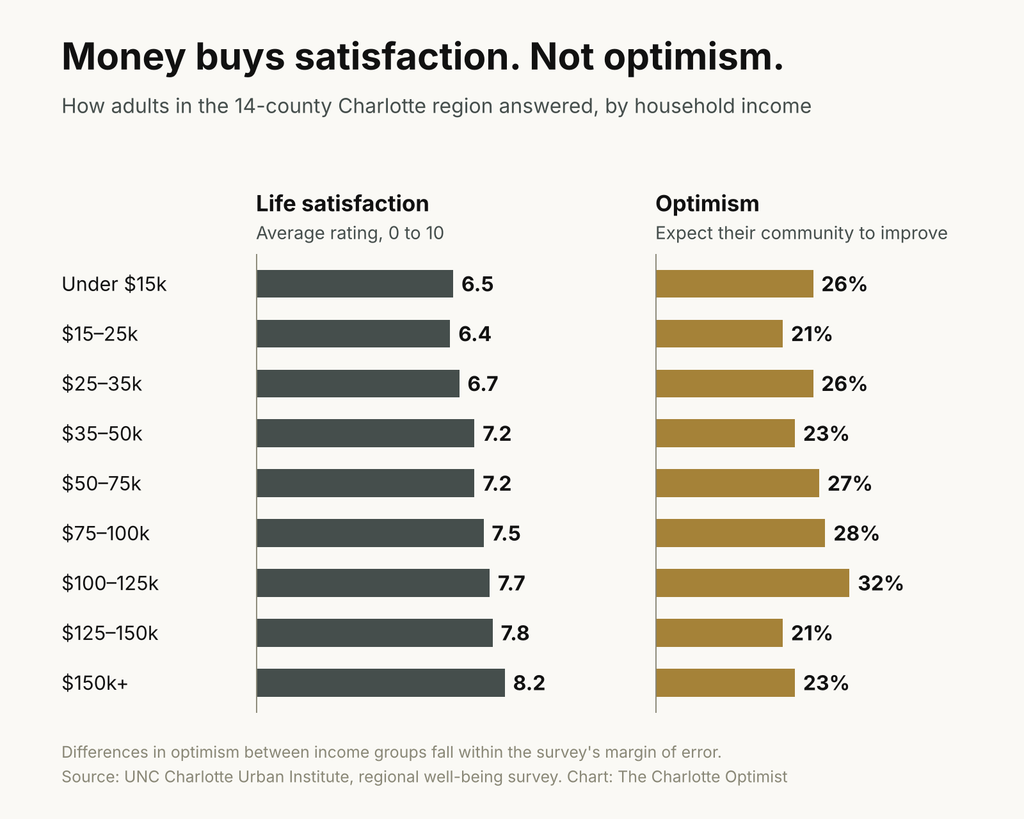
So money buys a better present, but not more hope for the future.
Overall, we’re happy, but not hopeful. Let’s call it Charlotte’s Optimism Gap.
***
So what’s going on?
First, trust: About 48% of the region agreed that “most people can be trusted.” That’s higher than the national average, but it’s well below what those same people feel for their primary circles of friends and families.
Second, growth: While boosters and economic development folks celebrate the booming population, people farther out are worried. Alysia Davis Steadman, the planning director in the city of Albemarle, said at Wednesday’s event that her residents are “very, very concerned about the growth from Charlotte coming to their community.”
As UNC Charlotte Chancellor Sharon Gaber added, you can’t judge a community “simply by looking at what is being built or how quickly an economy is growing.”
I have my own theories about the Optimism Gap, after diving into the survey over the past two months.
Of course, you can’t ignore the effects of national and international issues — wars, inflation, and the doomsday predictions of artificial intelligence ending civilization as we know it. The New York Times ran an opinion piece two weeks ago with the uplifting headline, “I’m Exhausted. You’re Demoralized. We Weren’t Built for a World Like This.” Fun!
On that, I couldn’t help but notice that, in our region, one piece of the Optimism Gap is a breakdown of media institutions. People who rely only on social media were more likely to be pessimistic (35%) than those who get their news from more traditional sources like television (28%). We know our own lives, but we know the larger community through screens and other filters that may not always be reliable.
This came up several times in my conversations for last week’s 8 Over 80 package, especially when former White House chief of staff Erskine Bowles told me, “With trust in a common set of facts, you can get almost any deal done.” Most of the honorees’ greatest career accomplishments occurred in the 1980s and 1990s, back when Charlotte had a robust central source of information, The Charlotte Observer, with a highly engaged publisher who was among the city’s key civic leaders.
Jeff Michael, who ran the Urban Institute for 18 years and now is the state’s deputy secretary for natural resources, said Wednesday that he once found that one county just outside of our region, Richmond, had higher levels of optimism than the county’s economy might indicate. He said a leader there told him why: “We only have one high school … that everybody goes to.” Indeed, if you’ve ever been to a Richmond Senior football game, you’ll see alums from decades ago lining the fence, or pacing back and forth in the stands, hoping for an eighth state title.
Of course 140,000 Mecklenburg County students can’t go to the same high school. But the point holds: communities need things they share in, and rally around.
Charlotte had that as recently as a decade ago, after the Chetty study galvanized the community around economic mobility. But the organization developed to help improve our score for future generations, Leading on Opportunity, dissolved this past summer. And since the pandemic, interests and funding have become scattered and fragmented.
I suspect that kind of shared purpose, or lack of one, affects “belonging,” which 65% of Mecklenburg residents say they feel. The pessimistic way to look at that stat would be to say that one-third of our county’s residents are located here, but without a strong connection.
***
Sally Gambrell Bridgford was talking to me about “awe” on Friday when her 24-year-old son interrupted our call to say he was leaving the house.
“Can I hug you?” I heard him ask.
“You can hug me,” she replied.
Sally’s family foundation, The Gambrell Foundation, was UNC Charlotte’s lead funder and partner on the well-being survey, as part of a $3 million, three-year gift to the university. Sally’s grandfather was William H. Belk, founder of the Belk department store chain. He left a lasting imprint on his family, she said, especially the part about how he believed a company can only succeed if the ecosystem in and around it — employees, customers, and surrounding city — thrives, too.
Sally became a social worker, then joined her mother’s foundation, hoping to help people who are struggling. The 2014 Chetty study, which ranked us last among major metro areas in economic mobility, drew Sally’s attention. But when she looked up and down the list, she saw that even the top-ranked cities didn’t have exceptional upward movement. She also noticed that even people in her wealth class weren’t exactly happy. Sally herself lived through alcohol and substance abuse, and told me she had to hit bottom before she came back up. She’s been sober for more than 40 years.
“I was assuming that the people who had the means, you know, we have problems, but we’re okay,” she told me. “Actually, we’re all struggling with flourishing.”
So she and the foundation looked elsewhere. They’ve taken four trips with local leaders to Finland and Denmark, countries that consistently rank near the top of the World Happiness Report. She’s come to believe that the main reason they thrive is that they invest more in people’s overall well-being. Both countries have strong education systems, and their health care doesn’t disappear if they lose a job.
The Urban Institute survey, conversely, shows that about 800,000 adults in the region aren’t confident they can handle an unexpected expense.
Over there, Sally said, people “don’t feel this sense of dread and threat.” But in America, “it’s almost like you have to prove that you belong.”
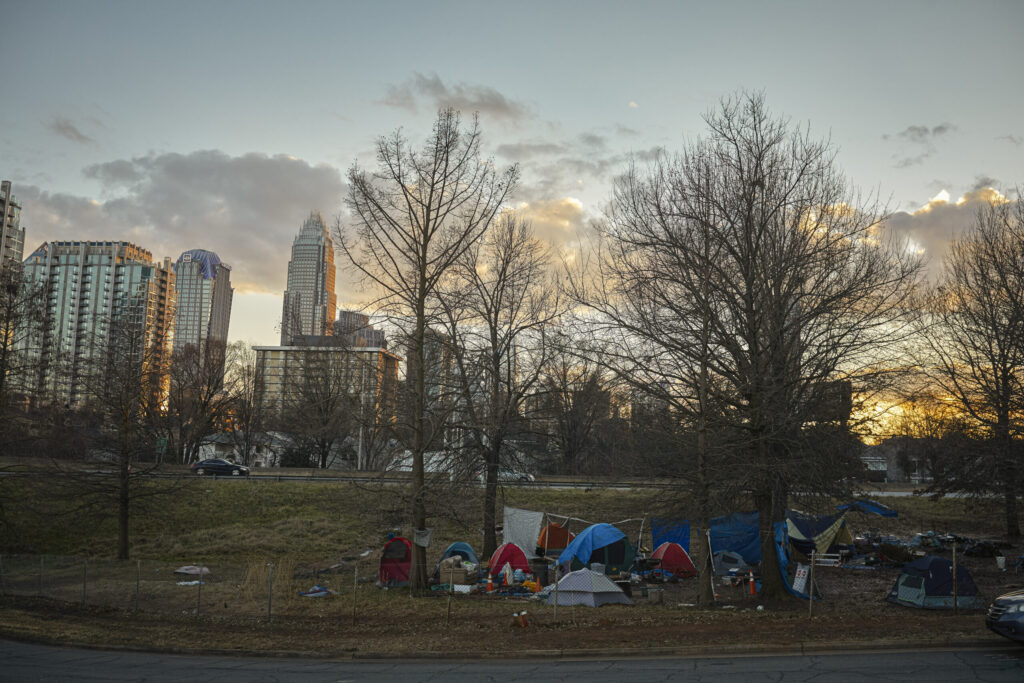
Lori Thomas, who runs the Urban Institute, has been on the Nordic trip the past two years. Lori is a social worker, too, and spent much of her career studying homelessness. When she moved to Charlotte from Richmond in 2008, she wondered where the housing strategies were. If someone mentioned providing sports or arts programs, she’d think, That’s nice. We need housing.
She now believes she’d been sucked into thinking that way by a culture of scarcity.
“I was flattening these people to just their housing need, instead of recognizing them as whole persons who also want meaning,” she told me. She still thinks housing is fundamental, and the survey’s findings support that, given that homeowners are 23 percentage points more likely than renters to have a high level of well-being. But now Lori believes other pursuits matter, too. “Should we not hope for more?” she said.
At the end of Wednesday’s meeting, Jeff Michael asked a panel to pick one change, or new investment, they’d make over the next 12 months to improve the regional well-being.
Foundation For the Carolinas president Laura Yates Clark had the most concise answer. “I want every decision to be made at the city, the county, state level to be guided by a question, ‘how does this benefit children?’”
Sally loved that line. In recent years, she’s turned her focus to hobbies. UNC Charlotte surveyed about 22,000 CMS students to see what they liked to do outside of school. She said she’s been criticized for it, given the more pressing issues that could be addressed, but she’s unwavering.
“A lot of people were telling me how tone deaf I was because hobbies are luxuries,” Sally said. But, “the number one group that pushed for hobbies in Charlotte were the Black churches. They wanted their kids to have a rich and rounded experience.”
***
This all ties into Sally’s broader preoccupation with the idea of “awe.”
A healthy city, a city that’s well, is one that inspires residents as much as it plays Whack-A-Mole with its troubles. Lori now calls this her growth into having a “both/and” mindset over scarcity.
I told Sally this was poignant last week, amid the controversy over Discovery Place’s inability to pay back a loan to the county in order to open the new Nature Museum. One option is for the county to take over the building and turn it into storage. The whole situation is unfortunate. But I can’t help but think that here’s a museum that could broaden the minds of generations of children — that is ripe to inspire “awe,” as Sally would put it — and wonder why they’d want to turn it into a big shed.
Sally didn’t offer an opinion on the Discovery Place matter specifically, but said she hopes the survey will help leaders envision a Charlotte where everybody feels they belong, then “work backward from there.”
“I know this is utopian,” she told me. “You’re an optimist, so I’m a utopian.”
Near the end of our call, she flipped the questions around on me. She asked what gives me “awe” these days. Time was, I’d find it by doing things like standing on a pitch-black beach at night, or skydiving, or taking a hike and sleeping in the woods alone. But now with two little kids, my awe comes from them.
“It’s the most important thing there is, really,” she said. She feels the same, she added, when she goes surfing with her own sons.
I brought up a baseball game. Last Monday night, my 6-year-old struck out twice against a pitching machine. He sulked in the dugout and said he wanted to quit the game. But then, in the last inning, he got a hit. One batter later, he scored the tying run. After he crossed home plate, he ran back to find his teammates jumping up and down, and he did a little hop and fist pump. I’d never seen that from him before. My heart jitterbugged.
Last week was one of the busiest we’ve had at the Optimist, with an extra newsletter and a heap of events around town, including one where I gave the keynote. But that tiny fist pump was, well, the most awesome part.
So, dear reader: Am I still an optimist? I’m certainly struggling with that where the school board is concerned! But I believe in kids and parents. And more broadly, I would love to return to a day when we had top-shelf civic leaders volunteering to run for those positions. Just go back in time and look at who used to serve on our elected boards — Sally’s uncle, John Belk, who ran the department store, served as Charlotte’s mayor for eight years in the ’60s and ’70s; and heck, the late civic titan and billionaire C.D. Spangler used to be the school board’s vice chair.
But maybe the question isn’t whether I’m an optimist, or whether you are, or even whether our region can be optimistic again. Maybe we should be asking ourselves whether we’re still willing to practice optimism. I am. Hope you are, too.
It can start with something as small as a little fist pump from a kid coming up in the next generation.