

During the State of the Union two weeks ago, the president dashed off a rhetorical question that made my dander stand up: “And by the way, what’s going on with Charlotte?”
To be fair, he asked it in the context of Iryna Zarutska, and her terrible murder on the light rail, a tragedy for her family and friends, and one our city owns like a scar. But now I see the question popping up in any conversation about Charlotte’s ills, as a sign that our home is irreparably broken.
So last week I had an idea: I’d have my regular week in Charlotte — in my roles as writer, dad, spouse, friend, and coach — and take notes, and then I’d write a “what’s going on with Charlotte” mosaic from those interactions. When I counted it up, I’d had nearly 20 meetings or conversations that centered on our city. And the truth is, the view from Charlotte is more of a kaleidoscope than a fixed image.

ONE
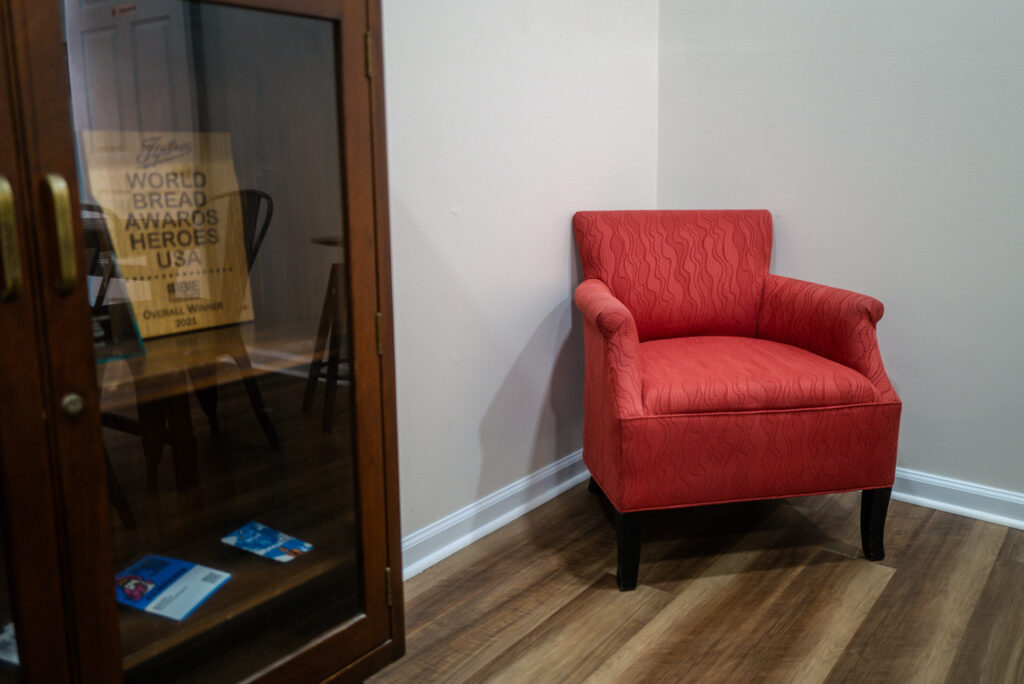
She hadn’t seen the red armchair since she left Charlotte a year ago.
“In the last days of my mother’s life,” Claudia Avila told me on a video call from her Colombia apartment Friday, “that’s where she crocheted.”
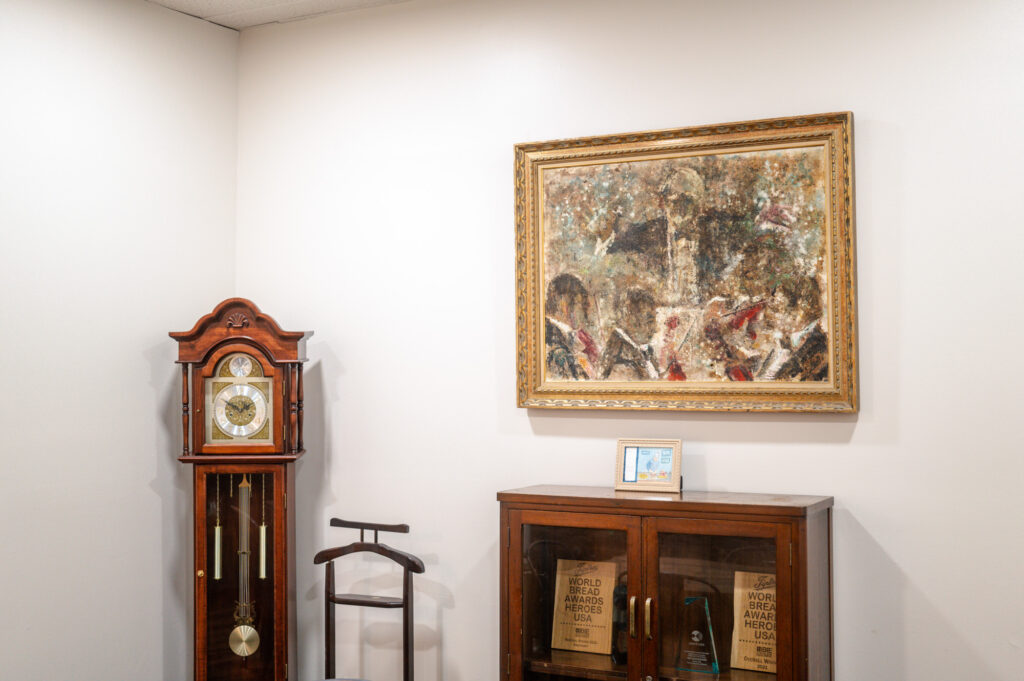
Next to the chair is a glass cabinet where Claudia kept books and pictures. Above the cabinet is an impressionist-style painting of a conductor and a symphony orchestra, which she earned as a trade for cleaning a Charlotte woman’s house a few years ago. Next to that painting is Claudia’s old-fashioned valet stand, and next to that is her grandmother clock.
Claudia left those treasured belongings behind last March to self-deport to her home country of Colombia. She’d lived in Charlotte for 24 years and made a living as the best authentic Colombian tamale-maker in town. Her sister is a U.S. citizen who lives in Asheville with her husband, but Claudia never made it through the immigration process. She’s in her early 60s and was terrified of news reports of undocumented immigrants being sent to countries that weren’t their home. She couldn’t imagine being a senior citizen behind bars.
A year ago this week, she left. She didn’t have enough money saved to bring her possessions with her, so she gave her furniture to one of the few people she trusted, beloved local bakery owner Manolo Betancur.
Manolo kept it in storage for a year. Last fall, he became the face of Charlotte’s opposition to the chaotic border patrol raids along Central Avenue, with hundreds of people coming to his business’s parking lot to protest and dance each night. Early this year, he opened The Changebaker Place, a bright and warm cafe, next to his long-standing bakery.
It’s a beautiful space, with a little parlor-like sitting area up front, a couple of laptop-friendly tables, and two meeting rooms. I’d met a friend for coffee at the bakery last week, and Manolo, being Manolo, took us into Changebaker for a quick tour. When he got to the back meeting room, he said, “all this furniture is from a deported person’s house.”
“What?” I said, or something like that.
He’d decorated the room with Claudia’s possessions. Anybody in Charlotte can work there now, or reserve it for small meetings.
I called Manolo the next day to ask more questions. Then on Friday around lunch, I was with him in that back meeting room when he FaceTimed Claudia. She answered from in her apartment in Colombia and smiled when she saw his grin.
Midway through the conversation, he turned the camera toward her furniture. It was the first time she’d seen it. She covered her eyes and sobbed.
“I couldn’t leave my stuff with anyone else in Charlotte,” she said. “The money from my tamales made it possible to buy that.”
TWO
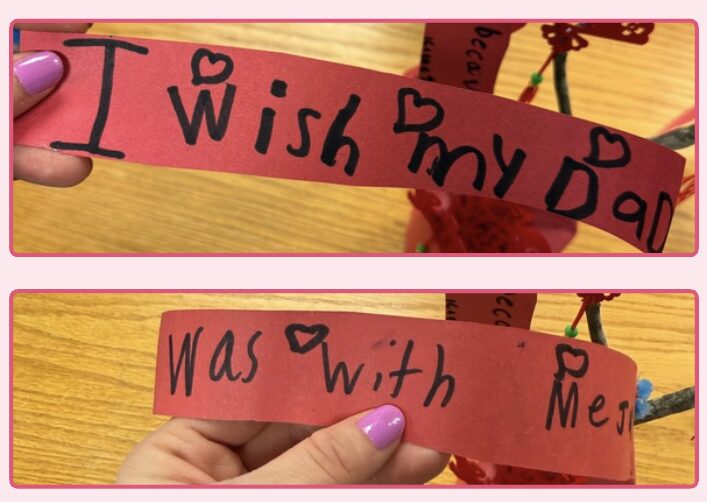
On Lunar New Year last month, an elementary-age kid in east Charlotte wrote his wish for the year on two slips of red construction paper.
“I wish my dad …” he wrote on one slip, to be hung on his school’s wishing tree, before finishing the sentence on the second:
“… was with me.”
I was sitting in with a crowd of funders at OurBRIDGE on Tuesday night last week when I read that. OurBRIDGE, readers of the Optimist might recall, is an afterschool program and wraparound resource center for families of immigrant and refugee children.
My own son’s birthday was Friday. He turned 6. So I’d been thinking a lot about time and changing seasons, and a tear slipped down my cheek when I saw his peer’s words.
A few days later, we rented a bounce house castle that mushroomed in our backyard. My wife put out Goldfish and apple sauce and juice. And my son’s friends’ laughter was shrieky enough to scare away any mouse or snake on the block. My wife did most of the prep, and we spent the week zipping past each other and talking past each other, under the weight of stress we were free to create for ourselves.
George had his own complaints last week. Restless is a young heart on the cusp of 6.
“Why’s it not my birthday yet?”
“Why can’t I open presents yet?”
“Why do I still have to go to school?”
Why? Why? WHY?
And I wonder, too, why we’re so fortunate that these are his most pressing questions, when other kids his age are wishing for their fathers.
OurBRIDGE has a new executive director. Salma Villarreal is a first-generation Mexican-American. She’s had nearly every job at the 12-year-old nonprofit. She didn’t intend on rising to the top position, but she’s ready and confident and steady. And her poise is in part a testament to founder Sil Ganzó, a shining soul who stepped away as executive director after the raids.
Border patrol agents came to OurBRIDGE’s door last November during their disorganized romp through our city. This is a place of joy for kids who asked for none of this, being taught by a group of teachers that speaks 22 different languages, in hopes of helping those students learn English and have a bright future in our city.
This isn’t a story to rehash the raids, but it’s worth pointing out that they’re not done causing waves here.
Sen. Thom Tillis, a Republican, during his criticism of now-dismissed Homeland Security Director Kristi Noem last week, was furious that he hadn’t yet received details about who was detained during the Charlotte’s Web operation in November. Tillis, like many folks in Charlotte, have said that they welcome detaining and deporting hardened criminals. But any of us who were here in November saw that the operation went beyond the “worst of the worst” they were supposed to target — and instead included harassing people hanging holiday lights, or people maintaining a country club’s grounds, or even the photographer for this publication. Or even, even, schoolchildren at OurBRIDGE.
“Numbers matter, right?” Tillis said of the operations around the country. “No, they don’t matter. Quality matters. Not quantity, quality.”
THREE
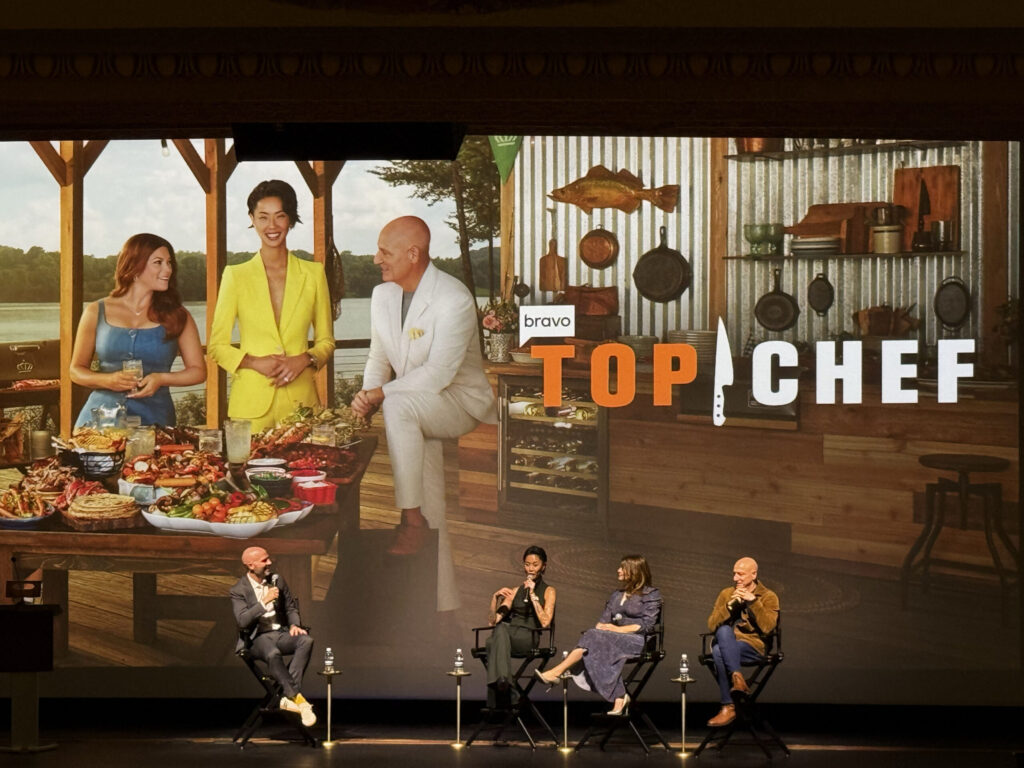
On Monday night, my wife and I sat in the back row at the premiere of Top Chef. Our tickets were for seats closer to the stage but not together, so we picked two near the exit and people-watched.
The people in front of us were really, really into it.
I should admit that I’ve never watched Top Chef. It’s not a point of pride but a plain fact, kind of like how I’ve never been skiing. Oh, stop. I know other things (the starting infield for the 1989 Orioles, for instance), and done other things (like jumping out of a plane).
Regardless, I’m a big enough fan of Charlotte and its people to appreciate that Top Chef is a big deal for our city. I cheesed at some of the “This is our moment” sentiments shared by chefs and mixologists and dessert-makers who’ve worked for years to bring a spotlight to Charlotte’s dining scene.
The most powerful exchange, to me, came during the pre-screening panel discussion, when my friend and one-man media company Tom Haberstroh asked a question of Top Chef judge Gail Simmons.
“Is that OK, that Charlotte doesn’t have a signature dish?” he asked.
“I don’t think you ever want to have a signature dish, because then, you get pigeonholed,” Simmons said. “The interesting thing about this city is it’s a very young city. It’s growing really quickly. There’s some really interesting immigrant communities that have settled here. They’ve taken the ingredients, like the hyper-local ingredients, the history of this part of the world — of Appalachia, you know, of the South — and they’ve used those ingredients and stories to create something that is totally hyper-particular to this place, and it couldn’t be anywhere else …
“It’s not just one thing. I don’t ever want to be just one thing. We contain multitudes.”
FOUR
Four days before Manolo showed me that room with the furniture, three days before the OurBRIDGE event, two days before a Top Chef judge told us it was ok to not have a signature dish …
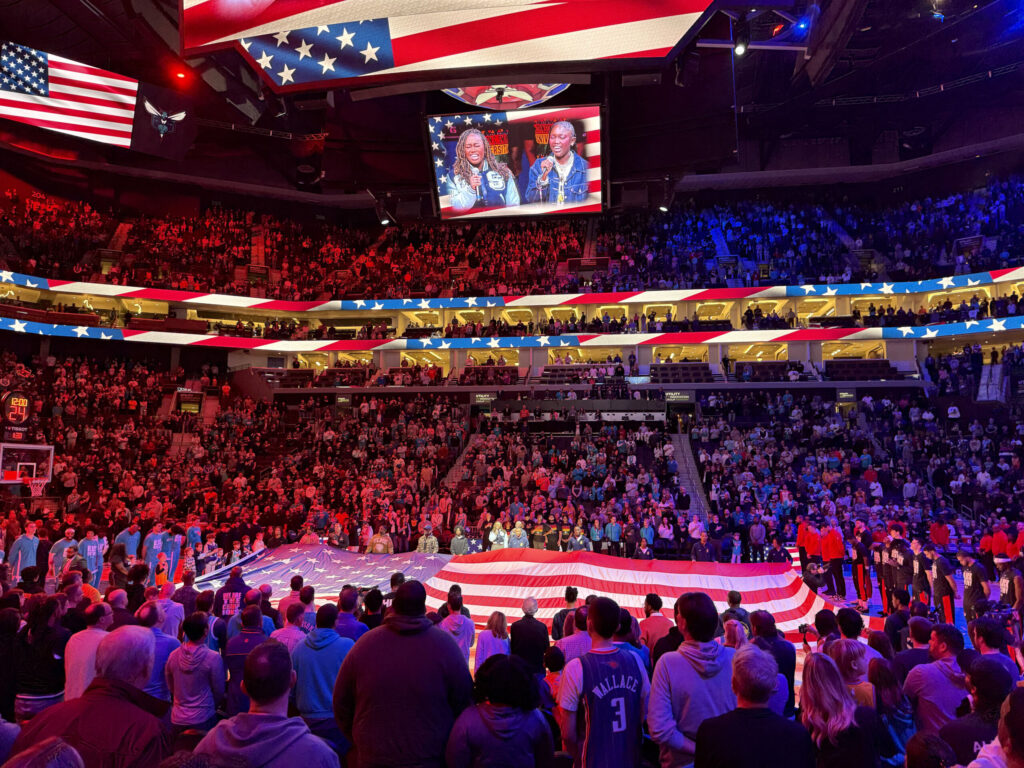
… I ran into Tom Haberstroh at the Hornets game. He’s part of the Blazers broadcast team, in between making Top Chef podcasts and writing his own newsletter — on top of raising two daughters in Elizabeth. Tom has a fire for doing things. It’s infectious.
Also at that Hornets game, our 2-year-old, who’s also a one-man show but lacks spatial awareness and believes everybody is a friend, nearly tripped Roy Williams in the food line. Yeah, UNC legend and coach Roy Williams. After about the third time our boy bumped into his legs, Roy reached out and put his paw on the kid’s head to move him. Fundamental defense. We apologized a half-dozen times, and Roy laughed and said, “If that’s the worst thing that happens to me today, I’m doing alright.”
On the floor, the Hornets are now one of the top sports stories in the country. They started the season at 4-14 and now are 32-32, going into tonight’s late matchup at Phoenix. And they’ve been beating the absolute hell out of teams. Bill Simmons did a deep-dive into them on his podcast. Pal and familiar Charlotte voice Tommy Tomlinson wrote a fantastic column on the team in his newsletter on Thursday.
Lots of folks are analyzing this remarkable run from all different angles. To me, it’s pretty clear. For years, the Hornets had one signature player in LaMelo Ball. But now they have rookie sensation Kon Knueppel, and Brandon Miller has developed into maybe the most versatile player of the bunch. The starting five of Ball, Kneuppel, Miller, Miles Bridges, and Moussa Diabatté has been the best lineup in the NBA since the start of 2026.
A basketball team, like a food scene or a city itself, is at its best when it contains multitudes.
FIVE
What else is going on with Charlotte? Here are a few more pieces of the kaleidoscope:
William McNeely, who’s survived a double-lung transplant, officially launched the new name for Do Greater locations, where promising young people from disadvantaged schools will work alongside blossoming professionals. He calls it Sparkhouse.
About 35,000 people locked arms over shoulders and bounced to Farruko’s “Pepas” last night at Bank of America Stadium, firing up our MLS team for a 3-1 win in its home opener.
Former TV anchor Molly Grantham celebrated two years since leaving television, bringing hope to people under her “Bet On Yourself” brand.
I had lunch with Bank of America president Kieth Cockrell, a father of three successful grown children who still wakes up each day asking how Charlotte can be safer and stronger. It didn’t hit me until afterward, but one topic that didn’t come up in my conversation with the city’s top banker: money. We just talked about Charlotte, its troubles and its triumphs.
I also talked with Cheryse Terry, the brilliant owner of Archive CLT, a cafe with a mission to preserve Black history and culture. She’ll join me, WFAE’s Julian Berger, and historian Tom Hanchett, for a live discussion during the Charlotte Ideas Festival on April 11. (Come say hello.)
We also had a primary election. The embattled sheriff survived, helped by a crowded field of opponents and his longstanding relationships with Black and Latino voters. One quiet winner, to my eye, was the nonprofit site The Election Hub, which helped residents make more informed choices. I hope it’s around for a long time.
And I spent two hours with architect and urban designer Terry Shook. I’m writing the foreword for his forthcoming book The Accidental Gentrifier. In between stories from his career shaping neighborhoods and learning lessons from his mistakes and successes, we talked about the I-77 project, and his dreams of connecting the West End to Uptown.
“277 to 277 should be sacred ground,” he said of the stretch of highway that slices through the two neighborhoods.
SIX
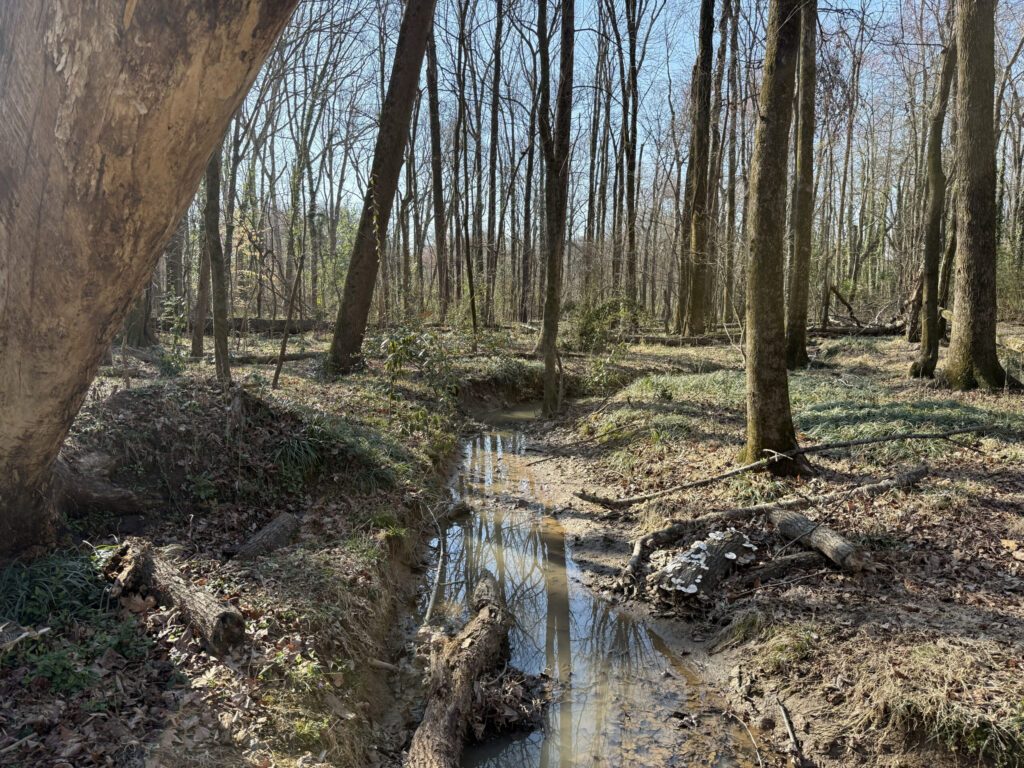
The week was frantic. So Friday morning, I took a walk in the Evergreen Nature Preserve. It’s where I went every morning in the days after my dad died in 2019. Down in a low-lying bottom area, there’s a stream, and it’s one of the few places in the city where you can be deep enough in the woods that you can’t see any sign of busy city life.
This is where I told my dad we would be having our first son. On Friday, the day of that son’s sixth birthday, the makeshift planks I stood on in 2019 had been replaced with a more permanent bridge over the stream. And several of the trees I used to lean on were gone. So I sat on a stump and just listened. A few trail walkers passed by.
The first pair said, “Hello, beautiful day,” which it was. The second pair of women asked, “Are you looking for a particular bird?” And I said no. When the third pair came by, though, a woman asked a question that pierced me, “Do you have someone off in the woods?”
“Not really, I guess,” I said.
“Ah, just forest-bathing?” she said, and I said yes.
I left there and went to Manolo’s. He was in the parlor area holding court for several meetings. Then, around lunchtime, we went back to the room with the furniture, and he called Claudia Avila.
SEVEN
She’d moved to Charlotte from Colombia at 39 years old in 2002. Her aunt had already set down roots here, and so had her sister.
Avila worked in banking back home, but when she arrived in Charlotte she realized there were no authentic Colombian tamales, so she flew back home to learn how to make them. Our city rewarded her over time with about 600 regular clients. She filled out a W-7, so she could have a taxpayer ID number, and paid taxes here on every job she took. She also cleaned houses, some with eight or nine bedrooms.
Her sister married a U.S. citizen and moved to the mountains. Their mother died in 2013. Claudia once dated a Colombian man but he lost his driver’s license and moved home.
“I never got married,” she said. “I always was working 12 hours per day.”
In early 2025, she felt the shift. One man rolled down his window, she said, and shouted, “Bitch, go back to your country.”
So she doubled up her production of tamales. And did. But she left pieces of her here. And in a quiet little corner of a quiet little cafe in east Charlotte, those pieces are on display.
And somehow all of that — the tamales and tears, the basketball run and debates over a highway, the reality show and the birthday cupcakes, the hardships and the hope — is what’s going on with Charlotte.