
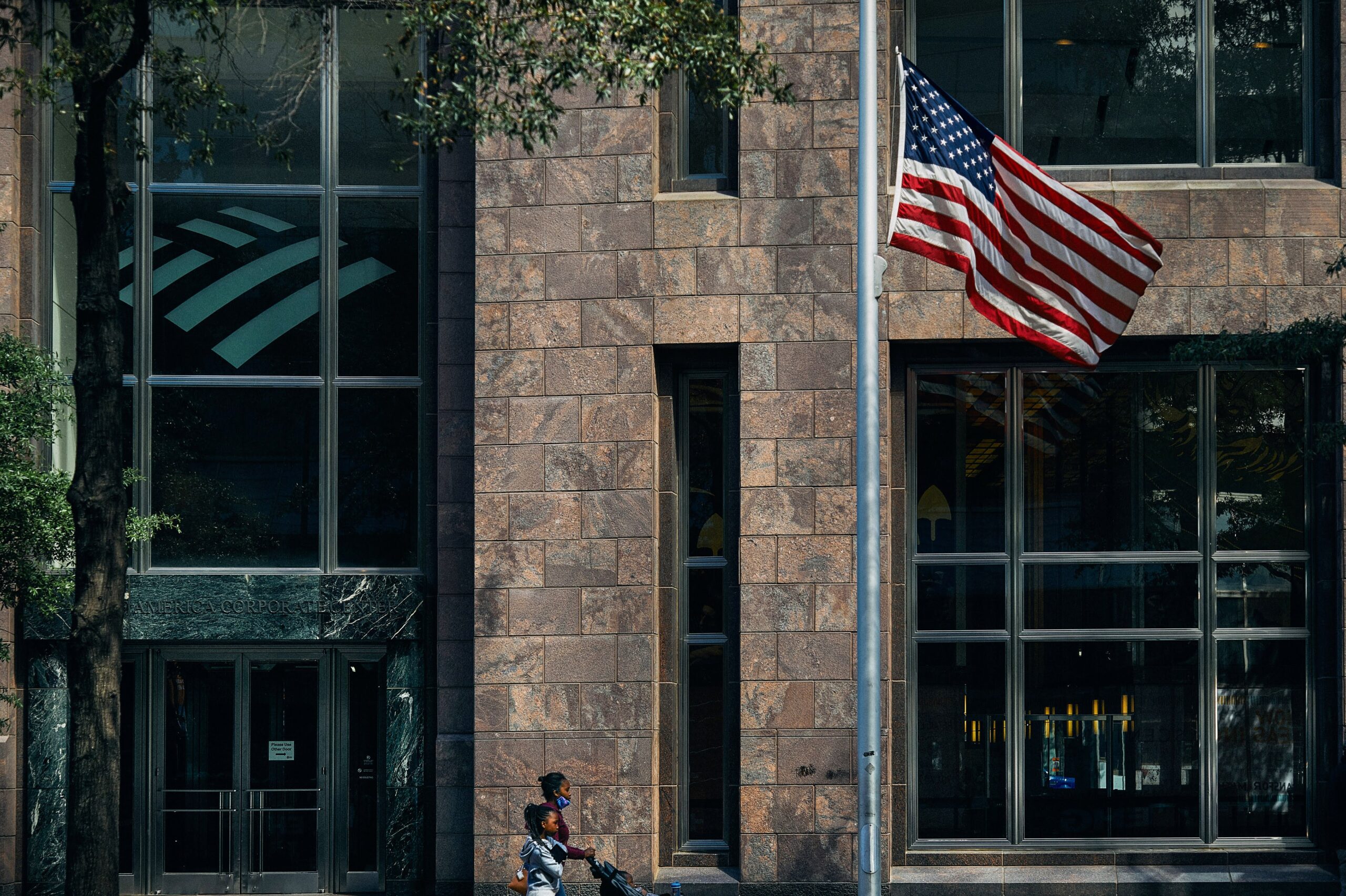
Back in 2018, I wrote up a 62-page proposal for a book about Charlotte, with the title, “World Class.”
That phrase was, for years, as much a part of Charlotte as the weather. It was aspirational; it was comical. My idea was to write a modern narrative bookended by the 2012 DNC and the 2020 RNC, and braid chapters of history in between.
My literary agent, who’d suggested I write this book, was about to shop it around to publishers when I hit pause. Who the hell was I, I wondered, to be the caretaker of our city’s story? I also saw an obvious flaw in the structure: Charlotte moves fast; book publishing moves slow. The thing would be out of date by the time it hit shelves. So I wrote an entirely different book instead, and haven’t touched that old Charlotte proposal since.
My gut was right. The pandemic made the 2020 RNC a blip of an event in Charlotte’s story. More than that, the Charlotte of 2020 barely resembles the Charlotte of 2026. In fact, now that I look back at that title “World Class,” I laugh. The phrase, for the most part, has run its course: a guiding principle for years, and a funny inside joke for a few more, is now, frankly, one I rarely hear from city leaders.
Against that backdrop, I opened the new book by Robert FitzPatrick, Charlotte: Searching for Soul in a Booming Southern City with a mix of admiration and skepticism. Admiration because, well, writing a book is hard, and writing one about a city of a million people is even harder. Skepticism because, well, the title alone already hints at the author’s conclusion. “Soul” and “Booming” and “City” are an example of the old axiom: you can have any two, but never three.
Not to give away spoilers, but FitzPatrick’s book is hardly a sparkling portrayal of the city where he grew up. He takes aim at the business “oligarchs,” the “world-class” boosterism, and even some people I know personally, presenting them more as cardboard cutouts who built a cardboard-cutout city. Even when he finds “fireflies” of soul — people fighting for better schools, preserving trees, speaking up to big banks or big energy — they’re dimmed by what he sees as an overwhelming corporate air.
You might say I have a different perspective!
Several people, from friends to Optimist readers, have suggested I read FitzPatrick’s book. A handful of you shared the podcast interview he did with The Charlotte Ledger, as if to say, “See, Charlotte’s not so great.” I finished the book one night last week and emailed Robert the next morning to set up a call. We were on the phone about 90 minutes later.
Guess what, friends: We didn’t fight. Quite the opposite, in fact.
Turns out, he’s dealt with similar comments, in reverse. Within the first 30 seconds of our call, he said he’s had readers and audience members mention The Charlotte Optimist, and tell him that he’s the natural counterpoint to that: The Charlotte Pessimist.
“I have never thought that, at all,” he told me. “I have never seen what I’m writing in that term. It always sort of unnerves me, each time, that even the information is referred to as negative.”
That’s where we started our conversation. We wound up talking for two hours.

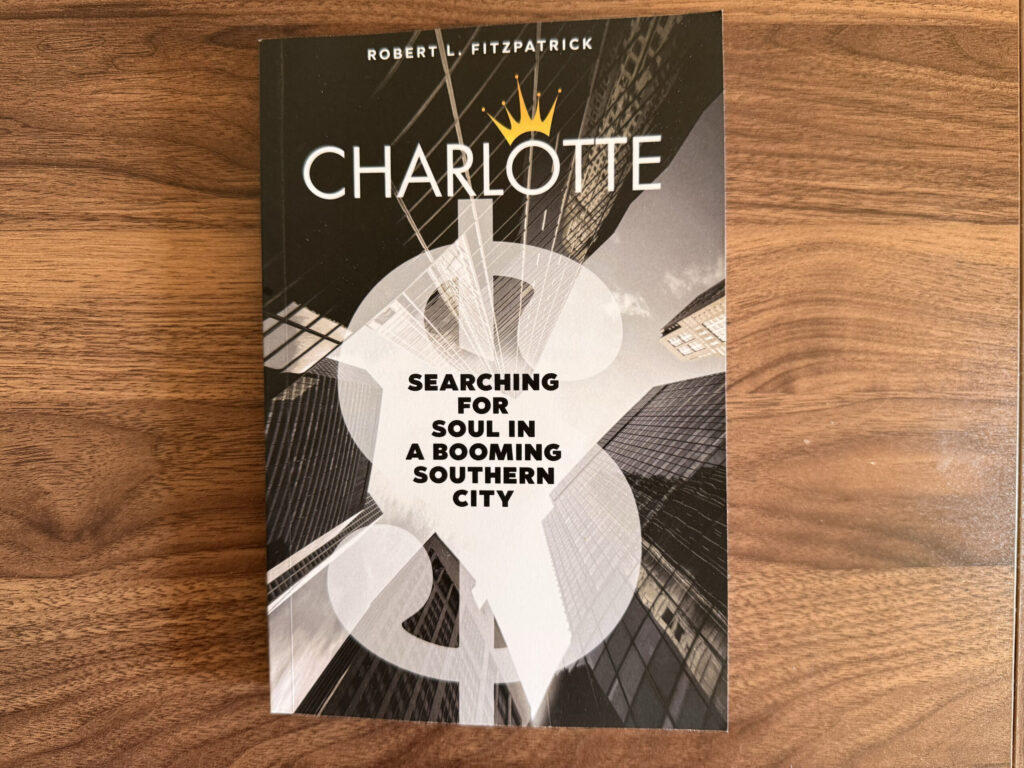
He compares this city to Seahaven, the fictional town in the Jim Carrey movie The Truman Show. Seahaven, of course, turns out to be a sprawling dome and television set full of unconvincing actors who take direction from a distant and lording director.
FitzPatrick grew up in what’s now Dilworth in the 1960s, with a backyard that opened up into Freedom Park. He left for two decades, then returned, then left again. He’s spent most of his life here. And in the 2010s, he said he felt like he was in “exile” in his own hometown. He saw Charlotte as a city that was building rental units at an alarming pace but was pricing people out of ownership, and one that was quicker to brag about new businesses and corporate relocations than stand up for its current residents.
“I used to say that Charlotte will break your heart, if you have idealism and a vision for what a city could be, if it varied in any way from this story or narrative that the Chamber of Commerce puts forth,” he says.
I know people throughout Charlotte, including myself, who have a very different view. I tell people now that Maryland’s where I’m from, but Charlotte’s home. I married a native Charlottean whose family goes back centuries in the west Mecklenburg area, and we now have two kids here. To me, home can be any place where you’ve had to replace some plumbing. We’re home.
But here’s what I do share with Robert, and relayed to him. I grew up on the Chesapeake, and my father ran his charter and commercial fishing boat out of a place called Solomons Island. When I was a kid, it wasn’t a town to visit, but one for people who worked the water. It had a tiki bar where people with scales stuck to their jeans would get drunk, one decent restaurant that the fishermen thought was too expensive for the taste, and a hot dog/ice cream stand where I’d spend my allowance.
After Dad died in 2019, we took his ashes to where he wanted them spread: The middle of the Chesapeake. We spent three days there, and I hardly recognized Solomons, with its new boardwalk and row of restaurants and an overwhelming number of people in clean pants.
I mentioned that to Robert, and he was intrigued, but said simple “change” is not the issue in his book.
FitzPatrick zeroes in on the word “home.” He told me he feels like it’s been “demeaned, degraded” and lumped in with “nostalgia.” And says that the modern American’s default is, “Be ready to move. Don’t stay committed to it. Don’t build your life on a place or around a place. Build your life around something more fluid.”
“I don’t have any reason to be embittered or terrified of change,” he said. “My own father was born in 1906. His father was an Irish immigrant. When I look at the wars, the Depression, I question whether the changes we talk about are really that significant.
“Nevertheless, there is an element of commitment to change that Charlotte violates.”
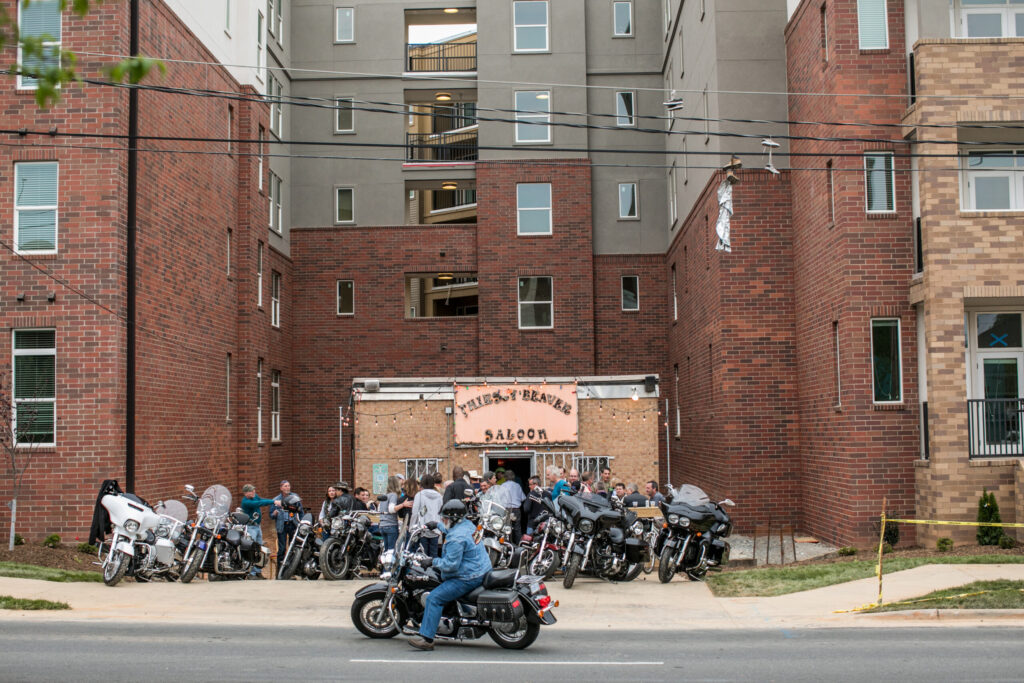
FitzPatrick’s book opens very broad, with sweeping generalizations and quotes from Thoreau and Orwell and Du Bois.
It gathers momentum around the eighth chapter, when he shares his first-hand account as a community organizer in 1970s North Charlotte, now NoDa. Fresh out of college, he led efforts that saved Highland Elementary from closing (it’s now Highland Mill Montessori, a centerpiece of NoDa), organized voters to reject an airport expansion in 1974, and helped block a new basketball arena years later. He says the city leaders’ reaction to those moments was discouraging. On the airport, he says, “The day after the election, the city’s leaders didn’t say, ‘The people have spoken.’ They said, ‘Well, we’re going to do it anyway.’”
FitzPatrick works to correct the record on old stories like that, as they get passed down. NoDa’s rise, for instance, is often attributed to the artists who arrived in the ’80s, but Robert believes it wouldn’t have happened without organizers who came before.
In his work with residents, FitzPatrick says, “through their eyes, I could see the priorities of the city made more clear. Because they weren’t really on the receiving end of it. … They weren’t impressed by skyscrapers or the Chamber of Commerce. Talking about the ‘New South’ or ‘world class,’ they did see it as a joke from the start.”
There are lessons worth noting. For modern-day electeds and business leaders, it’s a reminder to keep a balance between the image they project and the one longtime residents see. On the other side, I thought of the activists I know in town today. It’s a short trip from idealistic to frustrated to moving away. FitzPatrick, as it happens, left and moved to Hot Springs a few years ago.

Like many North Carolinians my age, I went through a pretty heavy Avett Brothers phase. The Concord boys dominated my iPod in the late 2000s. One song, “Me and God,” from their Carolina Jubilee album, hits home.
The narrators list places where they find God, like in “a long day’s work and a good sittin’ chair / the ups and downs of the treble clef lines / and five miles to go on an interstate sign.”
And, their overarching view on faith: “Now I don’t doubt that The Good Book is true / but what’s right for me may not be right for you.”
I see Charlotte’s soul the same way. I see it everywhere, but I don’t begrudge anyone for wishing it was more defined to their personal standards. That tension is in the stories we’ve published over the past 10 months. In a transplant who’s working to break down mobility barriers. In bankers who help aging business owners make dignified transfers of their life’s work. In a fashion icon whose grandmother grew up in the same North Charlotte neighborhood FitzPatrick fought for, years before he arrived. In a college that raised nearly $50 million in the name of decency. In a bakery owner and a food pantry founder and a neighborhood beer joint owner and recovering addicts and dayworkers. And yes, in a 90-year-old banking legend who continues to take a hard look at how his efforts to build this city were at once helpful and harmful.
To me they don’t add up to a “fireflies” chapter at the end of a book. They’re the main story.
I really enjoyed talking with FitzPatrick. He’s extremely thoughtful, caring, and wants what’s best for the people of Charlotte. I learned things from his work and, overall, would recommend it. It took courage to write. He acknowledges that in the pages, writing that challenging the conventional narratives of Charlotte has led to his “exile.”
Perhaps my sharpest critique is that he didn’t question whether those conventional narratives still hold true.
Charlotte has, as I feared with my own proposal, changed over the past five years. It’s far more than a banking town now. Power is more diversified than ever. Earlier this month, the Charlotte Executive Leadership Council brought together more than 40 CEOs of the region’s largest companies to discuss ways to help the city. My experience with the city’s top business leaders is that they’re far more three-dimensional than the labels they carry. Meanwhile, labor is growing in influence in local elections, not shrinking. And neighborhood-level resistance to the I-77 toll lanes project has actually made a difference; the governor even indicated he supported pausing the project at a meeting in Charlotte last week. That’s all healthy. And maybe it’s a sign of whatever “soul” means. Or maybe it’s a sign of restless energy that makes finding that definition impossible.
FitzPatrick’s search also didn’t include interviews with Hugh McColl, whom he mentions more than 20 times in the book. He told me he was just trying to portray McColl as an important character in the city’s story, that he “personifies” Charlotte’s ideology — one that values “commercial achievement” over non-commercially viable projects. I told him that idea clashes with the McColl I know, who sat in my truck with me and talked about his appreciation for trees and birds on the eve of his 90th birthday last year.
“What I was really trying to get to was an overview of a cultural force at work,” FitzPatrick told me. “It has historical roots. It has institutional support. For the most part it has an ideology and media and a narrative. That’s what hasn’t been named.”
FitzPatrick isn’t alone in his views, and he earned them honestly. He’s a former community organizer who tried his damndest to empower working-class people at a time when the city exploded with white-collar industries.
We left the conversation in agreement that we both love the people of Charlotte and the city itself, but diverged on some details. Again, healthy.
Reading his book and talking to him steered me to a better outcome than agreement or disagreement: It forced me to think about my own perspective on Charlotte’s soul. And I realized that I believe any search for it is like looking for a pot of gold without appreciating the colors in the rainbow. The elusiveness of soul here is a source of discontent for some, a joke for others.
But for many of us who call it home, the undefined space is our sanctuary.