
🎧 Listen to an audio version of this story, as read by Michael. 🎧
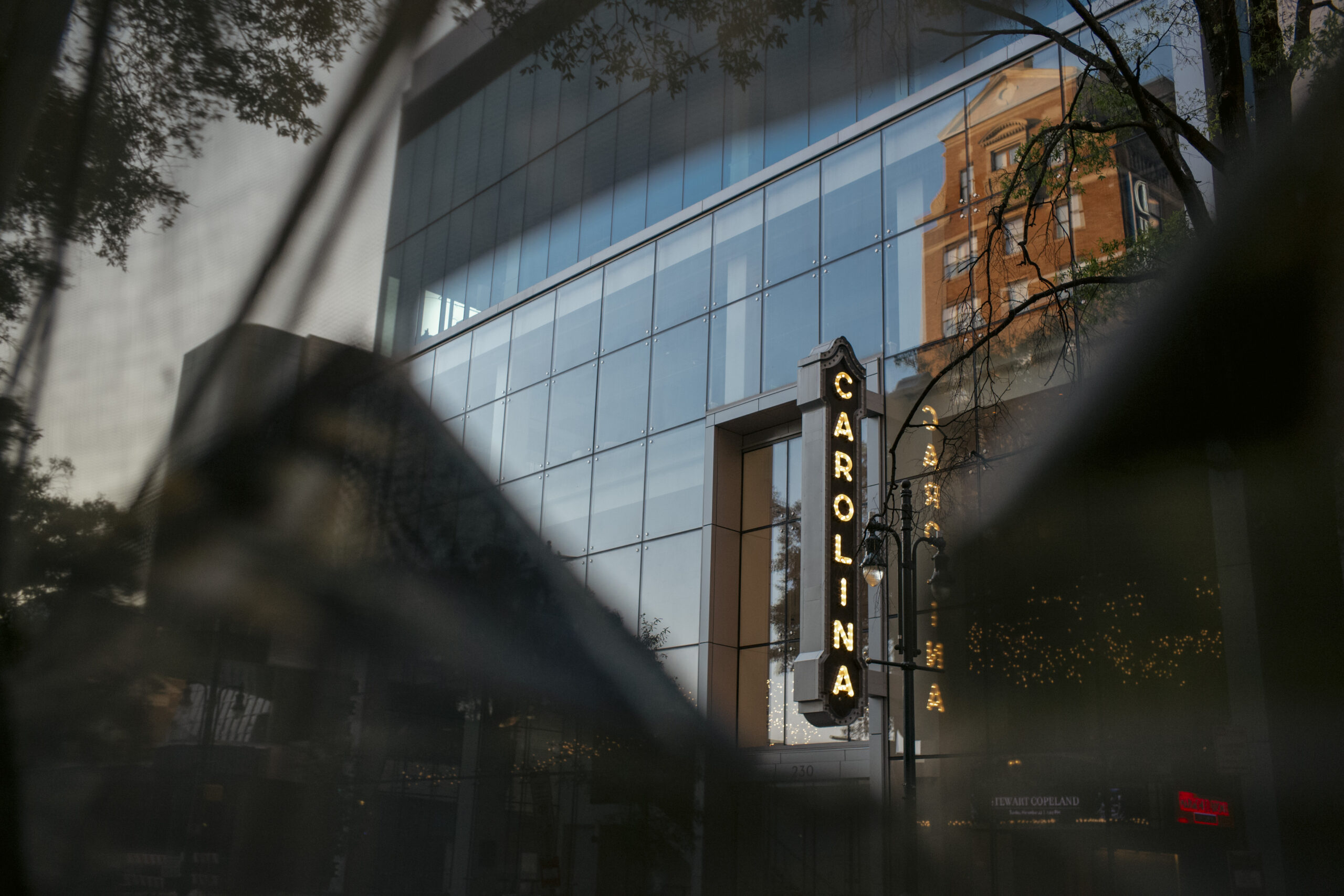
Long before he was a Broadway legend, Charles Randolph-Wright was a boy who couldn’t get into Charlotte’s finest theater.
The Carolina Theatre landed all the major titles in the 1950s and 1960s, crowds lining Tryon Street for new releases. But Black patrons were prohibited until 1963, and even then, Charles’ mother refused to take him. They were part of a proud and prominent Black family that owned a funeral home in York, South Carolina, and she was an activist who knew that integration of a long-segregated theater wasn’t as simple as flicking on the lights.
In 1965, though, The Sound of Music began its record 79-week run at the theater. The minister’s wife at Charles’ church made an arrangement with the minister’s wife at a white Presbyterian church: They would bring 10 children, five Black kids from one congregation and five white kids from the other, to see the movie together. Charles, who was 8 years old, remembers walking in and being awestruck by the two-story red-velvet curtains.
Sixty years later, in March 2025, Charles stepped into the Carolina Theatre again, this time to direct its grand reopening after a decade-long renovation. When he saw those red-velvet curtains again, the years flickered.
“To this day,” Charles told me last week, “I see that red curtain opening and see Julie Andrews in the mountains.”
In the six decades between those two trips to the Carolina, Charles built a world-class showbiz career. He left York on an A.B. Duke Scholarship, and as an undergraduate he studied acting with the Royal Shakespeare Company in London and dance at the Alvin Ailey School in New York. He graduated from Duke with honors and went straight to New York. By 1981, he was on a Broadway stage in the original cast of Dreamgirls.
Later, he directed Motown the Musical on Broadway, the 75th-anniversary tour of Porgy and Bess, and he wrote Blue and Cuttin’ Up. On television he directed Greenleaf and The Santa Clauses. And in 2020, working with Oprah Winfrey, he was the executive producer on Delilah, which was set in Charlotte.
A few weeks after the opening ceremonies at the Carolina last year, Charles, a Tony voter, was in a Broadway theater watching a show when his mind drifted back to the red curtains. Most Southern theaters are opera houses, with side balconies and boxes. But the Carolina is set up more like a true Broadway house.

There’s a movie he wants to make, one that’s set in a Broadway theater. The Carolina would be ideal. He started making calls, finding cast members, and reworking the budget. He planned to use Charlotte actors for most roles, art from local artists, and the Dunhill Hotel for a few scenes. All in an effort to showcase his hometown in a major motion picture.
He planned to apply for a North Carolina Film grant, from the same public fund that helped Charlotte land the Channing Tatum film Roofman and others. The grant provides productions with a 25% cash rebate on qualified in-state expenses. Charles estimates the incentives for this movie would total close to $1 million. He’d had numerous conversations with the state, knew what the grant cap was, and knew where he’d be in the queue. He says he had everything lined up to receive it in 2027.
He planned to rent the Carolina Theatre for three to four weeks straight, this coming January.
On August 25, the day before his 70th birthday, Charles was in Charlotte working on a project to pay tribute to a friend, when he called the state to ask a few final questions before submitting the application.
That’s how he found out the money was gone.
“Everything was in order,” Charles told me last Tuesday over coffee at Amelie’s in Uptown, “and then …”
***
The next day, Charles turned 70 and The Hunting Wives announced it would leave Charlotte for its next season, because of the grant issue. Over in Wilmington, the creator of Outer Banks said he was considering relocating his next series out of state, too.
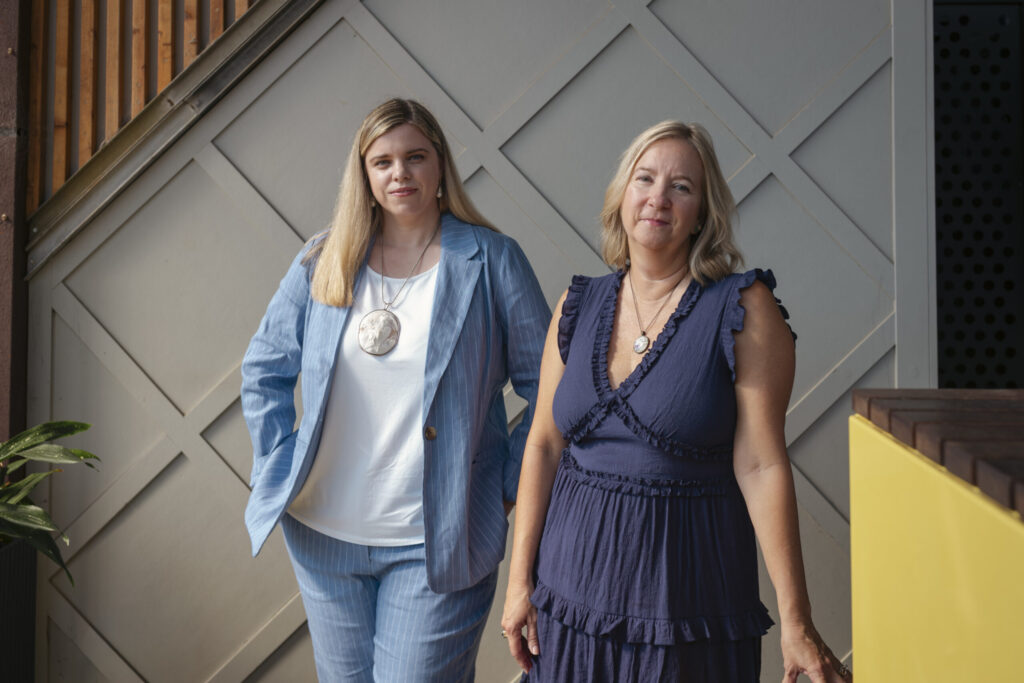
Christina Capra heard about the funding troubles “on the news, like everybody else,” she told me.
Christina is a south Charlotte resident and a member of one of Hollywood’s royal families. Her grandfather, Frank Capra Sr., won three Academy Awards for best director. He created the iconic It’s a Wonderful Life and Mr. Smith Goes to Washington. Christina’s father, Frank Jr., helped produce the Planet of the Apes sequels, before coming to North Carolina on a scouting trip for Firestarter and falling in love with the state’s coast. He later ran Screen Gems, the Wilmington studio that birthed the blockbuster television shows Dawson’s Creek and One Tree Hill.
Frank Jr. became known as the father of North Carolina’s film industry, and Wilmington became known as the Hollywood of the East.
Hold up here, because it’s a fun fact about Charlotte I didn’t know until last week: Yes, Christina Capra, the granddaughter of the guy who made It’s a Wonderful Life, daughter of the guy who built the state’s film industry, just like, lives here in our city. Neat, right?
Christina grew up in California, then went to film school at UNC-Wilmington, where her dad was the distinguished visiting professor of film studies. She remembers watching her dad approach a state legislator he’d never met and ask her, “What are you going to do for the North Carolina film industry?” The legislator laughed, but Frank was being serious. “That’s just who he was,” Christina told me.
So that’s where Christina’s thoughts went when she saw the news about the film grants.
“It’s not just me that’s carrying on his legacy. It’s every film student that’s graduating from film school in North Carolina and going into a completely uncertain market, with uncertain career futures,” she said. “It impacts so many people.”

She’ll be affected directly, too. Her current project, now in development, is Poster Girls, an adaptation of the historical fiction book by Charlotte author Meredith Ritchie. The story is about a little-known piece of local history: In 1942, the U.S. Rubber Company and the Navy built a 2,300-acre, 250-building shell assembly plant near Steele Creek. The plant employed 10,000 local people, about 10% of the city’s population at the time. And because of WWII, most of those workers were women, Black and white. They assembled shells packed with gunpowder. The women who pushed the powder carts wore bells on their ankles so other workers could hear them coming and move out of the way. Ritchie’s book, which has Rosie the Riveter on its cover, centers on two fictional women, both military wives, one Black and one white, who worked at the plant.
“This is such an iconic American story,” Christina told me Wednesday afternoon. “And not only is it an American story, it’s specifically a Charlotte story, and a North Carolina story.”
Christina built the budget for Poster Girls around the expectation that she’d film it here, and it assumed state incentives. She’s still hopeful it’ll happen, but she’s less sure today than she was last month. She’s careful in how she talks about the grant, because she truly doesn’t know what’s going on with the program, or why the money ran out.
But, “I’ve seen some sources say nothing will film until 2029,” she told me. “That’s kind of scary to read.”
The funding trouble, it seems, is a mundane mix of politics and budgeting. Most longtime North Carolina readers will remember that under Governor Pat McCrory, the state’s previous film incentive program — the one that lured The Hunger Games to the state with more than $12 million, and Iron Man 3 with about $20 million — ended in 2014. The next year, the state introduced a $10 million grant program, and by 2018 it was up to $31 million per year. If any money was left over at the end of the fiscal year, it rolled over to the next.
Public audits show that the program used $14 million in fiscal year 2019, $20 million in 2020, and $22 million in 2021. But then it jumped to $38 million in 2022, $93 million in 2023, $41 million in 2024, and $35 million in 2025.
So for several years the program was under-budget and banked money, but then it exceeded its annual appropriation in four consecutive years.
“The only way they can run out of money is if they spend more than what they get, right?” Republican state senator Michael Lee told Wilmington public radio station WHQR.
The new state budget passed this summer, signed by Democratic Governor Josh Stein, includes guidance to cap the annual disbursement at $31 million, several outlets have reported. The budget did include $15 million in a corrections bill, to put toward funding promises to productions that are already owed money. The Port City Daily reports that the program has $106 million in unpaid commitments that “could come due in the next few years.”
The budget’s guidance would “result in little to no program activity for the coming years,” according to a statement the commerce department provided to WHQR. That story also noted Christina’s fear, that in the worst-case scenario, grants wouldn’t resume until 2029.
I reached out to the North Carolina Film Office, which redirected my questions to the state commerce department, which didn’t reply.
Charles and Christina aren’t looking for someone to blame, but someone to help them move forward. They believe that North Carolina — and Charlotte specifically, given its airport and workforce — is a sleeping giant in the film world.
“People say, ‘Oh, it’s a banking city.’ I feel like there’s a real love of the arts here,” Christina said. “I’ve never really met anyone who said, at least not to my face, that we don’t want the film industry to succeed here — Republicans, Democrats, anyone.”
***
The very first shot of the very first scene of Delilah, which premiered on Oprah’s OWN Network in 2021, is an aerial from just above the townhomes on Poplar Street in Fourth Ward, pointed southwest with what’s now the Wells Fargo tower glowing in the distance.
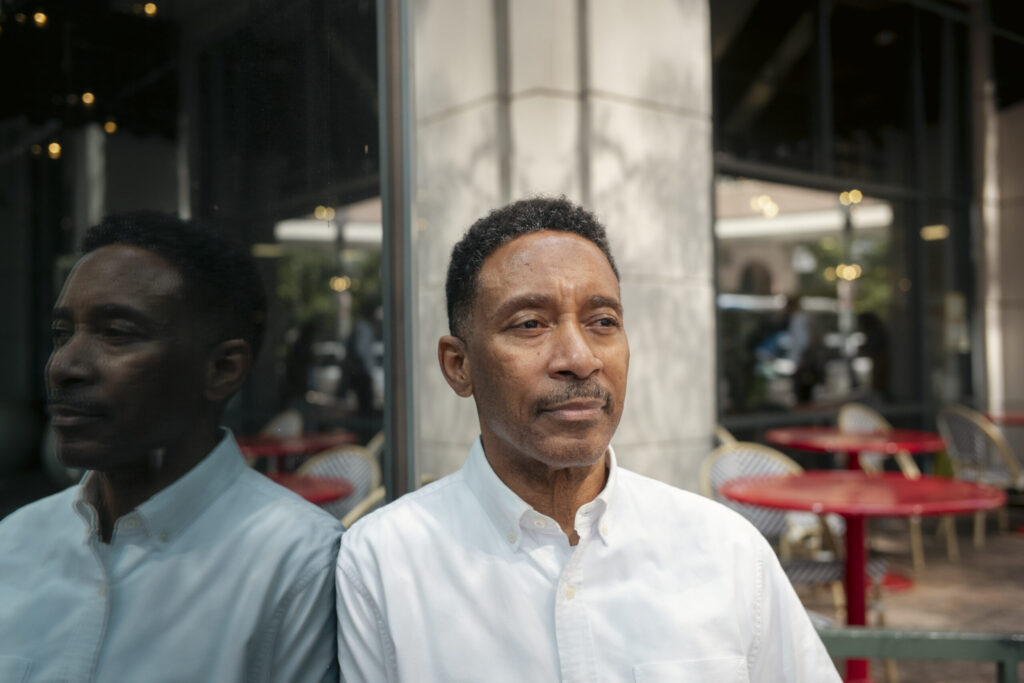
Charles, the boy from York County who couldn’t get into the Carolina Theatre as a kid, still gets emotional when he sees that opener.
“I remember shooting that,” he said. “It was so thrilling to me to go, ‘Look at this.’ … I wanted this to be local because I am.”
He shot a good portion of the show in and around Sugar Creek Road, shutting down streets and blocks for hours at a time. It helped fill nearby restaurants and grocery stores with crew members.
“I think I gave 10 musicians their first song on a national television show,” Charles said. “I used local art in all of the scenes, in all the backdrops, because, you know, that’s how things happen for people. … Everyone was so incredible. We used local actors as well. The main actors who were cast to come in [from outside], they loved being here. Two actually moved here.”
He and Christina talk about movies like little pop-up economies. Even a mid-range production budget these days runs close to $20 million.
“Things you don’t really think about, like dry cleaning and restaurants, art rentals, and on and on,” Christina said. “Just so many things are impacted to the positive from a film production.”
Each one of those little things adds up to one big show, and Charles takes it one step beyond that: “Shows breed shows.”
After the Delilah experience, he hatched plans to launch a studio in Charlotte. Then a prominent member of the Urban League in Spartanburg, South Carolina, called to remind him that, technically, he’s from that state. The city there offered an old warehouse to him for free. Now Charles runs the studio in Spartanburg, under the new company he founded with business partner John Gramling III, Salt Run Entertainment.
And that’s how Charlotte lost a film studio, without anybody here even knowing it was an option.
Charles isn’t ready to release the name of the movie he plans to film at the Carolina Theatre. But he loves to talk about what it could bring. He’s big on workforce development, and cites several partnerships with community colleges and other organizations in South Carolina. While he was a student at Duke, Charles would come home and work each summer at Carowinds. That’s a roundabout way of saying he wants to be able to employ young film pros at a living wage in Charlotte, as opposed to New York, where most production assistants make poverty wages. Most of those jobs there are filled by young people from affluent families.
Charlotte, Charles says, is fertile ground for film. He cites the same reasons many major companies are moving their headquarters here: Talent and tech crews want to live here instead of California or New York.
“You can’t have workforce training without work,” he said. “My ultimate goal always is that I want people in both Carolinas to be able to stay here and work.”
Midway through that thought, he paused and ran his hands along the Matisse-painted table at Amelie’s. “Because I had to leave,” he continued. “There’s no way I could have the career I have had if I hadn’t gone away. There was no option for me to work.”
***

What now?
Charles and Christina hope things will change at the state level. If not, they wonder if local governments and funders can find ways to incentivize the industry, to continue its momentum here. Charles is tapping into prominent local fundraisers to see if they could help him raise any private money to fill the gap on his Carolina Theatre project.
When Christina and I talked last week, I mentioned that the city has a long-standing organization named the Charlotte Sports Foundation, which helps bring major sporting events like the MLS All-Star Game and the Duke’s Mayo Classic to town. What if filmmakers here started a Charlotte Film Foundation?
“I love that idea,” Christina said.
Maybe it’s an absurd idea, practically. But it leads me to something that I brought up to Charles and Christina, during the course of our conversations: When did we, broadly, stop dreaming? When did we become such a square culture, full of 90-degree angles?
Everywhere I turn, I see people trying to “optimize” their lives and their time with AI, or young people using data to try to create the perfect face or physique.
In our own city, the dominant conversations over the past year have been about crime, transportation and highways, business development, and data centers.
Violence and pavement and profits and tech.
They’re all important, but you know what shaves down the sharp corners and makes the world a little more round? Let Charles answer: “I use art. Because I think art heals, and I think it’s our responsibility as artists to do that.”
“Things change and things don’t change,” Charles went on. “The world is very different, but also the world is trying to go back to a time where I was in a segregated theater in a segregated world.”
The Carolina Theatre cost about $90 million in public and philanthropic dollars to renovate. No small price, but now it’s led a world-renowned director like Charles Randolph-Wright to want to bring a multimillion-dollar film production to the city. And it’s led a Capra family member to dream of using the theater for her premiere of Poster Girls, the film about Charlotte that Christina might not be able to afford to shoot in Charlotte.
So back to that dreaming, and the things you can’t measure on a spreadsheet.
Last winter, Christina was invited to the Carolina Theatre to speak at a holiday screening of It’s a Wonderful Life. She remembers being there with those red-velvet curtains, feeling bonded with her family through the classic holiday film her grandfather directed.
You know the film. It’s the one about a man who spent his life putting money into his town instead of himself, and then needed an angel to show him what the town would’ve looked like if he hadn’t.