

The jewelry was in the old woman’s freezer.
When she couldn’t find it, she called her son in a fit. He was a well-known Charlotte businessman, and he rang the agency in charge of her care during her slide into dementia.
“We’ve got a problem,” the son said.
Don Olin was shaken. He and his wife, Sally, founded their caregiving business mostly to help vulnerable people avoid situations like this.
Don’s mother had fallen in her upstate New York home and spent 24 hours on the floor before anyone knew. People deserve more dignity than that, Don and Sally believed. So in 2001, they took $50,000 from their own savings and started Partners In Care, one of only a handful of care businesses in Charlotte at the time. It was a second career for both. Don ran a food brokerage business for 32 years before he and his partners sold it in 1999; Sally was a nurse. She became the planner and organizer; he knocked on doors and sweet-talked hospital staff into spreading the word about their services.
Together, with the help of their children, the Olins built an in-home elderly care business that ran for a decade on a foundation of trust between them and families.
So when that businessman called to say, “We’ve got a problem,” Don and Sally rushed over to the woman’s house to turn over cushions and look behind shelves. They went through the uncomfortable exercise of grilling the caregiver who’d been assigned to look after her. People take advantage of the elderly all the time, after all. Maybe they weren’t immune.
At the house, though, they opened the woman’s freezer and saw a freezer bag full of the jewelry. She’d hidden her jewels from them, and in the process, she’d hidden them from herself.
“That’s the problem with hiding places,” Jennifer Szakaly jumped in as Don was telling me this story last month. “You have to remember where you hid it.”
Jennifer runs Caregiving Corner, a care management firm that helps people and their families navigate the maze of growing old, from finding the best insurance plans, to helping families downsize or transition into a continuing care community, to sitting in on doctor’s appointments. Sometimes, Jennifer and her team are the ones who help family members understand that a loved one only has two weeks left. Caregiving Corner averages about 200 clients each month. Medicare doesn’t cover care management; families pay by the hour, or long-term insurance does. She does take some cases pro bono.
Charlotte’s aging population is exploding. About 18% of Mecklenburg County’s population is 60 or older. It’s expected to be 23% by 2042, with the greatest increase in those 85 and older, which is predicted to grow from about 14,000 in 2022 to about 42,000 by 2042. While plenty of attention rightfully goes to young kids and childcare, the people who care for seniors will be stretched even thinner over the next generation.
When the Olins started their business a quarter-century ago, there were about four licensed home care agencies in town. Today, state licensing records show that Mecklenburg County has more than 500. The Olins were among the first in a field that’s suddenly become crowded and, at times, inconsistent.
Care management firms are dedicated to helping people sort through that list and the many other daunting choices at this stage in life. Though Jennifer’s work isn’t identical to what the Olins did, she considers them mentors.
Which makes this next part all the more interesting: Last year, the Olins hired Jennifer’s firm to help them manage their own care.
Don is 77 and has Parkinson’s. Aides come to his house each morning for four hours, and each evening for another four. He wears a pendant that calls his kids’ phones if it senses he’s fallen. He sometimes forgets and tosses it on the bed, sending alarm bells around the family. A machine on his counter dispenses his daily dose of pills.
His story now reads like a riddle: Who cares for the caregiver?
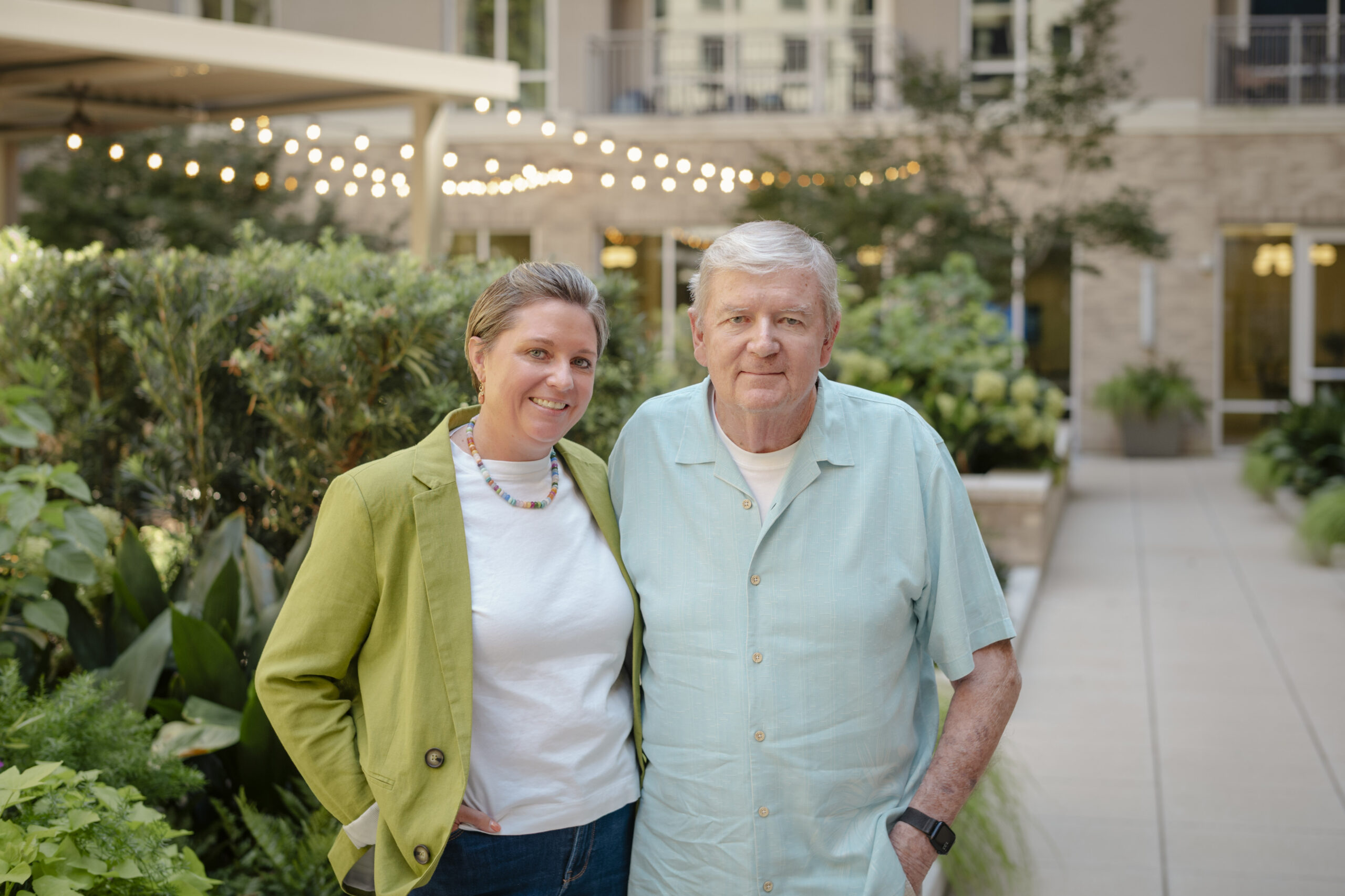
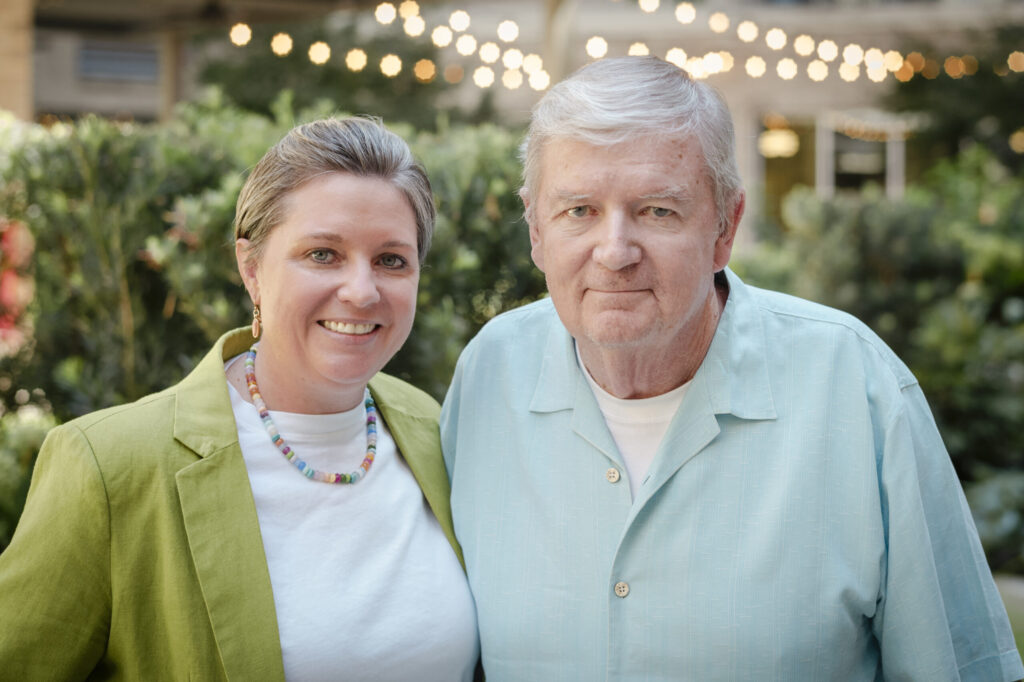
His daughter, Jen Olin Lafontaine, is the first answer. She’s a carbon copy of her mom, a Type A personality who’s prepared for any circumstance. We were all sitting in a courtyard last month — Don, Jen and Jennifer — and they laughed at how things turned out.
“Now I’m on the receiving end,” Don said, “which is hard for me to even say. But it’s true.”
“Dad and I joke all the time that we used to run this agency,” Jen said, “and now he’s got aides coming in eight hours a day. You’re sitting in this seat now, and you’re the customer.”
Don rolled his eyes and let out something between a laugh and a sigh.
***
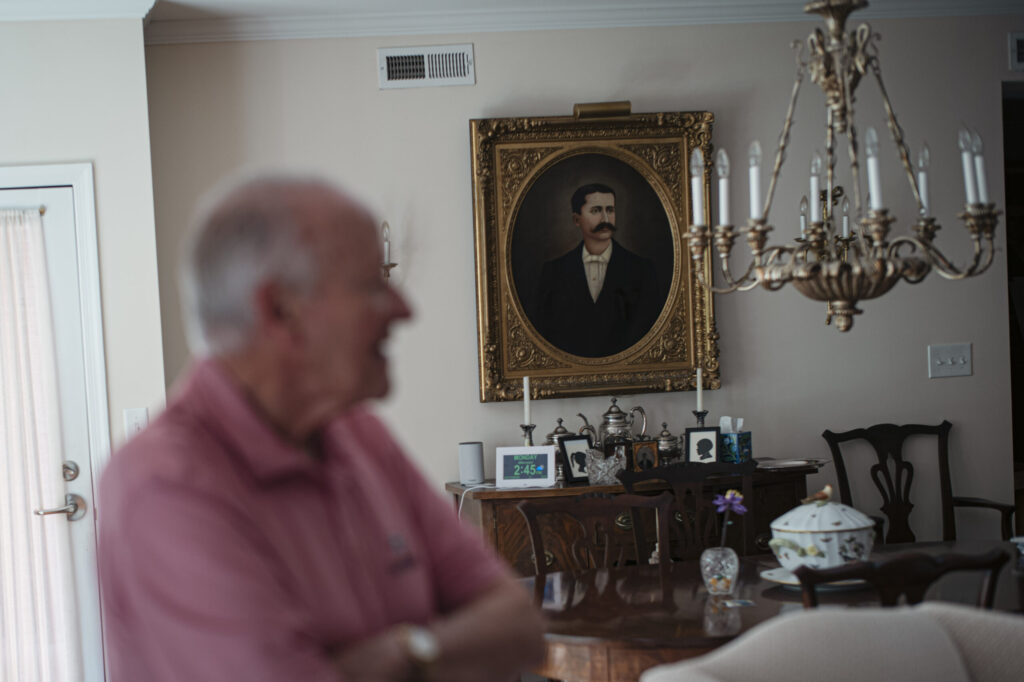
I’ve spent the past five weeks sitting in living rooms and offices and a park with remarkable people 80 years or older who’ve left generational imprints on Charlotte. We call them “8 Over 80” winners, but this year we have nine of them, because two insisted that they accept the honor together. The Optimist is Southminster’s partner on this project.
They include a civil rights icon whose image on the front page of The New York Times went around the world, a former mayor who brought the Panthers to the city, a pastor who built arguably the most influential congregation in town, a former White House chief of staff, and a Marine who became a Pulitzer winner. I have nearly 24 hours of recorded conversations with these people, and they’re among the greatest treasures of my reporting career.
They were dominant newsmakers of their time who’ve faded from the headlines in this era of selective and short memories. Charlotte has a reputation for tearing down its history, but that tired cliche mostly refers to physical buildings. Our city also takes heat for having little to no soul or identity. But what if I told you Charlotte’s identity, its soul, lies in the richness of its people, and that the history is walking and living all around us, every day?
As an example: Before my visit with Erskine Bowles and Nelson Schwab, the longtime friends who’ve transformed the affordable housing landscape here over the past five years, I stopped at Reid’s in SouthPark for lunch. In one of those Truly Charlotte Moments, at the lunch counter I ran into Hugh McColl, the former Bank of America CEO who is credited with building modern Charlotte.
We wound up eating our wraps together, and in our short 35 minutes, a handful of people he didn’t know approached the table to thank him for his contributions.
I asked Hugh, who’s 91, if I should know anything about Erskine and Nelson, who are in their early 80s.
“They’re good boys,” he said.
The people I’ve visited with this past month are keepers of our city’s memories. Their contributions are archived in old newspaper stories. Their names are engraved in plaques on school buildings, government centers, and benches throughout Charlotte. Most are reluctant to accept recognition these days. None asked for anything in return for their work. All they want is for the next of us in Charlotte to continue building together — across race and gender, party lines and policy differences — and make the next great American city for everyone who lives here, and everyone who’s to come.
“It is a place that wants you. And people expect you to get involved with the community,” Erskine Bowles told me of Charlotte, before bringing out the phrase his father taught him, the phrase longtime Charlotteans know will be the next sentence before I even write it:
“Add to the woodpile.”
They want to live on, not in name, but through our actions and progress.
They’ve outlived friends and siblings. Several have outlived spouses. They have enough grandchildren and great-grandchildren between them to fill a few football teams. Still, some have experienced, and continue to experience, loneliness. One said a doctor friend told him to go into a retirement community when he was 80, whether he wanted to or not. Another said, “I don’t keep numbers. I just keep moving.” Another, a widower who’s presided over countless funerals, said of losing his wife, “You learn how to live without a replacement.”
For all the collective fame they had at the height of their careers, and all the money some of them have made, what sustains them is connection — regular dinners with their sons and daughters, weekly guitar and music sessions, an office reserved for them at a workplace, and conversations with the next generation of community leaders. A couple of people from last year’s 8 Over 80 class and this year’s still get together on Tuesday nights for dinner and conversation about issues facing the city and country.
But if maintaining connections is work for some of Charlotte’s most fortunate and well-to-do seniors, imagine what it’s like for folks who didn’t spend a lifetime developing networks of support.
***
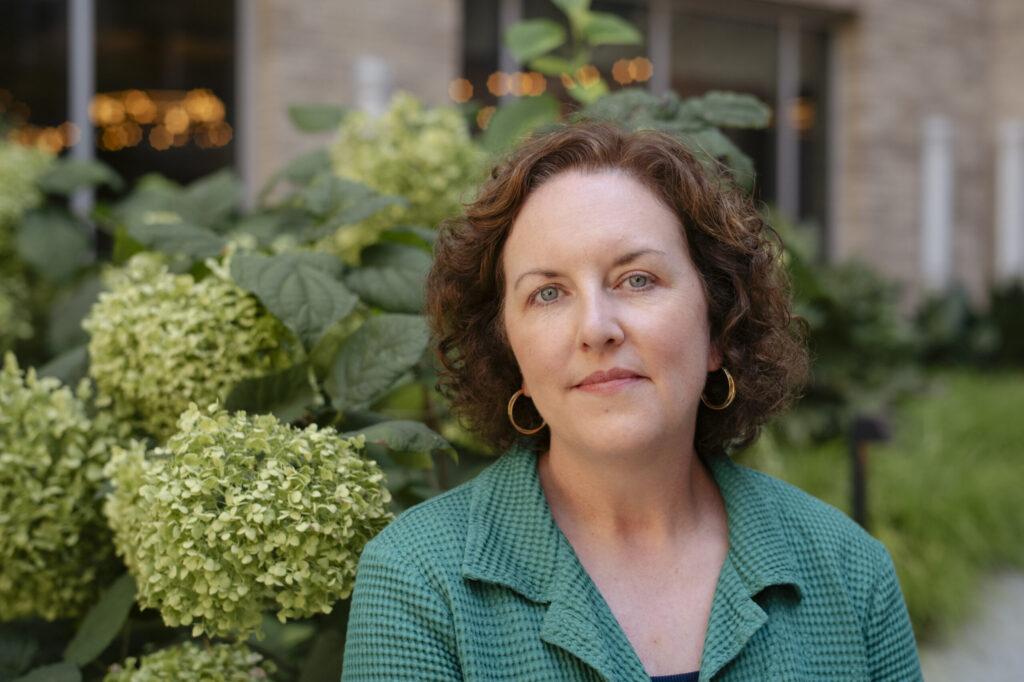
Jennifer Szakaly grew up in Asheville, two neighborhoods over from a continuing care community. She volunteered there in high school, sitting with elderly people who simply wanted a friendly visitor. Their stories moved her.
“You’d knock on the door, a very unexpecting person, and then you find out something remarkable that they had done with their life, and they’re usually very humble about it,” she told me over coffee in August. “In society we really don’t do very much listening to begin with, but [especially] paying attention to older people.”
In 2000, Jennifer was a graduate student in UNC Charlotte’s gerontology program when she wrote a “Status of Seniors” report with the Council on Aging. They presented it to a room full of local leaders, including the mayor and county commission, as she recalls. It was a snapshot of the community, with planning recommendations.
The nationwide caregiving crisis is due largely to two demographic trends. First, the oldest members of the Baby Boom generation turned 80 this year. Second, the generations behind them began having fewer kids around the 2008 recession. Colleges are in the first year of their slide into the enrollment cliff, meaning the young workforce cliff is next. “It’s the mouse coming through the cobra’s body,” Jennifer says.
It’s not as if nobody warned us. Around 2018, Southminster commissioned the “Meck 60+” study with UNC Charlotte gerontology researcher Julian Montoro-Rodriguez. The professor’s team surveyed about 760 adults ages 60 and older, along with 130 caregivers, who mirrored the county’s race and gender demographics. As many as 43% of those surveyed indicated they lived alone. Montoro-Rodriguez hoped the report would spur a comprehensive funding approach for the areas of need, but so far public investments haven’t kept up.
The first sentence of the study’s 2018 announcement noted, “Experts project that by 2025, 9 out of 10 counties in North Carolina will have more people over the age of 60 than under 18.”
Today, 88 of the state’s 100 counties are there.
And here’s the thing: Mecklenburg, with an average age of about 35.5 years old, is the sixth-youngest of North Carolina’s counties, behind only those with large military or college populations.
The pressures of aging are more acute elsewhere. North Carolina added nearly 400,000 residents between 2020 and 2023, and about 47% of them were 65 or over. More than 210,000 North Carolinians are living with Alzheimer’s.
I got the statewide figures from Tom Akins, the president of LeadingAge North Carolina, an association of nonprofit continuing care communities, including Covenant Village in Gastonia, Cypress of Charlotte, the Pines at Davidson, Sharon at SouthPark, and Southminster. Tom’s 65 and his mother is 99, living in a continuing care community in Kansas. His father died in 2017 in a memory support unit after living three years with Alzheimer’s.
Tom and I spent a good bit of our time talking about North Carolina’s fastest-growing county, Brunswick in the southeastern corner of the state, near where he lives in Wilmington. Retirees from northern states have been settling in Brunswick in droves for more than a decade. Akins says the “caregiver supply” is generally measured as the number of people under 65 for every person over 75. Brunswick’s ratio is about 24:1 now, but projected to fall to about 5:1 in 2045, Akins says. That’s five people in the county under 65 for every one person over 75.
“Who’s gonna care for those folks?” Akins said.
My own father spent his final years in Brunswick County. He was in the care of a for-profit hospice agency for more than a year. While the nurse assigned to him, Courtney, was wonderful, the process was a mix of frustration, sadness, and occasional humor. From late August 2018 to early January 2019, he lived in a shared room in a skilled nursing facility, barely slept, and waited an hour sometimes in soiled sheets. About 24 hours before he passed, we moved him to a nonprofit hospice house, where he had his own room with a memory garden outside, and we ate meals supplied by generous community members. It was, as far as these things go, a beautiful place to die.
I told this story to Akins, and he nodded, as if it were one he’d heard dozens of times. He believes for-profit elderly care operations are necessary to the overall picture, but there needs to be balance.
“They’re bringing money into the system, and they’re bringing efforts,” Akins said. “But to the extent that there is a shareholder or an investor out there that needs a return, what you’re going to see is continued downward pressure on the number of staff that are in that facility, and I think there’s a direct correlation between the number of staff you have and the quality of care that you’re able to provide.”
That ratio of potential caregivers to people over 75, Akins says, is going to be one of the state’s most critical issues going forward.
“You can’t fight demographics,” Akins told me. “You need to tell people … to go start having more kids. But that’s going to be 20 years before it has any impact.”
One additional note from Akins: Immigration is deeply tied to caregiving. Foreign-born workers represent about 19 percent of the overall workforce in the U.S. But they make up 28 percent of the elderly care workforce.
“That’s a really strong headwind that we face,” Akins said. “We’re just not going to be able to care for everybody unless we look at some different kinds of options.”
One is technology. Akins says developers are working on sensors that can detect when a patient’s bladder is full, then alert a staff member in time to get them to a toilet, not only saving the staffer’s time, but saving the patient from shame and their families from frustration.
The people filling the caregiving gaps in our state and city are family members. In 2021, North Carolinians provided 1.2 billion hours of unpaid care, adding up to about $16.5 billion in unpaid labor. Many of those caregivers are working-age children who are reluctant to ask for help for themselves.
“HR professionals refer to it as ‘the quiet epidemic at work,’” Szakaly told me. “People don’t want to be perceived as complaining if they need to vent, if they’re frustrated by the overlap of their challenges of everything that’s on their plate. But it’s also sad. It’s not a happy life transition.”
Working-age people are unlikely to flood a field where they get paid as little as $15 an hour, especially in a place like Charlotte, where the city, county, and big banks all have pushed their minimum wages past $20. Advocates in the aging industry want the General Assembly to pass legislation that provides a stipend to family members who provide care. So far it hasn’t.
Montoro-Rodriguez told me that Southminster continues to invest in his work, years after the Meck 60+ study. The nonprofit has funded his Caregiver TLC (Thrive, Learn, Connect) effort, which does workshops with caregivers to support their own mental health, while they care for a family member.
“They really have responded,” Montoro-Rodriguez told me of Southminster, without my asking, “but we need more like that. More collaborations and ways to make the topic really more relevant.”
The state does have one program, Project C.A.R.E., that gives dementia caregivers support and $500 vouchers. But a January 2026 report to the Governor’s Advisory Council on Aging says that the number of caregivers served has dropped sharply in the past few years, as host agencies have raised their costs and state funding has remained level.
“It’s not perceived as a priority,” Montoro-Rodriguez said, “when in fact it’s one of the main priorities, because it affects pretty much every family.”
***
Every year, Don and Sally Olin took a trip to Hilton Head for what they called their Death Binder Weekend. On the first night, Sally would pull out their Death Binder, which included accounts that had been updated, passwords that had been changed, and other things their children would need one day.
Sally was relentless about planning. One day, Don remembers, she said to him flatly, “We’re going to the funeral parlor.” She’d received a pamphlet in the mail that said there was a special for veterans, and Don was a veteran.
“Oh boy!” Don remembers replying sarcastically. “Here we go.”
A few years ago, Don started to receive care from Memory & Movement, a nonprofit organization that works with patients dealing with symptoms or effects of Alzheimer’s and Parkinson’s. He thought it wasn’t the best use of time and money, but Sally insisted he take more tests: “Whether you like it or not, we’re doing it.” Sure enough, Don received an official Parkinson’s diagnosis.
Sally had already been diagnosed with pancreatic cancer by then. She led their move out of their two-story home in the Arboretum area, into a 55-plus community in Weddington. She also started passing off decisions that she’d always made during their 55-year marriage. She’d ask Don, What do you think of this rug? How about this couch?
He later realized she was prepping him for a time when she wouldn’t be here.
In 2025, Jen, who has kids of her own and a career as a fractional COO, called in one of her own clients, Caregiving Corner, to help. The firm assigned the Olins a nurse care manager named Allison who would sit in on doctor’s visits the family couldn’t make.
In October last year, the family threw Sally a 77th birthday party at Divine Barrel. Everybody was there: Jen, her twin brothers Michael, a dean at Princeton, and Matt, co-founder of Charlotte Is Creative. So were about 35 others. Sally danced much of the night.
The next morning, she couldn’t get out of bed. At about noon, Don called Jen, not knowing what to do, despite all the years he ran a business handling similar situations for others. Jen told him to call 911.
The first night in the hospital, Sally was septic. A doctor pulled Jen into the hallway and told her they were going to start penicillin and that she might want to call her father, because Sally might not make it through the night. Jen told the doctor, “Wait a minute.” Her mother was allergic to penicillin. The doctor looked at the chart and saw that information he’d missed.
The Olins never left Sally alone after that, not for a single hour. They wrote their shifts on the whiteboard so she knew who’d be coming.
A few days later, Jen was sitting in the hospital’s parking garage when Allison, the nurse care manager, called. Allison had just seen test results in Sally’s patient portal, which the family had given her access to. Jen read them and asked what they meant.
“Do you really want to know?” Allison asked.
“Yeah, I want you to tell me,” Jen said. She didn’t want to hear it from a doctor who didn’t know the family as well as Allison did.
“She’s got two weeks,” Allison said.
Jen appreciated the clarity. She remembers doctors couching the news by suggesting hospice care and other things, but she never got the cold and plain timeline from them. Jennifer says that’s much of her team’s job, translating between doctors and families.
“Doctors don’t have the time always to get to know someone,” Jennifer said. “They might have a good relationship with the patient, but you might have three people in the room that need to hear the information in three different styles, three different ways.”
Jen walked out of the parking garage that day and into the hospital. She pulled her brother Matt into the hallway to tell him their mother had two weeks to live. And together, Jen and Matt told Don.
I asked Don, during our conversation in the courtyard, if he remembers that part. He doesn’t. “That’s that blank area where we’re all just praying that maybe this isn’t all true. And in reality, it is true.”
Jen remembers furiously texting friends and family to update them, until Allison pulled her aside and said, “You need to put your phone away.” Jen handed the responsibility of telling others to her husband.
One day when Don wasn’t there, Sally asked her three children to pull up chairs next to her hospital bed. She told Jen to grab a notebook. Then she spilled the last plans of her life, the last things she could take care of for them: Which life insurance company to call, which accounts to log into, and the long-term care policy she wanted Jen to activate for Don the day she died.
She’d already finished her Christmas shopping for her grandkids, and told her kids where the presents were hidden. “Jen,” she said, “I need you to finish the stockings.”
Sally died on November 10, 2025. When the family went to the funeral home, everything was already taken care of. She’d miscalculated only one detail, the obituary. Her family had drafted a long one, and it would cost about $2,500 to publish in the Observer. The funeral director told them Sally had set aside $250 for her obit. It was one of the few times in those terrible weeks that they all laughed so hard they couldn’t breathe.
Sally prepared for everything, except how much people would want to honor her.
***
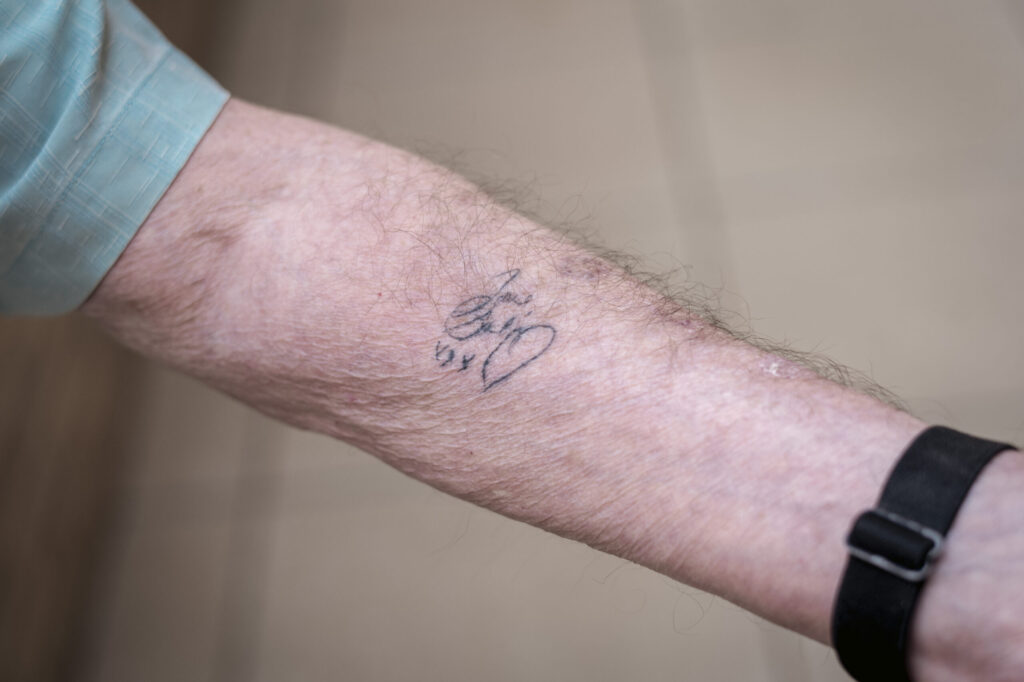
Three days before Christmas, Don and his kids went to a tattoo parlor. He’d sworn he’d never get one, but now he has Sally’s signature and a heart on his forearm. Jen has her mother’s handwriting. Matt has “Love, Mom,” and Michael has the waveform of her voicemail saying I love you.
Don’s still a salesman, in some ways, and he made sure I knew what he wanted the overall message of this story to be. “If nothing else comes out of this,” he said, “I hope it’s that people understand they’re not alone. There are resources out there. And don’t be afraid to plan a little bit ahead.”
Jen’s assumed the role Sally left open. She’s already started scouting future living options for Don, including continuing care communities, in the event he can no longer stay in his house. For the most part, the home is outfitted for him to grow old there. But it does have an upstairs room, with a television, and Jen’s told her father that he’s not to go up there without help. One of the top risks for someone with Parkinson’s is a fall.
A few weeks ago on a Sunday, Jen called Don, and he said he had friends over for the Panthers game. She looked at her husband and said, “He’d better not be upstairs watching.”
“It’s my man cave,” Don said in a low, tough-guy voice that was convincing to none of us sitting with him. Jen rolled her eyes.
Sally also left behind instructions for Don and his potential love life, after her death. “I don’t care if your dad gets remarried,” Sally told Jen once, “but nobody’s name is going on any of the financial paperwork. No one. That’s my one rule.”
Don, half listening, said, “So what’s this about I can’t … date?” And we all cracked up.
One thing about caregiving that can’t be measured in legislation and statistics and studies: It’s the passing of responsibilities from one person to another, when the first person can no longer carry them.
Don got a call a few weeks ago from his Walgreens, reminding him that he needed to come in for his annual COVID and flu shots. For 55 years, Sally managed the house and the money and the doctors’ appointments.
“I’m thinking, I just got those,” he said of the reminder to get his shots. “And I honestly don’t know. I guess I’m going to go there and have them look up the records.”
Jen sat silently, then blurted, “Trust me, you’re due.”
Don looked at me and said, “See that?”
Then he glanced up to the sky, and Jen said, “The baton has been passed.”
For all their time working as caregivers, and for all the planning Sally did, the Olins say that even they weren’t fully prepared for this stage, and the thousands of logistical decisions it brings alongside the emotional hardship. That’s true for almost everyone who knows elder care. Akins, the LeadingAge North Carolina president, said of helping his mother over the two months since her fall: “It’s just impossible.”
“When you’re in it,” Jen said, “there’s no amount of work experience that can get you through.”
The same was true, in this case, for the care manager. “Sally was somebody that I looked up to,” Jennifer said. “I found myself almost looking ahead and thinking, ‘I wonder, having lived a life as a care manager, how I’m going to experience my own aging and my own decline.’”
Jennifer viewed every decision through a lens of, What would Sally want?
This was the one part of our conversation that got Jen. Listening to someone else describe caring for her mother, just a few weeks before the first anniversary of her death, she started to cry.
Don, who an hour earlier had rolled his eyes about being the customer, gathered himself and became the parent again.
“You OK, kiddo?”
Editor’s note: The Charlotte Optimist is Southminster’s media partner for the 2026 8 Over 80 awards. Southminster did not review this essay before publication. Special thanks to Tracy McGinnis, Southminster’s vice president of philanthropy and strategic initiatives, for her vision and trust.