Days away from his last breath, William McNeely held an iPad against his belly as a medical team wheeled him into surgery. On it was a plan for how he wanted to live.
First they stopped to visit with his family. “I love you” sounds a little different when you’re going back for a double-lung transplant that your body might reject. This was the only moment McNeely felt scared, looking at his children, then young adults, and his wife, Sheila.
He’d lived a good 55 years to that point. His life traced a familiar arc for kids from his era — a Black child from a lower-income neighborhood, Clanton Park, lifted by court-ordered desegregation and sent to schools with kids born into more opportunity. He carried an appreciation for proximity and connection into adulthood, building relationships that eventually led to a successful career at Apple in the 1990s.
But in the late 1990s and 2000s, after a court decision ended busing, McNeely became a father and middle-aged professional who watched that connective system disappear.
Segregated schools again became the norm. Kids in west Charlotte rarely interacted with kids from east Charlotte, and kids from any struggling community were as familiar with uptown’s business culture as they were the moon.
There in that hospital bed, McNeely mapped out a plan to spend his life helping rebuild the system of connections that had sprung him. His vision was to create physical spaces designed to make kids’ ambitions visible to others, and to themselves. If all went well and his body accepted those new lungs, he promised himself, he would make it happen.
So he hugged his family in that waiting room, took a short ride into surgery, then handed the iPad to his doctor.
“Give me this iPad back in the morning,” McNeely remembers saying, “because I got stuff to do.”
That was March 2019.
***
Now it’s January 2026, and McNeely catches his breath after we’ve walked upstairs into a former chapel at Shiloh Institutional Baptist Church in the Camp Greene neighborhood off of Freedom Drive.
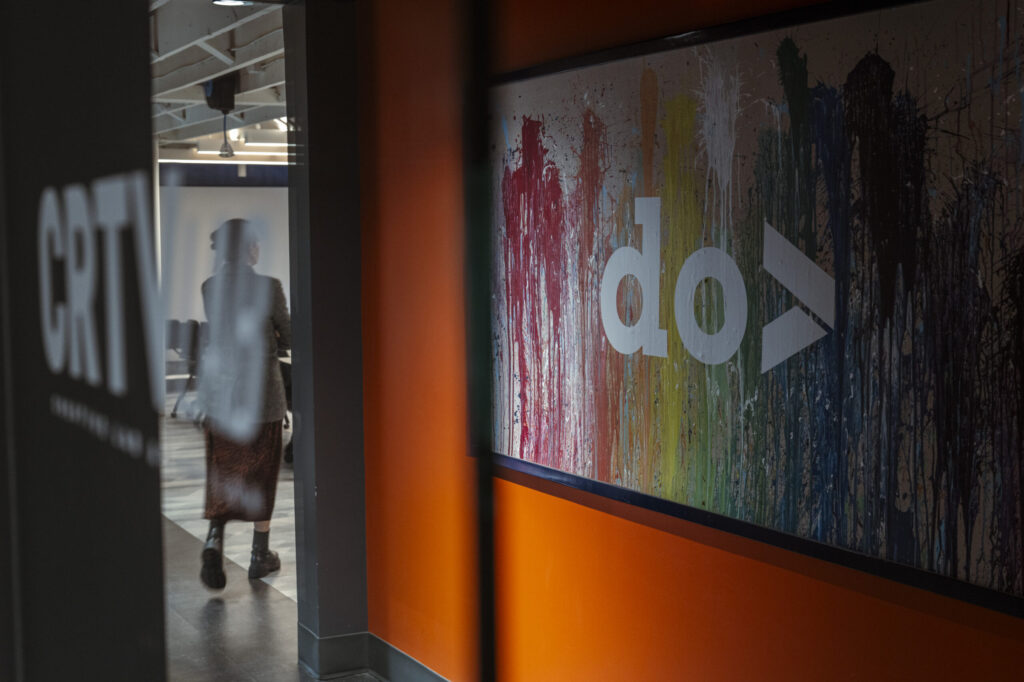
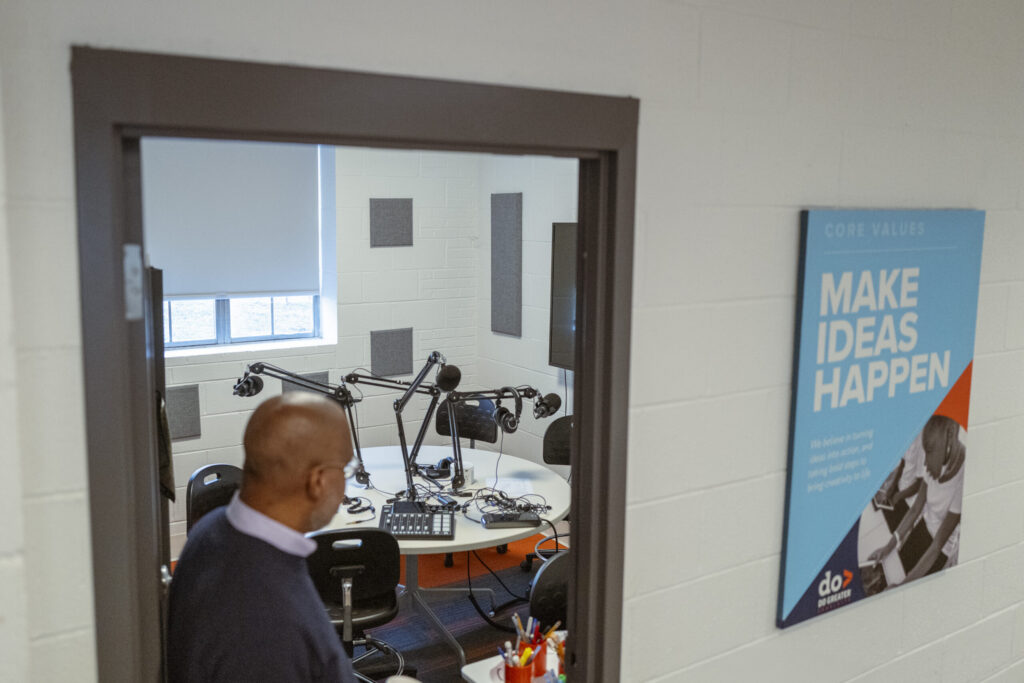
His nonprofit organization, Do Greater, already occupies the church’s former basement. In 2022, Do Greater renovated that space into a coffee shop with meeting rooms and a laboratory, where students from Title I schools come to launch and test ideas, create merchandise, and meet people. The basement also has become a Charlotte community hub, where fledgling entrepreneurs come for pitch breakfasts and business leaders meet for civic meetings. They call it Do Greater’s Creative Lab. A tour of the space is like walking through a carwash of motivational quotes: “Ignite Creativity,” “Nothing Is Impossible.”
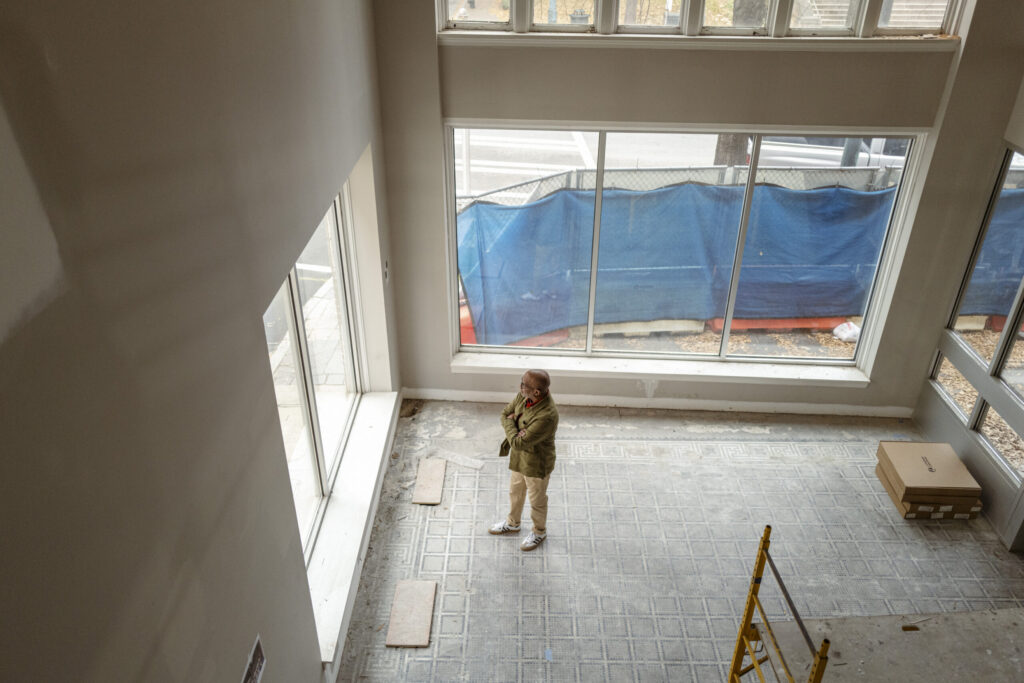
Now demand is so high that Do Greater is expanding. The organization is overhauling a Tryon Street building in center city that used to house former Mayor Harvey Gantt’s architecture firm, and before that a car dealership. At the same time, crews are renovating the upstairs chapel at Shiloh.
Old yellow light fixtures still hang from the chapel ceiling. Crews removed the pews around the start of the year. A 100-inch television sits in a box along a wall. After catching his breath, McNeely describes his vision for a room that blends a high-tech digital labs and coworking areas, all in service of upward mobility. Kids from disadvantaged neighborhoods will be able to record live podcasts here in the same room as professional hosts, or hold events to introduce their ideas to an audience.
The goal is to help ambitious kids from underserved communities capitalize on curiosity before it hardens into frustration, and to make the connections that turn ideas into futures.
He calls such moments “creative collisions,” or “sparks.” And that’s why, amid all the “Creative This” and “Coworking That” popping up around Charlotte, Do Greater will soon rebrand its spaces into something that stands apart, and something a little more literal: Sparkhouses.
“We understand that if this environment is conducive for these sparks to start happening,” McNeely says, “then they will happen.”
If anyone would know, it’s him.
***
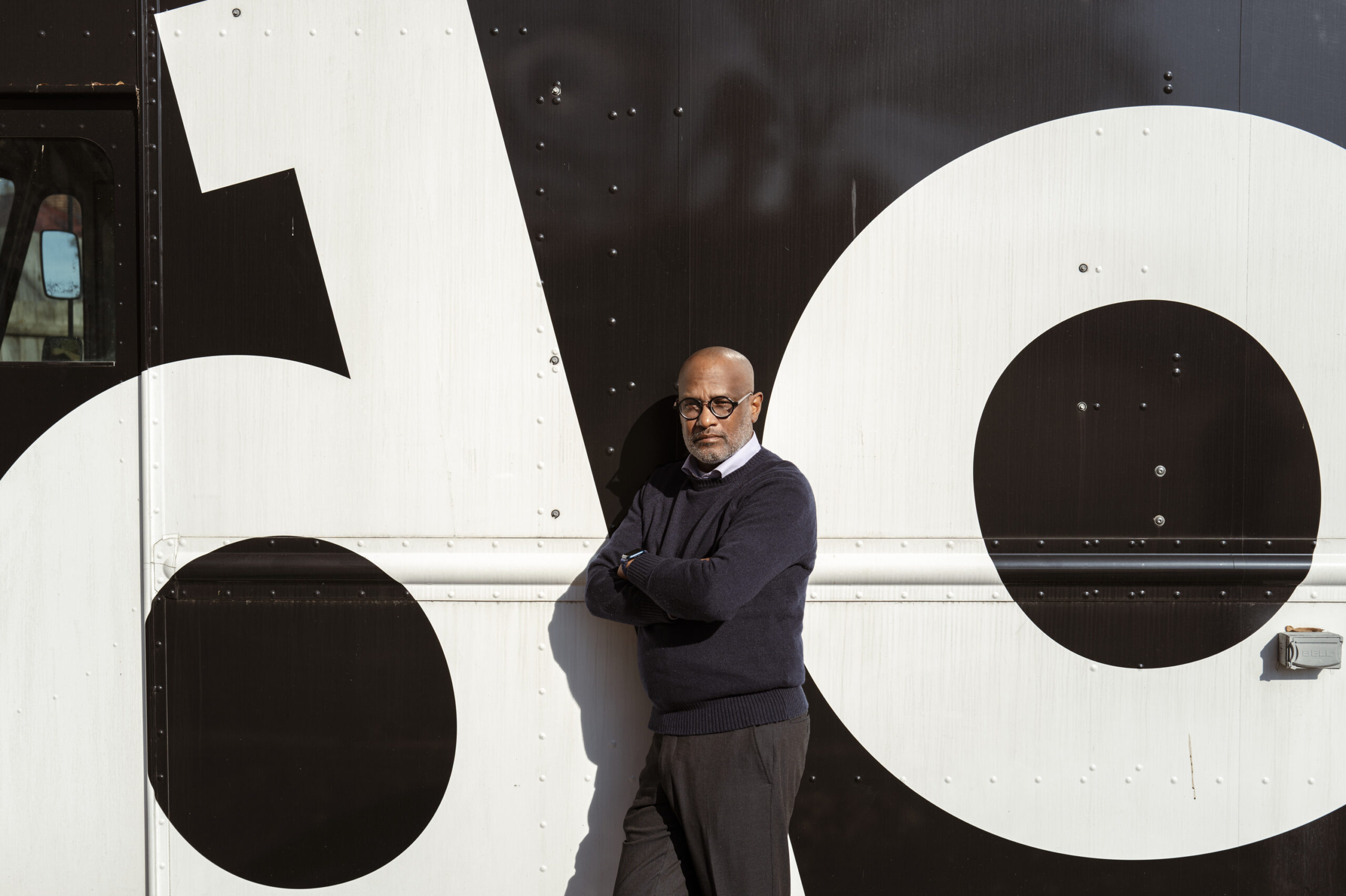
McNeely was a toddler when his mother put him and his three siblings — two older brothers and a younger sister — on the train to her hometown of Charlotte. She was separating from the kids’ father, who was in the military and stationed in New Jersey.
They moved in with her mother in a rental house off of Beatties Ford Road, then to a public housing community called Belvedere Homes, before eventually settling in a house she bought in Clanton Park.
William’s mother went to nursing school at CPCC, cleaned houses, and worked part-time at Johnson C. Smith, often juggling multiple jobs at once. Wherever they lived, William remembers hearing her say on repeat: “I will not let my kids fail.”
The Swann v. Charlotte-Mecklenburg Board of Education Supreme Court decision of the early 1970s mandated busing as a means to achieve desegregation. As far as McNeely’s concerned, there’s no question: Busing was his family’s spark. He went to Carmel Middle and South Meck, with his mother’s voice always on his shoulder: “Take advantage of everything that’s offered to you — everything.” He became South Meck’s drum major. His brothers rose in the ranks of ROTC and went off to college; his sister, bused to Olympic High, became a standout athlete.
Around his senior year, one of William’s bandmates helped him land his first job at the old Sedgefield Pharmacy on South Boulevard. His responsibility was to deliver prescriptions to people in Dilworth and Myers Park, learning how to drive a manual transmission on the fly.
“Now you’re starting to see these different things,” McNeely says. “And you start having these aspirations: What does it take to live here? And people would start to tell you, do this and this and this. And you can do the same thing.”
William initially studied engineering at N.C. State, but didn’t like it, and eventually transferred to UNC Greensboro to finish his degree. This was in the mid-1980s, and McNeely had developed a fascination with Apple founder Steve Jobs. He knew he wanted to work at Apple but didn’t know how to get there, so he walked into a store called Computer Land and started asking questions. The manager offered him an unpaid internship selling Apple products. One day, Apple’s regional manager entered the store and asked, “Who is that kid?”
McNeely soon landed a job in customer support, then began shadowing a regional manager all around North Carolina before becoming an account manager himself.
You can see how he translates his story to Do Greater students.
“I said, ‘Well, if I want to work at Apple, then how am I going to do it?’ I said, ‘Well, the only way I can work at Apple is to find somebody that works at Apple,’” McNeely tells me. “It’s this intentional process that you can start, just by starting.”
***
When busing ended after another court ruling in 1999, Charlotte didn’t exactly have the social infrastructure — nonprofit or for-profit — to soften the transition. There were few places for kids from one side of town to meet peers from the other. Creative collisions were no longer the responsibility of public education.
A 2014 report ranking Charlotte last among large U.S. metros in social mobility prompted a widespread community response, and several new organizations formed to focus on transferring “social capital” — or, in basic terms, connections.
McNeely’s youngest child was at South Meck at the time, and McNeely helped coach his football team. He paid close attention to opposing schools and how different the teams’ makeups were compared to his high school days.
In March 2016, McNeely woke up one day and couldn’t breathe. Doctors diagnosed him with idiopathic pulmonary fibrosis, a chronic disease that worsens over time. He hauled an oxygen tank behind him everywhere he went after that, including on the sidelines at his son’s games. Soon he was declared medically disabled.
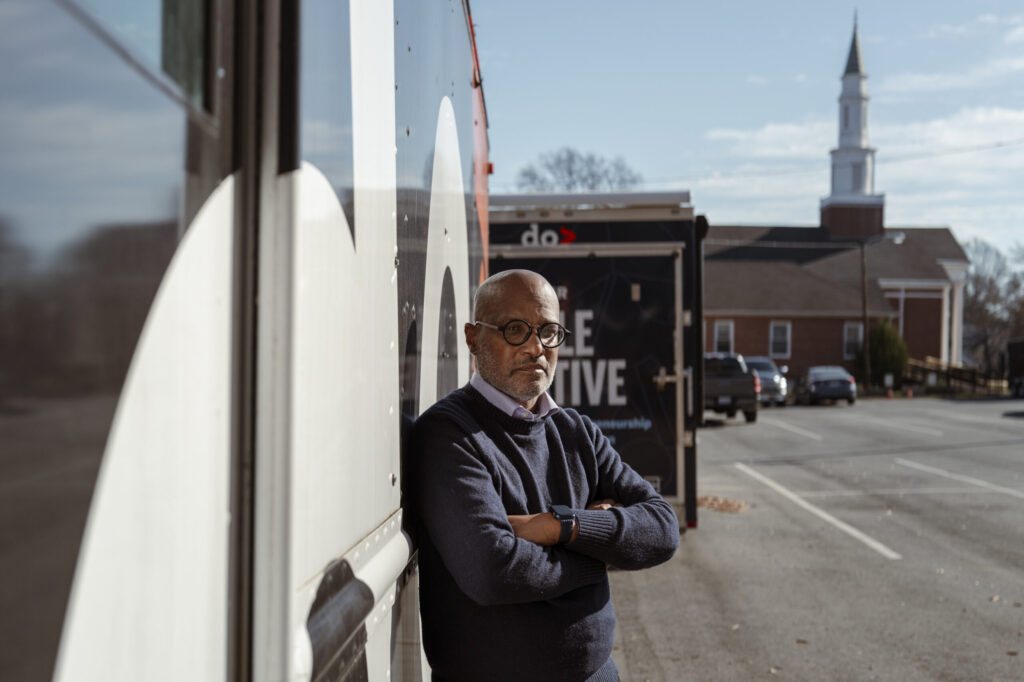
He hated sitting still. During the day, he’d visit the Apple Store at SouthPark, watching who came in and how they interacted with the latest technology. He noticed who wasn’t there. The observation led him to a new idea: Do Greater as a mobile lab that could travel to underprivileged kids. Sort of like a roving Apple Store.
He eventually found a beat-up truck at a facility off of Interstate 77.
“God this is terrible,” he remembers saying. “I’ll take it.” He raised about $4,000 from family and friends to buy it, and had a local company wrap it with a Do Greater logo his wife created.
Then, in late February 2019, even the oxygen tanks weren’t helping. A doctor told him he had two weeks left to live.
“I automatically said, ‘Oh, it’s not that I have two weeks to live. I have two weeks to figure out how to keep living,’” he remembers telling the doctor.
That Friday, an organ donor’s lungs became available at Duke Health’s Pulmonary Fibrosis Center in Durham. McNeely arrived the next day, tapping out plans on his iPad for how he wanted Do Greater to, well, do more.
***
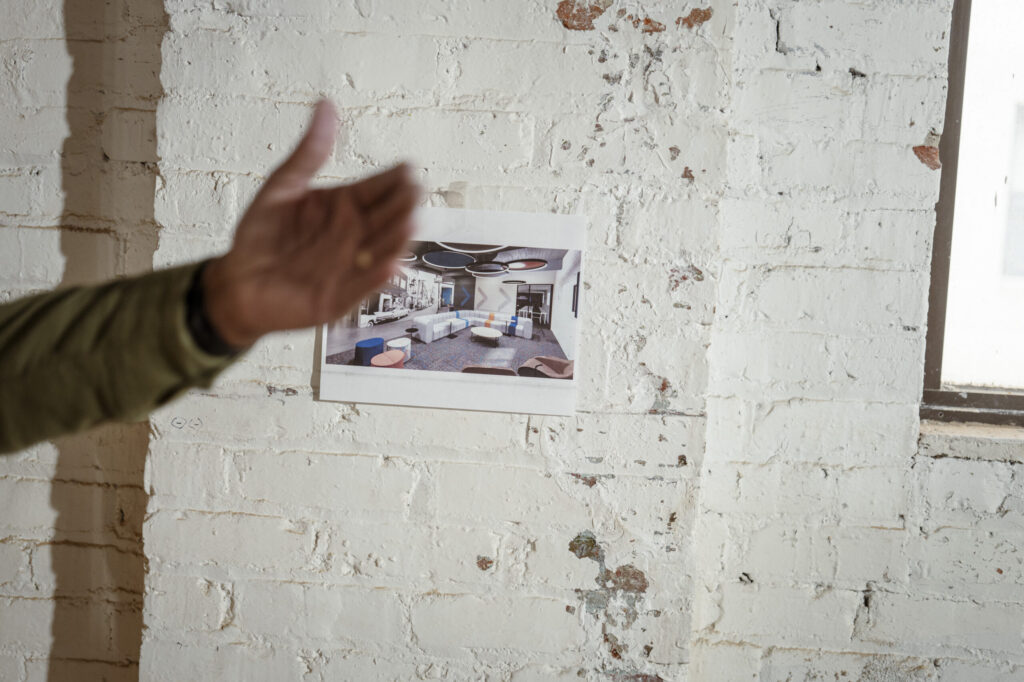
A few years after surgery, McNeely found himself inside a century-old building at 500 North Tryon Street with Harvey Gantt, one of the most important figures in Charlotte history.
The building was most recently a headquarters office for Michael Bloomberg’s short-lived presidential campaign in 2020. Bloomberg signs still leaned against the walls.
McNeely had never considered an uptown space, and he certainly didn’t have Bloomberg money to blow on it. But he had a feeling. Then Gantt began telling stories about the inspiration and creativity that once happened inside the old brick walls.
That’s when it became clear to McNeely that Do Greater could usher in a new era of inspiration here, and serve as a place teenagers could go uptown at night. He signed a lease and started raising money.
When completed later this year, the three-story building will be designed for movement. The main floor will have a coffee shop and event space up front, and classrooms and workspaces for students in the back. Upstairs are offices professionals can rent. The basement will include multimedia studios and podcast rooms available to both professionals and students.
Sparkhouse, in McNeely’s ideal world, works like this: Students learn photography through Do Greater programs, use shared equipment to make photos around the city, then return to the building to show that work to professionals renting offices upstairs. And those professionals may become collaborators or clients for the young photographer.
Walking through the building on a recent Monday, McNeely rattled off Do Greater’s partners — from Wray Ward to Carolina Youth Coalition to large corporate sponsors like Truist and Ally. One connection after another.
It’s a lot for anyone to manage, let alone a person who takes more than a dozen medications each day to regulate his body and the foreign lungs.
McNeely has built out a small team to help move Do Greater in directions even he can’t envision, including Kelsey Van Dyke, named one of The Charlotte Observer’s emerging leaders in December.
“I want to change how seriously we take young people,” Van Dyke told the paper. “Charlotte’s youth have ideas, insight and lived experience that should shape our city now, not someday.”
McNeely, who turns 62 at the end of February, also survived a scare with prostate cancer last year. In March, he will mark seven years since his transplant. The average lifespan for people who receive lung transplants happens to be seven years, but he doesn’t dwell on that.
Instead, he’s living by his 2026 motto: Start Anyway.
That means continuing to see futures in forgotten spaces, building a team that can carry his work on for decades, and telling himself the same thing he tells everyone, from students to venture capitalists:
“Passion will make you do things,” he says. “But when you find your purpose, that’s when you start doing the impossible.”