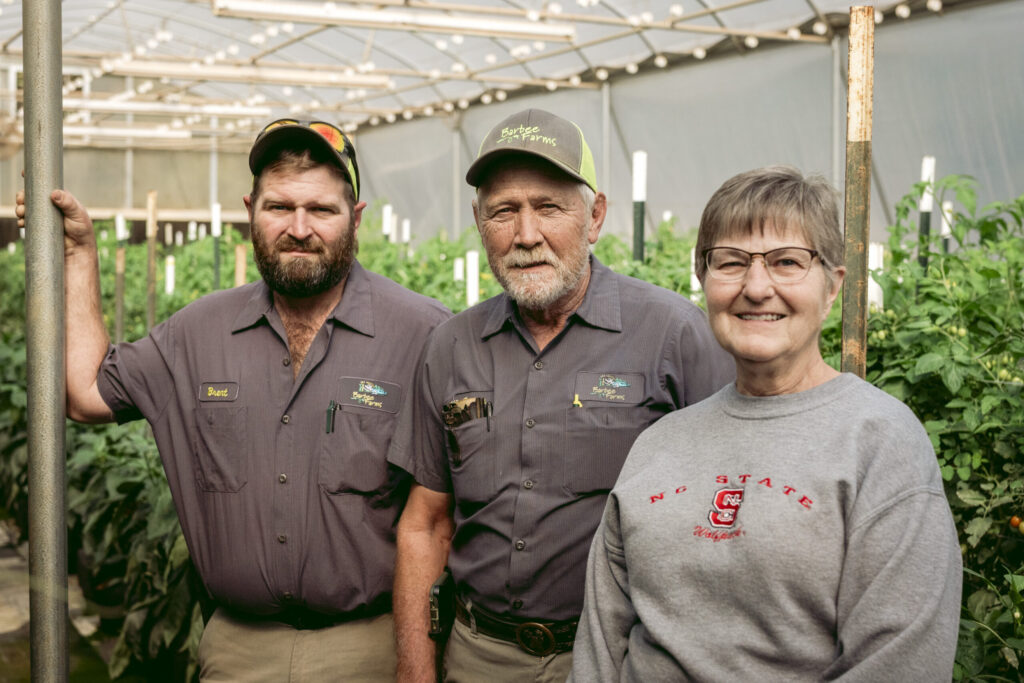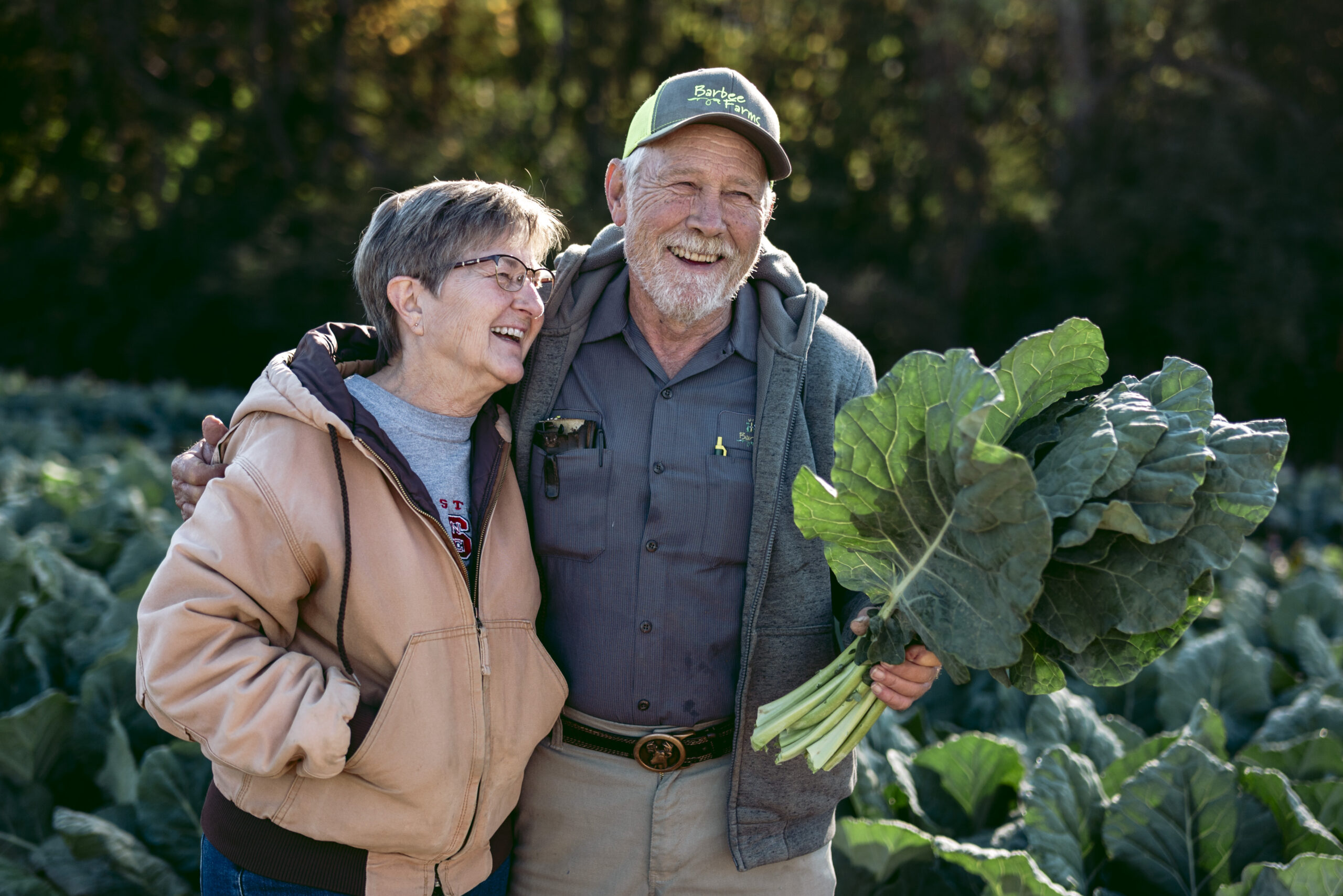
Tommy Barbee came inside after a long day tending to hogs and found his young son distraught. Brent Barbee was around 10 at the time, and some kids at school had been making fun of him for being from a farm family.
Tommy, the fifth generation to work this land in Concord, looked at the sixth generation and asked him, “Son, are you ashamed of how you have been brought up, our farm life?”
He braced for the answer.
This was the late 1980s or early 1990s, around the time Costco introduced rotisserie chickens for a few bucks. Chain grocery stores were everywhere. Vinyl had given way to cassette tapes and soon, CDs. Fast, mass everything. Kids in city schools in Charlotte, which was becoming a town of suits and finance, would dress up in overalls and thrifted straw hats on Friday nights to mock visiting football teams from rural areas. It seemed to Brent that every kid in his generation had lost touch with the reality he knew — that meat came from slaughter instead of aisle 6, that produce rose from the ground seasonally instead of being shipped in all year long.
If the boy had told his father he was indeed ashamed, “I’d have probably changed my lifestyle,” Tommy says now. “Which would’ve been a complete mistake. But you always want your kids to feel like they have a purpose.”
But Brent looked up and said, “No.”
Today Brent’s the sixth generation to farm the land, and he has a boy of his own who goes to nearby Cannon School. The Barbees are now stars of career day, and whenever they visit the school, other kids and their parents thank them for what they do.
***
A generation later, a young woman from Charlotte named Jasira called home from college upset.
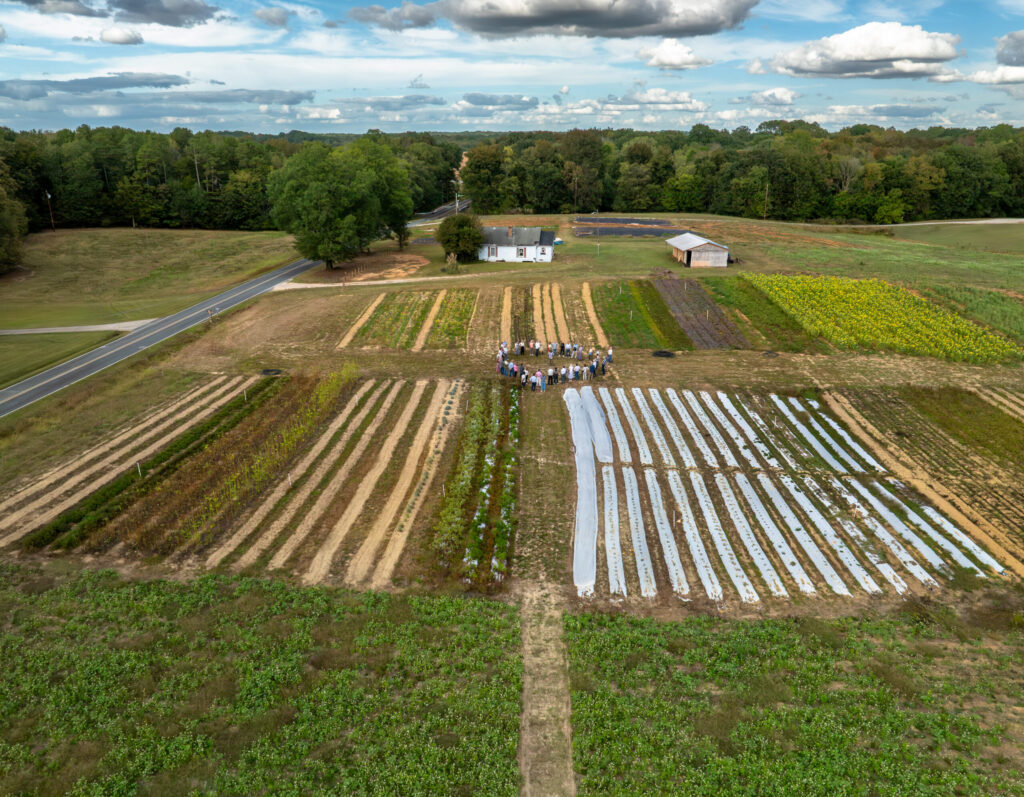
Jasira had been raised on a seven-acre farm with her parents, Cherie and Wisdom, in northwest Charlotte near Hornets Nest Park. Deep Roots Farm has evolved, season after season, into one of Mecklenburg County’s most celebrated urban farms. It recently expanded operations to include 40 acres in Union County, on land owned by the Carolina Farms Fund.
In early October, I took part in a tour and dinner at the Union County location, which is part of the Carolina Farms Fund’s efforts to preserve farmland in the region. We were greeted by the Jzars’ college-age son, Alvamir, who took us out through rows of recently or soon-to-be harvested eggplant and peppers of all different varieties.
After the tour, we ate a dinner created by heralded Charlotte chef Sam Diminich of Restaurant Constance.
It was a brilliant evening with some of Charlotte’s most influential people and funders, to give them a literal taste of what’s possible when people buy into the local food system.
The Jzars are renovating an old building on the property into a market. This fall, they put spring crops into the ground, and next year they’ll host limited pick-your-own events for children to grab and taste their first in-season strawberries.
Jasira Jzar knew that taste from a young age. She ate fresh meals every night as a kid in west Charlotte, same as Brent Barbee had in Concord a generation earlier. But when she went to college, after a few days of cafeteria food at Howard University in Washington, D.C., she couldn’t take it anymore. She called home and told her mother she needed to make a grocery run, to digest something that actually had nutrients.
“And do you know, her whole time at college, for four years, this child was buying food from Whole Foods?” Cherie told me last week, laughing.
Jasira graduated from Howard last spring summa cum laude in biology and chemistry, and she’s pursuing a career as a physician-researcher focused on health and community well-being.
***
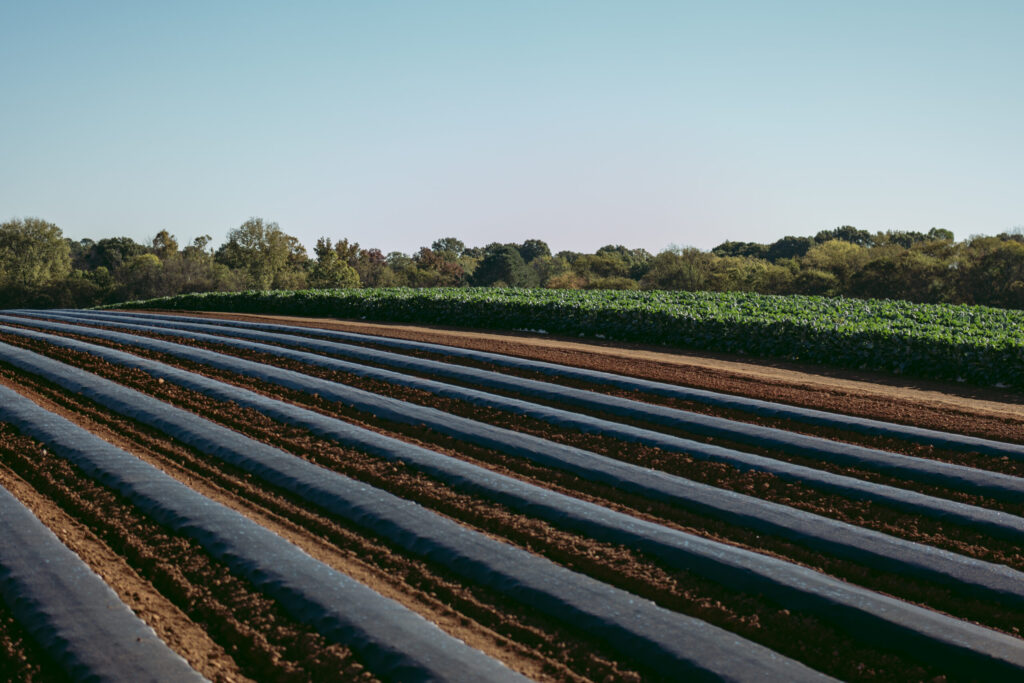
We may never shed the junk and preservatives from our diets, but year by year, a community of Charlotte-area souls are trying to reconnect the people who eat here with the food people grow here.
The pitch is usually pretty simple: Hey, try this.
The headwinds, though, are strong. Large grocers dominate with their convenience. A federal food-assistance program designed during the economic crises of the mid-20th century to both feed people and support local farms now sends most of its dollars to corporate chains. Walmart alone captures about a quarter of all SNAP spending nationwide, while Mecklenburg County farmers’ markets only recently made it easy to use those benefits. Add in long commutes, long workdays, and kids’ activities, and the average family has little time to plan meals around what’s grown nearby.
Even a $12 billion rescue package for farmers, unveiled last week, isn’t a long-term fix, people in the local food scene will tell you. And there are no single “heroes” for local government to fund — a point Cherie Jzar made bluntly in a response to our story last week on Carolina Farm Trust.
The real change, Jzar and others tell me, will come in smaller ways and more consistent investments in people already in the communities — from farmers like the Barbees working the dirt, to markets with multiple stakeholders like the Uptown Farmers Market, to co-op stores like the one being planned for West Boulevard. Only with trust will someone eat food from another’s hand.
And then, with one bite of a fresh strawberry, a peach, or a carrot, maybe a mind will shift, another local food champion will be awakened, another farmer born. It takes generational work to undo generational backslide.
“It takes a change in mindset,” Brent Barbee told me in October, “and government cannot change mindset.”
***
It could start with something as simple as an apple. Maybe an EverCrisp apple.
If you’ve never heard of it, you’re not alone. The first harvest of EverCrisps hit Charlotte-area markets this fall. It’s a new breed of apple, a cross between a beloved Honeycrisp and Fuji. People have loved Honeycrisps for decades, but they bruise easily and have shorter shelf lives. So a few years ago researchers began looking for ways to blend them with a more durable brand. The first EverCrisp trees were planted in North Carolina about five years ago.
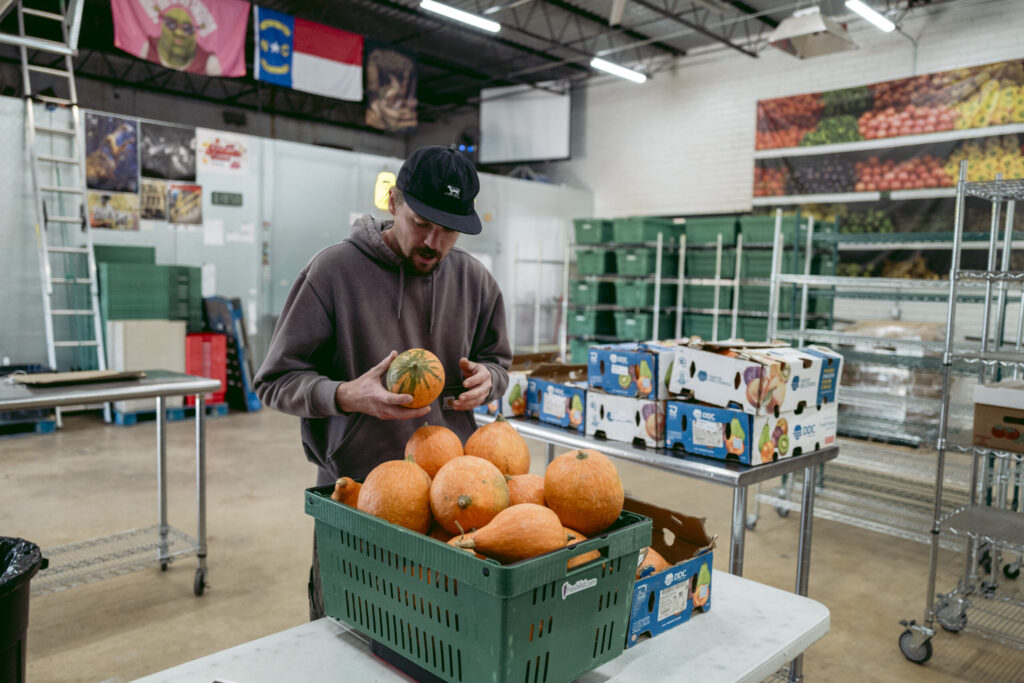
This fall, the local food hub Freshlist worked with a North Carolina farm that grew them. Freshlist is a hinge organization that purchases fresh food from North Carolina and South Carolina farmers, and distributes it to local restaurants. Each week they gather a list of what’s available and send it out to chefs, who reply with orders that suit the menu. Nearly all of Charlotte’s top local restaurants buy produce this way. On a recent trip through the operation, I saw crates of produce with tags for destinations like The Culture Shop, Customshop, Good Food on Montford, Haberdish. About 500 different items were available to them.
Freshlist owner Jesse Leadbetter founded the company 12 years ago as a technology enterprise. That failed miserably, he says, and he stumbled into the food space when he noticed that farmers don’t have time to deal with creative chefs who change their menus, and chefs don’t have time to research dozens of farms for what’s being picked. (Tommy Barbee told me, “I don’t deal with chefs.” Leadbetter told me, “I’m Jesse and accidentally started a food hub.”)
Freshlist is a “for-profit,” and Leadbetter uses the quotes intentionally. After a few years of success, he invested $60,000 or so of his own money in cold storage. And his margins are tight. About 71 percent of the money that comes into Freshlist goes back out to local farmers. Since 2017, the company’s work has led to about $10 million going back into the regional growing community.
“Everything you do has to be as efficient as possible,” he says.
In August, Leadbetter hired new CEO Anthony Mirisciotta, who worked in the Carolinas for years but most recently was director of a nonprofit food hub in northwest Arkansas that was funded by the Walton family. I asked Mirisciotta about the difference between the nonprofit model with a major funder and the hustle culture of a for-profit startup, and he said, “there’s probably an equal list of pros and cons.”
Freshlist expanded into a neighboring building around the time Mirisciotta arrived, and he’s in charge of coming up with new programs to increase access and revenue. This fall, he helped launch pop-up markets at Freshlist’s headquarters in the Belmont neighborhood. Most of the customers came from within walking distance.
And many got their first bites of an EverCrisp apple there.
“My biggest dream overall is just people realizing and being more connected to the seasonality of food,” Mirisciotta says. “I think it’s so important for humanity in general.”
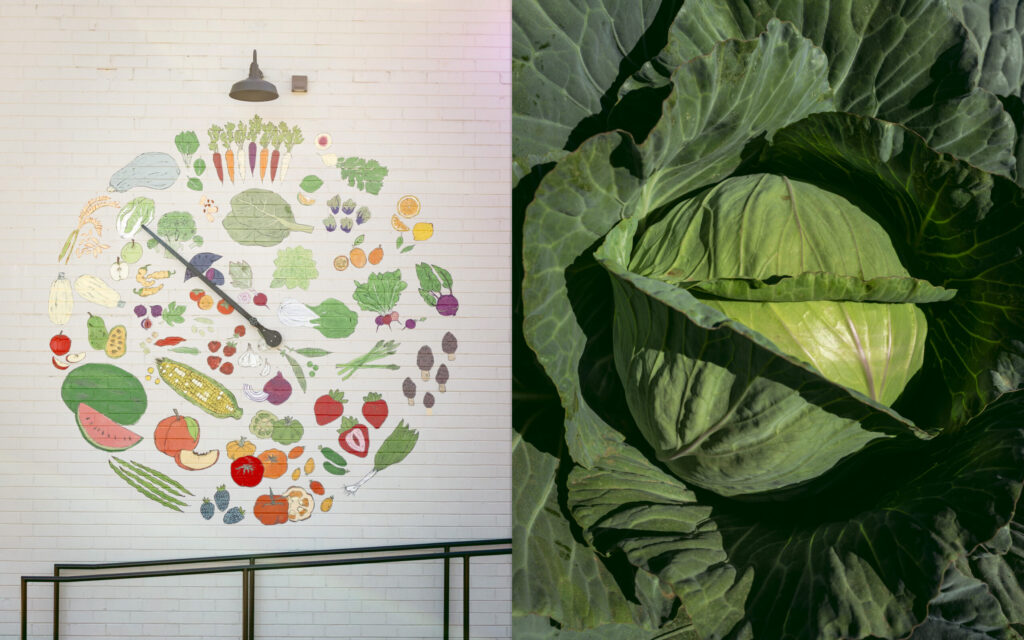
And if you have any question of what’s in season, just visit the Freshlist building and peek at the seasonal produce clock on the outer wall. The 12-foot clock makes one rotation a year, and it’s only a few inches away from the winter solstice, where it points to carrots.
***
Late this October, I visited with the Barbees in Concord for nearly three hours. Brent had been on my favorite cover of Charlotte magazine from my time as editor there.
The Barbees, along with the Jzars (who happened to be on the second-to-last cover of the magazine), are as close to celebrity farmers as the Charlotte region has. Much of the Barbees’ fame comes from their longstanding presence at the Davidson Farmers Market, a producer-only market that runs year-round.
In the new Davidson Farmers Market Cookbook, a visually stunning and lyrically written book that’s easily the finest cookbook I’ve ever opened, Tommy and Anna Barbee are the first family featured. But it’s nearly impossible to capture their humor and wit on a page; it’s one of those things you have to see, and hear, in person.
Tommy and Anna met in high school, when Tommy didn’t know who to ask to prom. His sister-in-law put names in a hat. They wrote Anna’s name on two slips of paper, another girl’s name on another two slips, and left two other slips blank, in which case Tommy wouldn’t go.
When they pulled the first name, it was Anna. Tommy grumbled a bit. So they pulled a second name: Anna again. He took her to dinner at Hereford Barn off of Graham Street, the fanciest restaurant he knew, and they’ve been married 44 years now.
When Brent went to college at N.C. State, they urged him to major in something that would lead to a career off the farm. “I told him to major in veterinary science and minor in taxidermy — and either way you get your dog back,” Tommy says.
Brent majored in turfgrass management, thinking he might find a path as a golf course superintendent. But after two years at State, he came home to farm. This was in the mid-2000s, and the farm had been primarily a pork operation for years. Brent decided to turn the land over completely and make it a produce farm.
Across the 70 acres they own, and the 35 more they lease, they grow dozens of products, all paced out so that something’s always in season. Tommy and Anna took me and photographer Logan Cyrus on a tour. Before we started, Tommy took one look at Logan and wondered whether he should change his hat for photos. “Nah,” he said, and then Anna jumped in, “Give me two minutes,” before walking off.
“See, I don’t have to do any thinking,” Tommy said. “My wife does all the thinking.”
Anna came back with a new hat, and Tommy said, “She’s gonna fuss at me for not changing my shirt, but I ain’t changing it.”
They kept talking like that, a couple who knows everything about each other and partners who seem to know everything the other doesn’t.
A few years ago, someone told the Barbees that there was no way they could grow quality carrots in this region in winter. “Well, last year carrots was number four on our total sales.” They’ve also done brussels sprout, with success. I asked Anna what year they started that, and she turned to Tommy, “What, two years ago?”
“Nah, it’s been longer than that,” he said. “Go back and look at our chiropractor bills; that’ll tell you.”
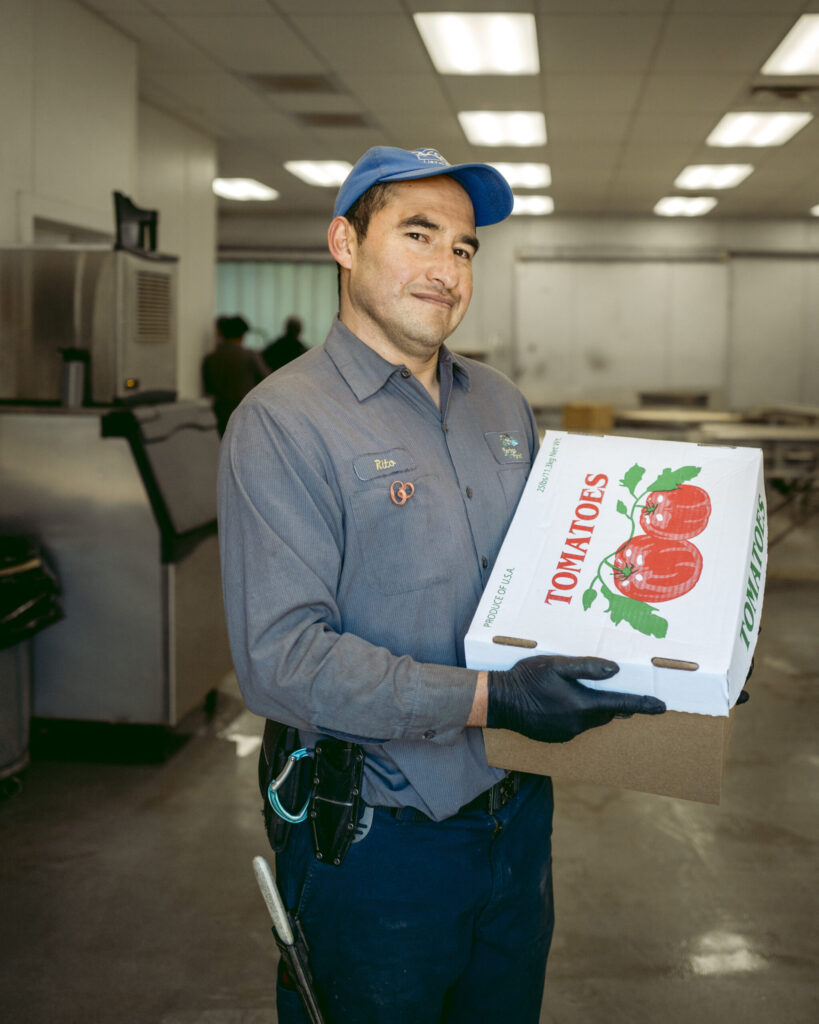
During the growing season, they hire migrant workers through the North Carolina Growers Association, which handles all the paperwork. The men live in houses on the property and have vehicles they can use to head to the store. During the height of the year, they work 80 to 90 hours a week, and so do the Barbees. One worker named Rito in the sorting house kept asking Logan to take his picture. He’d helped harvest Christmas trees in Boone for four years, and tobacco out east for a year, and the Barbee farm is without question his favorite, he said.
Two years ago in October, Tommy learned he had lung cancer. He’d always sworn he would never take chemotherapy and radiation, and he told the physicians that. But when one doctor told him he had only two months to live without treatment, Tommy changed his mind like this: “Well, if you didn’t cram that chemo and radiation too far up your butt,” he told the doctor, “I wouldn’t mind having a little bit of it.”
With those treatments and immunotherapy, he’s been cancer-free since, he said.
As we set off into the farm, Tommy explained the intricacies of farming with us — how some areas of the property are colder than others; how they plan for and expect to lose their peach crop two out of every five years to a late frost; how strawberry plants go dormant not because of cold but because of shorter days; how sensors now alert them on their phones if the temperature dips below freezing; how they coat plants in water because ice protects against frost; how they grew phenomenal tomatoes this year but still lost money because wholesale costs rose — and at times during these lessons I felt like he was also the explaining meaning of life.
But perhaps the most valuable lesson came when we were standing in a field of collards, after he picked a plant to show it off: “Looks like dinner to me,” he said.
Then he pointed across the road to his neighbor’s property. There’s a four-acre field that sold recently for $250,000 an acre to a developer. I swiped my recorder app down and quickly did the math on my phone; if the Barbees sold their 70 acres at that price, they could make $17.5 million.
I asked him how long it would take him to make that selling collards, and he said, “Oh, somewhere around a thousand.”
Anna jumped in.
“We’re not in it to be millionaires,” she said. “I’m very happy with my lifestyle. I don’t expect a new car every year or an expansion on my house.”
“That’s a good thing!” Tommy laughed.
“If you get depressed and you walk out here, it makes you better,” Anna said. “There are things more important than money.”
Then she paused.
“Now, I have become accustomed to lights, and to heat,” she said.
“Spoiled women these days,” Tommy laughed. “Indoor plumbing and everything.”
And if they’ve passed everything down to Brent and his family — Brent’s wife, Dana, runs a store on the property that sells their produce to consumers — it’s that simplicity. And the idea that there’s a difference between value and values.
Early Wednesday morning this week, Brent Barbee was sitting in the parking lot of Freshlist with his weekly delivery. Jesse Leadbetter happened to be driving by on his way to a coworking space to do paperwork when he saw the Barbee vehicle. Jesse stopped.
They got to talking after moving the produce into storage, and Jesse asked the question most people in Charlotte’s business-minded community would ask: “Why are you still here? If you sold your farm, you could get [millions] and buy another farm.”
And Brent Barbee, the boy who was heckled for being a farmer’s kid in the 1990s, looked at Leadbetter and said, “If it was about the money, I wouldn’t be doing this in the first place.”