
🎧 Listen to an audio version of this story, as read by Michael. 🎧
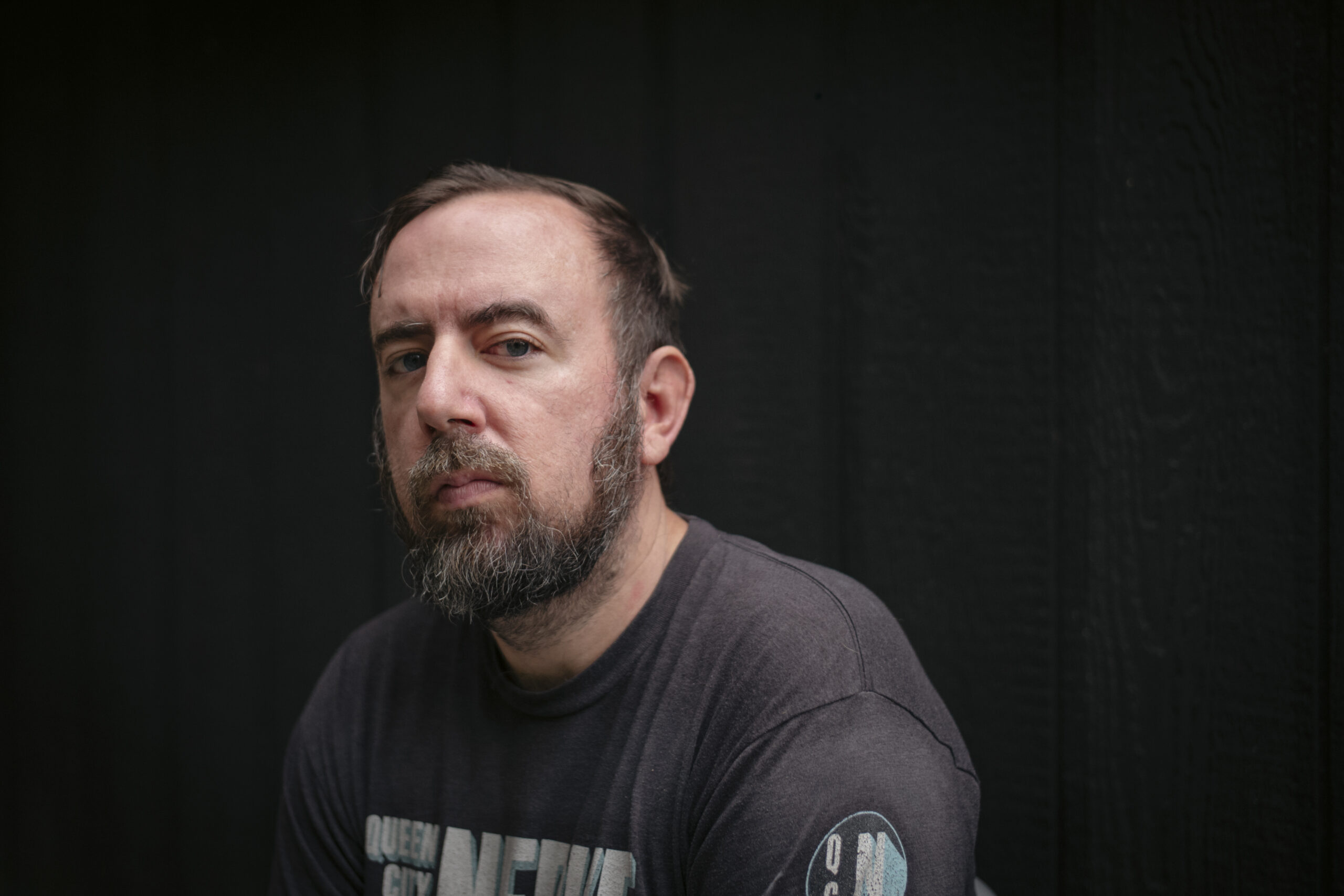
Ryan Pitkin will turn 40 in about a week, and the publication he defined now rests in peace.
Local media doesn’t need another wake. Queen City Nerve wouldn’t want you to go through the trouble of clipping on a tie anyway. But when the alternative, authority-challenging outlet closed last week — eight years after launching from the ashes of its predecessor, Creative Loafing — it marked one of those subtle generational shifts in how the city talks about itself, and who talks about it.
Ryan isn’t the mayor or a CEO or the director of any big foundation. But for most of his career he’s been the torch-bearer for Charlotte’s counterculture narratives, following in a line of baggy-eyed alt-weekly editors who wrote about LGBTQ issues and social injustices long before mainstream outlets were comfortable serving readers those headlines. Along the way he and co-founder Justin LaFrancois built a small team of regular contributors for a business that peaked financially in 2024 with $400,000 in revenue.
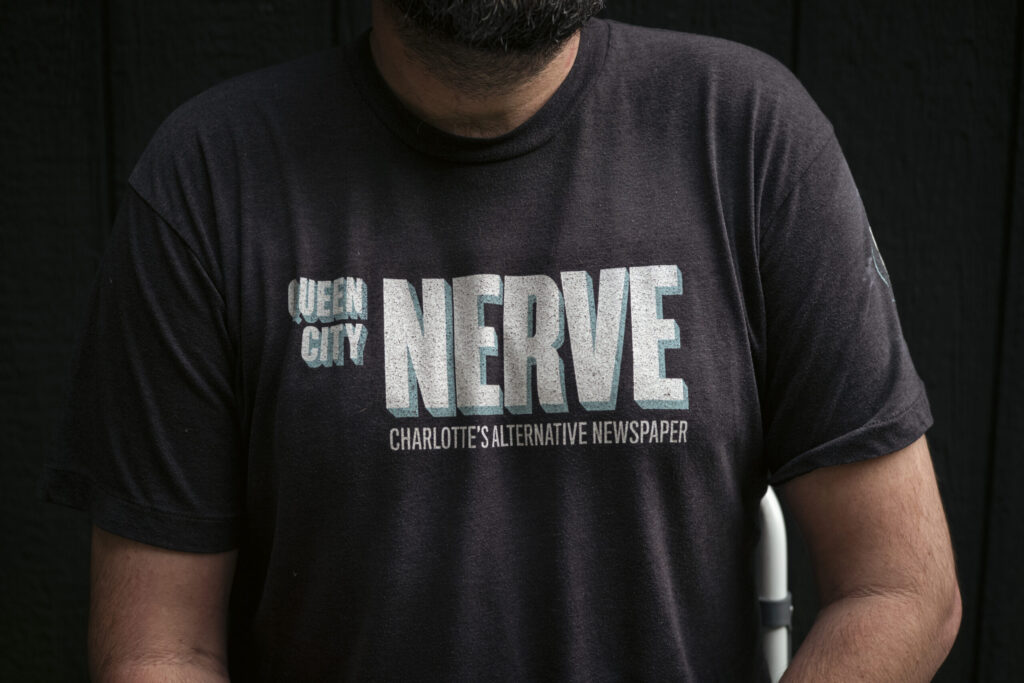
Young and angsty, and usually wearing a work uniform of typographic T-shirts, Ryan and his editorial teams became the media homebase for Charlotteans who felt unmoored in a corporate city.
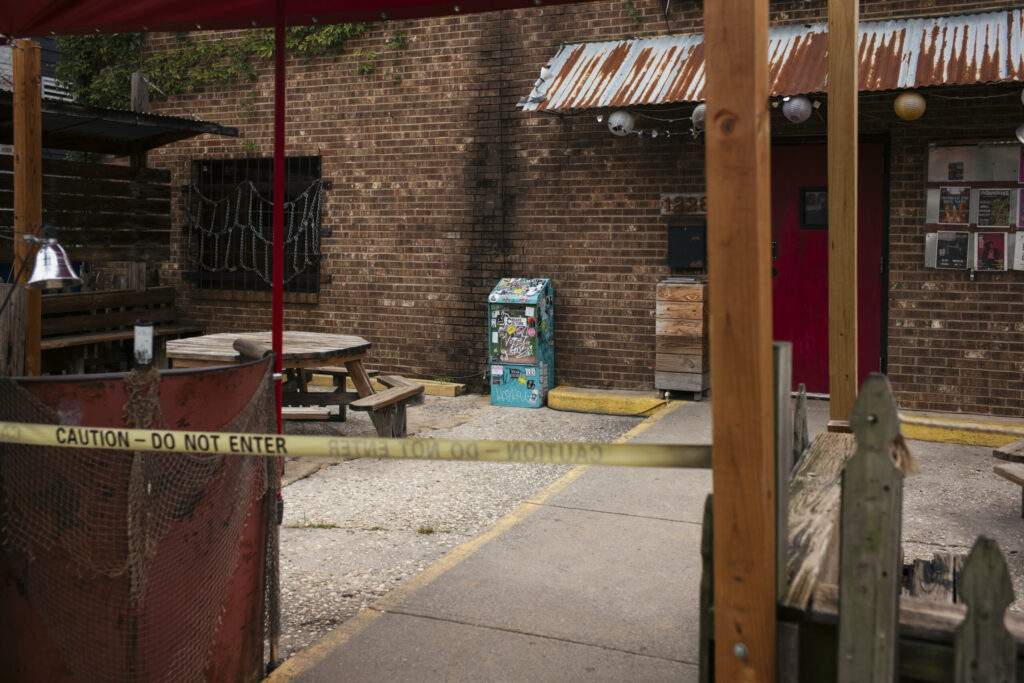
Rewind to Halloween afternoon 2018, when Ryan was at a bar in NoDa and his phone kept jingling with people sending him beer money.
He’d been Creative Loafing’s editor until 12:05 p.m. that day, when the paper’s owner locked the seven staff members out of their computers, fired them, and killed the product with no warning, after 31 years in print.
“No severance. No nothing. It’s been real,” Ryan posted on Twitter, followed by, “Not asking for any crowdsourcing campaigns or nothing, but if you want to buy us a beer: RyanPitkin.”
He was the definition of an alt-weekly editor then: a cheap-beer-slugging, underground-art-loving, mainstream-mocking, all-nighter-pulling graduate of North Meck High and UNC Charlotte. He was only 32, but he knew the city and its history, its suits and its alleycats.
By then he’d already written what still stands, in my view, as the most hilariously entertaining viral local story of all time, about a mulleted man who took the Knights’ Homer the Dragon mascot costume and had a helluva night in uptown. (In true alt-weekly fashion, Ryan immediately grew sick of being known for his most popular hit.)
Born in Connecticut before moving to Charlotte in elementary school, Ryan remembers riding around New Haven and Hartford with his grandfather, a retired internal affairs cop. His grandfather would point out where someone was killed, and who controlled which corner. “I just thought that was the coolest thing in the world,” Ryan says. “I think that played into why I wanted to be a journalist, because I damn sure didn’t want to be a cop. But I loved the idea of building that knowledge about a city.”
On that Halloween in 2018, journalists and creators from all over the city joined the Creative Loafing team at Solstice, the NoDa haunt which, in a poetic sidenote, would itself close for good five days later. People around the country, many of whom knew Ryan as the guy who wrote the story about the party-going mascot, sent money. Musicians and artists arranged a benefit concert, Rest in Print.
Within a few hours, the outpouring of support had become a bigger story than Creative Loafing’s closure. A few investors noticed. Two days later — “once we shook our hangover,” Ryan says — he and Justin LaFrancois, a 25-year-old Creative Loafing sales guy, were in serious talks about building something on their own.
Justin had been at the publication barely long enough to lose a job. He had no journalism background, and didn’t want one. He did however have a passion for the community around alt-weeklies, and he believed he could make a business out of Ryan’s work. “I built the structure so that he could be the person he is,” Justin says now.
Somehow, just five weeks later, they published their first issue of Queen City Nerve, a locally owned independent alt-weekly.
“Entirely out of spite,” Justin laughs.
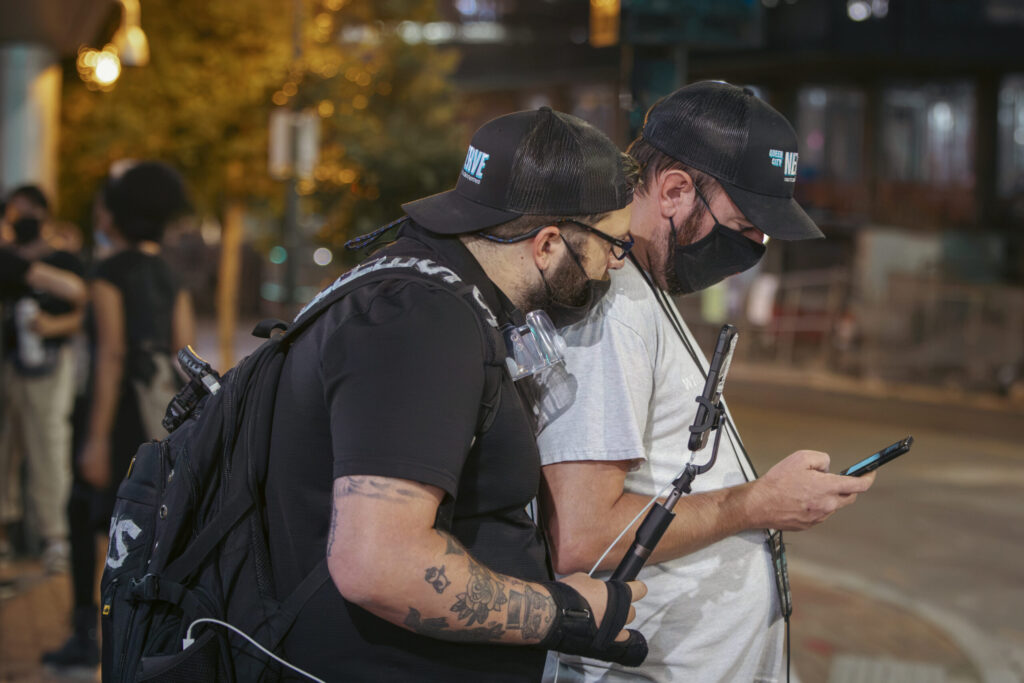
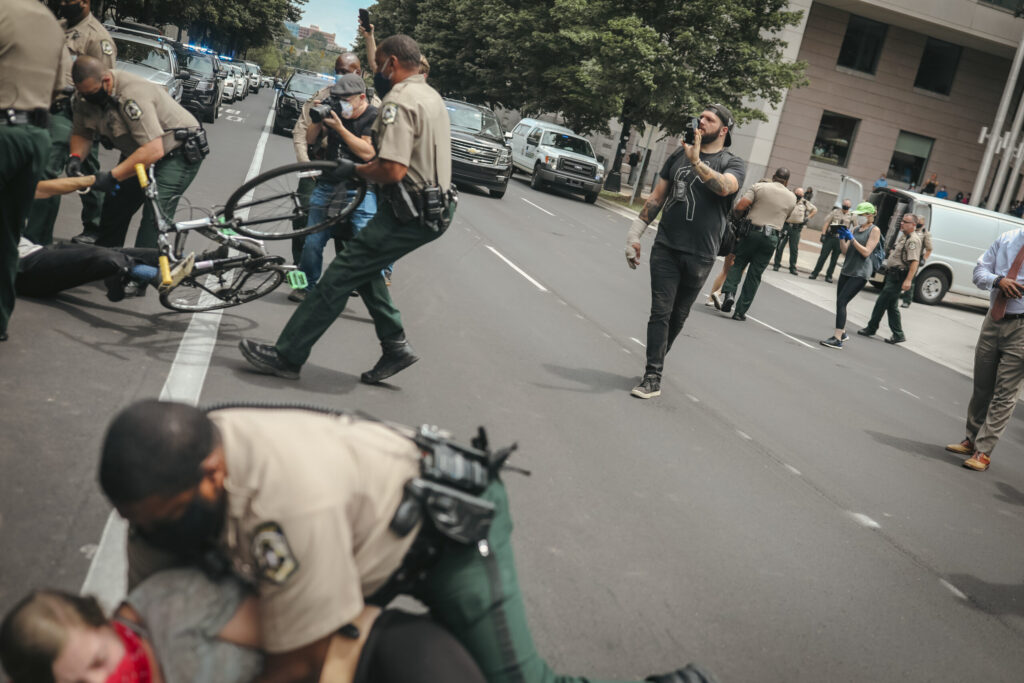
They had a stretch where they were the most famous media duo in Charlotte, when Justin’s livestreams of the George Floyd protests in the summer of 2020 became appointment viewing for people watching from home. (Justin, too, would like to be known for more than that viral summer.)
Meanwhile, the Nerve continued the alt-weekly tradition of giving voice to people on the margins. Ryan, who I’ve known for a dozen years, is particularly skilled at convincing those subjects to open up to him.
My favorite interaction with him came, strangely, during the protests that followed the police killing of Keith Lamont Scott in 2016. One night — I can’t remember which — demonstrators made their way to the former Epicentre. I spotted a television turned on inside one of the closed businesses, and it was showing an Orioles-Red Sox game. A lifelong Orioles fan, I stopped to watch a few pitches. Then I turned to my right and saw Ryan, a lifelong Red Sox fan, next to me. We talked baseball for a few minutes before moving on when water bottles began to rain down from the second level.
Ryan and I see the city, and report on it, through different lenses. But his best stories, especially his most immersive reporting projects, were vital. He seemed to always be in the mix when big things happened. He covered homelessness and housing instability through the eyes of the people living in “tent cities.” He wrote about a Russian family that fled political persecution in 2022, only to watch the family patriarch be detained by ICE during an asylum hearing this past spring. His exclusive look into troubles at a hotel for transitional housing in May 2025 was a prologue to federal fraud charges being filed against a prominent property owner later that year.
Ryan also kept a running list of people killed by homicide in Charlotte, and people who died in traffic fatalities. He’d find pictures of them in ordinary settings, where possible, bringing humanity to the victims, and he created maps of where the deaths occurred.
Maybe the Nerve’s most popular civic feature was its simplest. Council Quickies was a plain-spoken, mostly objective weekly recap of what happened at Monday’s city council meetings. It was a true service, distilling four-hour meetings into digestible bites without losing the substance.
But their core coverage was, contrary to popular opinion, quite celebratory. Ryan and Justin walked around professing the motto, “If you think nothing is happening in Charlotte, you’re not trying.” And the Nerve, with music writer Pat Moran, was about the only outlet to showcase up-and-coming local musicians and artists in the early stages of their careers. They were regulars at places like The Milestone, Snug Harbor, and other venues with graffiti on the bathroom walls.
“Who’s gonna write about my shitty band now?” one person commented on the Nerve’s social media post announcing its closure.
Were they liberal? You bet. Did they sue and get sued? Of course. Were they immune to screwing up? Hell no. Did they give a damn? More than is healthy.
As media’s fractured over the past five years, and more niche outlets have taken hold, they started to shed the “alt-weekly” tag. They eventually reached a point that will be familiar to most people at local outlets covering our rapidly expanding city: they felt like they weren’t doing enough. Ryan remembers going to an annual conference for alt-weeklies and hearing a speaker tell the crowd, “Raise your hand if you think you’re covering your city as you should be, doing everything that you could be.”
“And you know,” Ryan says, “not a single person ever raised their hand. Because how could you?”
Still they found ways to be distinct, creating merch like the “RIP Old Charlotte” tribute to local businesses that closed. Their paid membership list reached about 500 people at one point, most of them at $10 a month or $100 a year. Justin says the membership program topped out at about $4,000 in revenue a month.
After their big financial 2024, Ryan and Justin started talking about taking salaries for themselves. They’d only ever taken enough money from the Nerve’s accounts to pay their rent, and they reinvested all other dollars into the business. They worked side jobs, like driving Uber or bartending, to supplement their income.
“Diabolically, now I want to say we shouldn’t have invested it in the business,” Justin told me Friday. “We should’ve been making money. But that’s coming from a lot of burnout.”
No two stories of publications closing are the same.
Charlotte magazine folded last year because an out-of-town ownership group simply decided they didn’t want it, regardless of what the outlet meant to the city. Queen City Nerve’s financial fallout was, characteristically, unique to them. It wasn’t a case of slow and steady decline. For six years, Justin tells me, the publication grew its revenue by an average of about 21% year over year. Then, in 2025, the elevator cables snapped and the business fell to the floor.
Justin says the Trump administration’s decision to slash funding for the National Endowment for the Arts filtered down to advertising revenue for arts and culture-focused publications like the Nerve. He says that two of his biggest partners, Blumenthal Arts and UNC Charlotte’s College of Arts and Architecture, reduced their annual ad spend with the Nerve — “and it’s not really their fault,” he adds.
The national shifts coincided with Charlotte’s renewed focus on crime and public safety. Local corporations and nonprofits have invested significant time and money into improving public safety in uptown and along transit lines, especially since the killing of Iryna Zarutska on the light rail last year.
“It’s the history of moral panic. You cannot get support for something that people aren’t afraid of. People aren’t afraid of art,” Justin says. “Put it this way: People love independent theaters. And that love is great. Reading is great. Showing up is great. But people don’t see those things as part of your daily life. You see crime as a part of your daily life because you want to be safe.”
At the end of 2025, Ryan and Justin cut expenses and contributors. They asked for donations. Justin, meantime, had moved to Richmond, Virginia, and was running the business from there. In early February this year, he announced that he was “beginning conversations” about a potential ownership transition.
He’d personally guaranteed every dollar the company borrowed, and he needed help getting out of debt. In November 2025, he filed a lawsuit against one advertiser over a nonpayment of $1,000. He applied for grants from journalism-focused foundations like Knight, but didn’t win one.
A few potential “buyers” emerged over this summer. Justin says he can’t name them because of confidentiality agreements. But he says two were interested in the Nerve’s 34,000-subscriber email list. Another, though, was an out-of-state publisher that signed a letter of intent, which I reviewed for confirmation, to buy the Nerve and keep Ryan on as editor. “I could’ve flown through every cloud in the sky that day,” Justin says of that offer. A week later, on a Thursday at 5:30 p.m., Justin was taking a nap on his couch in Richmond when his phone rang and the offer fell through. He knew that was the end.
He now plans to file for personal bankruptcy, and is looking for work in Richmond.
“It’s nearly killed me, dude,” Justin told me Friday. “The highs and the lows of what I do every single day trying to keep this thing alive, they were gonna kill me. I’m surprised I didn’t have a stroke. … It’s tough for me to not be angry about it. Because there are people I can literally point my finger at.”
A few days after making the call to close, last Monday at 7 a.m., Ryan and Justin emailed their readers to say that the Nerve would shut down immediately.
Another round of support and eulogies flowed. But this time, there was no Venmo ask, no publicized drinking session, and little left in their tanks to try to save it.
When I asked them what they were proudest of, neither mentioned the stories they’re most well-known for. “It’s not 2020,” Justin said. He pointed to a book the Nerve published, Legacy: Three Centuries of Black History in Charlotte, North Carolina, written by Pamela Grundy; and the annual Eat, Gay, Love Thanksgiving meal for LGBTQ residents.
And Ryan, of course, didn’t mention the Homer the Dragon story. We were at Dyad Coffee on Friday, and he seemed more reflective and at peace than I’d ever seen him.
“I don’t care to see our most powerful people in the city making statements about how they’re going to miss Queen City Nerve,” Ryan said. “The fact that the most powerful statements come from people like (activist and Second Chance Federation chief of staff) Kristie Puckett, and (homeless advocate) Deb Phillips, and (activist) Robert Dawkins — who sacrifice everything for no money, but just for the love of the community — that those are the people who felt the strongest about us closing makes me feel like we did something. We were doing the right thing.”
What’s also different this time is that Ryan Pitkin, the longtime champion of counterculture, is a happily married, mortgage-owning, iced-coffee-drinking guy who’s staring down his 40s.
He’s doing contract work for the Courier Newsroom, and says he’s making more money doing that than he ever did as editor at the Nerve. He’s looking forward to back-to-back vacations, including a trip to Boston with his wife, Christine, for a Red Sox series.
He’s not yet old, but no longer young, and you can hear it in his voice.
“I have found this happiness in my personal life that I’m very protective of, and that’s my priority,” he says. “But at the same time, as far as my identity in terms of people knowing me for Queen City Nerve, I couldn’t be prouder. …
“It was a dream of mine. But there’s also just like, I don’t know, this silver lining. Now I’m looking at the positives of what something boring would look like.”
In other words, it’s been real.