
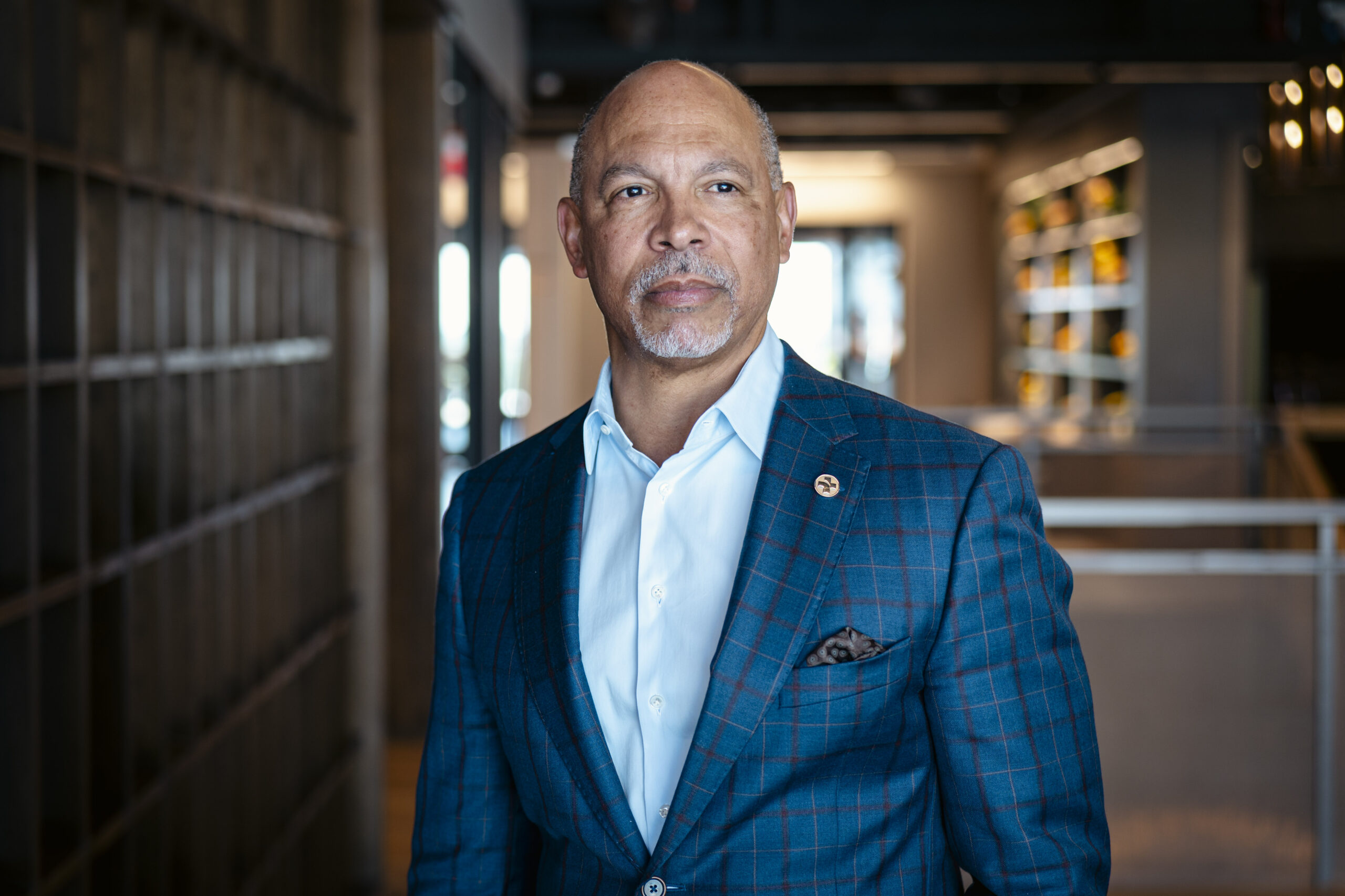
“CODE ORANGE!”
The announcement over the hospital’s intercom sounded like a drill to Gene Woods, until, “THIS IS NOT A DRILL,” which sounds like a good start to a network drama, except this was September 11, 2001.
Woods was in his fourth day as chief operating officer at Medstar’s Washington Hospital Center in the nation’s capital. The code orange interrupted his orientation session, where he’d just learned that “code orange” meant to implement disaster preparedness protocols.
A plane had flown into the Pentagon.
Woods stepped into the hallway maze and blanked on how to get to his new office. Nurses and doctors swirled around him, but he didn’t want to ask for help. So he found his way, alone.
He closed his office door and opened a three-ring binder that outlined the hospital’s code orange procedures. He spent 15 minutes reading, he remembers, before joining the action. Medstar had the first helicopter on the scene, where 184 people died. A call came in that Washington Hospital Center could be the next target, along with the neighboring children’s hospital and VA hospital, so they sent visitors and outpatients home, while Woods and the rest of the staff hunkered down with the patients who couldn’t leave. His hospital’s surgeons received the 10 most severely burned Pentagon patients that day.
Woods was recounting pieces of this story with me last month when I interrupted him.
“Why didn’t you just ask for directions?” I asked.
We were sitting on the terrace at The Pearl, the medical school and research campus he brought into existence a year ago. The terrace was designed for team cocktail hours and celebrations, but it’s rarely used, partly on account of Woods’ unceasing work schedule. A quarter-century after 9/11, the 61-year-old Woods is the CEO of Advocate Health, formerly Atrium Health, formerly Carolinas HealthCare System, formerly a string of other brands, going back to the 1800s. It’s Charlotte’s homegrown community hospital system, and it’s ballooned into the nation’s third-largest nonprofit health care system, mostly due to Woods’ vision over the past decade. Since arriving in 2016, he’s taken the organization from 65,000 employees to nearly 170,000, across six states.
He’s one of the more sought-after health care executives in America, but at the same time he’s become one of Charlotte’s most enigmatic local business leaders, celebrated and questioned and criticized in any day’s work. What’s undeniable is that while other hospital systems wilt, he’s turned this one into a racehorse that’s running lengths ahead of peers and, in some respects, the general public’s comfort level.
The descendant of enslaved people, and the son of a man who grew up poor in Tennessee, Woods last year had a total compensation of more than $25 million, $14.4 million of which was bonuses. The headlines over his raise prompted a hailstorm of criticism — and a new bill in the state legislature that would cap nonprofit health care CEO pay. In an era of distrust and rising costs, some people see Woods and Atrium as a symbol of what’s broken in the very American health care system he says he’s devoted his career to fixing.
I spent more than a year watching Woods speak in public settings, reading his memoir, and talking to his friends and critics, in preparation for our interviews last month. What he said about those few minutes during the code orange on September 11 was as clean a window into his mind as anything else.
“I didn’t think asking for directions would inspire the team to say, ‘Wow, we have a new operating leader who can’t even get to his office,’” he told me. “So I said, ‘I’m going to figure this one out.’”
“It wasn’t pride,” he added. “It was about inspiring confidence.”
You can read that instinct multiple ways, much like you can read Woods multiple ways. Maybe it’s the decisiveness of a man who trusts his own compass, or maybe it’s the quick analysis of a leader who can see how his demeanor can affect everyone who works under him.
It may also be the instinct of a visionary who’d simply rather not ask for directions or permission. In any case, it’s the instinct behind the man who now runs Charlotte’s former community hospital unlike anyone before him, and who seems puzzled that people are unsettled by the speed and the scale of where he’s taking it.
“People still sometimes see us as Charlotte Memorial,” Woods said, referring to the flagship Dilworth hospital’s name from 1940 to 1990. “They don’t realize that not only did we become Carolinas HealthCare System, but really a leading national health system that has grown up pretty quickly.”
Woods’ 10th anniversary as CEO was April 28, and he forgot about the occasion until he started receiving text messages from team members on the way to work. “Mostly I kind of feel like, no, I’m just getting started,” Woods says.
The next day, April 29, he met in a four-hour closed session with board members to finalize an agreement to combine with Raleigh-based WakeMed, the largest provider in the state’s largest county. Atrium plans to invest $2 billion into WakeMed as part of the deal, and says it would add facilities and 3,300 jobs.
But sirens went off the minute the deal was announced on May 1, about 72 hours before Wake’s commissioners were to vote on approving it May 4. The state treasurer and auditor immediately raised questions about competition and whether it would raise costs for the state health plan. Media outlets derided the short notice as another case of Atrium skirting transparency and public engagement — although the health care systems presented a timeline that shows Wake’s commissioners knew about the agreement in March. And general public skepticism toward “big anything” has turned the merger into a litmus test for how large Atrium can be in North Carolina.
In response to the pressure, Wake’s commissioners delayed the decision for 90 days.
“It’s too good to be good,” Wake County commissioner Safiyah Jackson said at a June 8 hearing.
Woods insists it’s good.
“We’re just going to augment the talent that’s there,” Woods told me. “They’re a smaller system in a really competitive market [with UNC Health and Duke Health], and we believe competition is good. So we’re there to support them, and bring jobs, and we’ll invest in technology.”
WakeMed was hardly the only big project on his desk. Six days before he appeared before the commissioners, Woods was in Chicago with that city’s mayor to break ground on a $300 million hospital on the South Side.
Then, the day after the Wake commissioners meeting, Atrium completed a long-awaited and complex land-swap deal with Inlivian, to contribute 14 acres of land on North Tryon Street to affordable housing.
A new hospital in Chicago. An afternoon-long grilling from public officials in Raleigh. And a $30 million land transfer in Charlotte. Any of the three might be career-defining events for other people. Woods knocked them out in eight days.
Is Woods’ way right or wrong? That’s not for this story to decide. But to be sure, it’s his way, and his way is urgent.
He wakes up between 5 and 5:30 each day and meditates. He listens to podcasts about stoicism. He reads books like The Obstacle is the Way. He plays electric guitar and writes songs. And he keeps a stamp on his desk, given to him by Ed Brown, the late bank executive who worked hand-in-hand with former Bank of America CEO Hugh McColl.
The stamp reads “WE HAVE ALWAYS DONE IT THIS WAY,” and there’s a bright red line through it.
***

Trust in institutions, as we’ve written several times in the Optimist, is plummeting everywhere. From national to local, people are skeptical of politicians, judges, media outlets, and large corporations. And health care systems.
North Carolinians have several recent scars on that last front. No merger or acquisition is seared into state leaders’ minds more than when Asheville-based nonprofit Mission Health sold to for-profit HCA Healthcare in 2018 and 2019. The deal led to reports of diminished care, staff reductions, settled lawsuits, and pages upon pages of lessons for others.
“That’s the fundamental question: People don’t trust large institutions,” Woods told me in a follow-up interview on June 3. “I’m not saying that organizations and systems sometimes don’t deserve that, because I think there’s been promises made that haven’t been kept.”
For its part, Atrium still faces lingering skepticism after Duke University’s law school and the then-state treasurer released a joint report in 2023 that said the system was the state’s most aggressive collector of medical debt from 2017 to mid-2022, stripping people of savings and putting liens on homes. Atrium stopped collecting in 2022, around when it merged with Advocate, and then canceled all of those old judgments and liens, forgiving some that were 20 years old. In 2024, it adopted seven affordability commitments.
Among them, Atrium’s charity care program now allows anyone under 300% of the federal poverty level to receive care at no cost. (For a family of four, that threshold is about $100,000.) Nearly 100,000 Atrium Health patients never received a bill last year.
Still, old practices and memories die hard. And Woods acknowledged twice in our longer interview, “We’re anything but perfect.”
“I tell the team, trust is earned through action,” Woods added. “A lot of folks think, well, if you get larger as a system, quality decreases. Well, actually, our quality has increased. We continue to try to get as many proof points as we can and share those — although it’s harder to get good information out there. Good stories don’t always cut through the ones that are controversial.”
One number Woods touts is that Atrium has seen a 14% decrease in mortality rates since Advocate formed, meaning fewer patients are dying in the hospital or shortly before or after hospital visits. He also points to Atrium’s move into the Triad. In 2020, Atrium merged with Wake Forest Baptist. And last year, Atrium Wake Forest Baptist combined with a smaller system in rural Elkin, N.C., Hugh Chatham Health, which Woods says was losing about $20 million a year. Atrium committed to investing $100 million.
Dr. Kevin High — who ran Wake Forest Baptist when it merged with Atrium five years ago — joined Woods at the Wake commissioners’ meeting a few weeks ago, to serve as sort of a character witness for WakeMed’s potential future. High told the commissioners he also once feared that his institution would be swallowed, and that Atrium’s promises would dissolve the moment they became expensive.
“They delivered in every way,” High told the board. It had been “a true partnership, not a takeover,” he added.
High’s testimony was part of an effort to calm a fight that erupted after the deal went public. Days after the announcement, UNC Health made an unsolicited bid to block Atrium’s entry into the market, with a proposal to invest $2.5 billion in WakeMed and another $2.5 billion in Wake County, The Assembly first reported. But WakeMed’s executives say they chose to partner with Atrium because of its similar mission.
The State Health Plan, which covers more than 700,000 public workers, warned that the merger could raise premiums, claiming that Atrium charges more than WakeMed for the same care. The state treasurer and other critics cited research on hospital mergers that finds consolidation tends to raise prices.
Atrium contends that the deal removes no competitor in Wake County, keeping the competition at three — WakeMed/Atrium, UNC Health, Duke. Atrium has said publicly that its rates with the State Health Plan are negotiated, not imposed. The system also says it’s open to capping WakeMed’s rates to the plan, as long as it doesn’t leave WakeMed at a disadvantage, and to sitting down with officials to discuss other concerns.
The more I asked Woods about all this, the more he pointed to Atrium’s continued expansion of work in communities — from putting virtual care in more than 120 CMS schools, to delivering free care to homeless encampments, to pushing the boundaries of research.
“Don’t compare us to other systems,” he said. “Compare us to what we’ve done.”
What growth and scale enable, he argues, is an ability to reduce expenses. His top example is surgical gloves. When Atrium combined with the Midwest’s Advocate Aurora in 2022, the two systems were buying surgical gloves under 11 different contracts, he says. Each vendor swore it was offering its best price. The new Advocate Health folded the 11 contracts into one and, “in the stroke of a pen,” Woods says, saved $7 million. At the time of that merger, Woods promised his board that they would save $1.5 billion in efficiencies in three years. They did it within 30 months, he says, while increasing staff and raising their pay.
That cushion, he argues, is what lets a nonprofit absorb what it can’t control, like rising supply costs and a payment system in which the government sets many of the prices. He recently told a room of business leaders at the Charlotte Regional Business Alliance that his is the only business that starts each day $17 million in the hole, because of the charity care program.
None of this is a rave review of American health care. He wrote in his book, Health, Hope, and Healing For All, which published in 2023, that, “The sobering truth of the matter is that our entire health care system is ailing and in intensive care.”
I read that line back to him in our May 14 conversation, and asked where we are now. He let out a laugh and said we’re still there, and getting meds.
Then he flipped it, and said it’s why he’s “so not wedded to the past models of doing things. I mean, when you’re in intensive care and you’re at an inflection point, the risk of not doing something bold far outweighs the risk of just staying the same in the status quo.”
***

Before I started The Charlotte Optimist, I took the idea around to several people in current or former leadership positions to get a broader assessment of the city’s appetite.
One person I spoke with was Woods. We met on Zoom on MLK Day in 2025. In April 2025, Atrium gave a founding donation of $25,000 to help launch the Optimist. All members, including Woods, agreed that they wouldn’t have any say in editorial direction. Nobody at Atrium read this story before it published. I mention that, though, to be transparent with you.
It also leads me to this: One thing I’d hear often in the early half of 2025 was that Gene Woods could be Charlotte’s next Hugh McColl.
It’s a big burden to lay on anyone. McColl, of course, is the banker who did more than anyone to create modern Charlotte. His bank merged and acquired dozens of others, and along the way it helped create the skyline and arts organizations, while getting laws changed in his favor over buckets of fried chicken with the president. I called McColl two weeks ago, and he told me he and Woods have become friends. Woods comes to him for counsel, often on mergers.
So I went back into newspaper archives from 1988, when McColl and North Carolina National Bank took over the largest bank in Texas, First Republicbank of Dallas. It was a watershed moment that would make NCNB the 10th-largest bank in the country. What struck me was how familiar the coverage sounded. McColl, then in his early 50s, had a reputation “as the George Patton of banking,” as the New York Times wrote at the time. “A blunt-spoken, tough-minded leader with a ruthless disregard for tradition at the banks he takes over.”
McColl bristled at it then. “It’s a puzzlement to me. It’s 180 degrees from my management style,” he told the Times. “Even if I do better, I have a hard time proving it.”
Woods is about 10 years older now than McColl was then, but standing at a similar place on the public-trust timeline.
There are real differences between a bank merger and a health care combination. One is built to make money; the other is built to keep people alive. But the narratives rhyme.
I took it back to McColl, who turned 91 last week, and asked him what he made of the pushback against Atrium and Woods in the past 10 months.
“My theory is keep on the straight and narrow path, and do your thing, and people will come around to you,” McColl said. “I think he still is the toast of Charlotte — 90% of the people think he does a great job. I don’t think there’s a great body of thought that he’s not good. It goes with the territory. If you make $25 million a year, you’re going to have to expect to have people resent you.”
Time, he figures, will soften the assessments. “He does a lot of good work to help disadvantaged people. I don’t think he’s gotten enough credit for that, at all,” McColl said. “It’s good for the city. It’s good for our public. We’ve got better medical care than we’ve ever had. And we’ve got better job opportunities.”
***
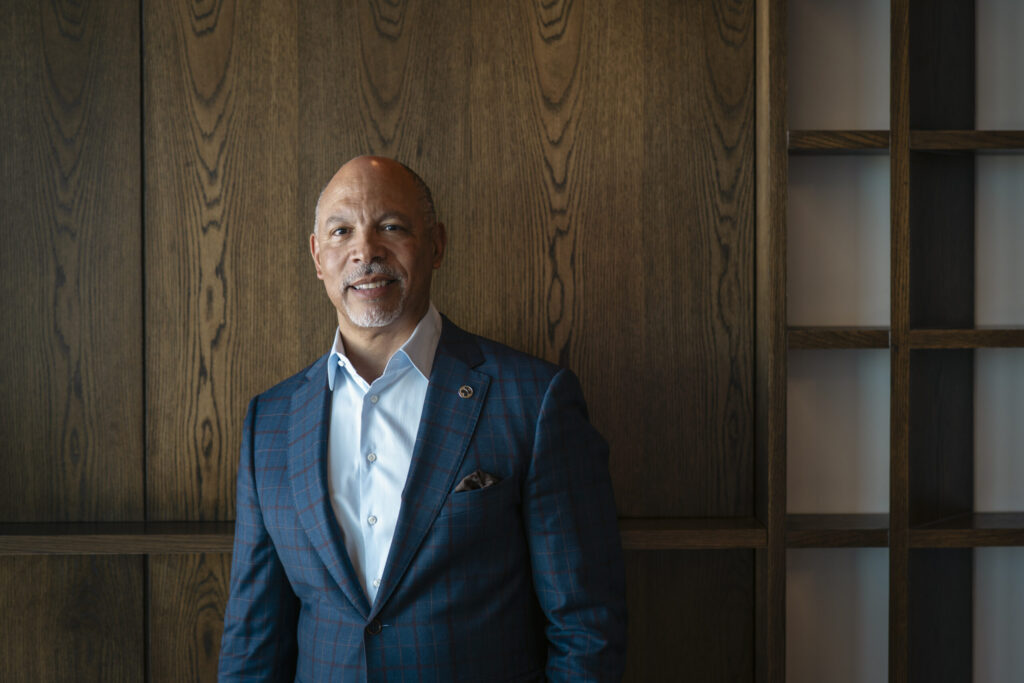
To understand how Woods runs, and why, you have to go back to a rural community in Tennessee in the 1800s. Specifically, you have to go to a man named Citizen Stovall Woods, who owned 18 slaves, including a young woman named Grace.
Some steps remain mysterious because of shoddy records from the period, but Gene Woods knows for sure through DNA tests and ancestry charts that Grace’s grandson was Agen Woods, and that Agen had a boy named James Hobert Woods, who had a boy who was Gene Woods’ father. In other words, he’s five generations removed from slavery.
“I sometimes wonder what they would have thought,” Woods told me in a quiet moment as we sat on the terrace.
Woods’ father grew up in the segregated South, and rode the U.S. Navy out. He was never forthcoming about the racism he saw, but Woods writes in his book of one story he often heard. His father’s first Navy bunkmate was a white guy from Arkansas. One night, Woods’ dad was in the top bunk and could hear crying down below, so he jumped down and asked what was wrong.
“My daddy don’t like me bunking with no n***er,” his bunkmate said, according to Gene’s book, “and I can’t say I’m happy about it either.”
His father laughed and responded, “Welcome to the Navy. You’re gonna have to stop worrying about what your daddy thinks. If you can do that, you’ll be alright. Now shut up so I can get some sleep.”
From there, the Navy took his dad to Spain, where he met his wife. Gene’s mother was the oldest of 12 children who grew up in the sherry-and-flamenco country of southern Spain, where her family traces back to the 1400s. Woods says often that he’s “a bunch of serendipitous accidents,” and that’s reflected in his journey. His parents moved the family to Philadelphia when he was in the fifth grade.
His high school guidance counselor told him he should go to vocational school, but he wasn’t good with tools. Meanwhile, he was stocking shelves at the local Acme grocery store when an older colleague, maybe in his 40s, told him he should focus on his grades so he didn’t end up stocking shelves into middle age.
Woods became the first in his family to go to college, showing up to Penn State with a typewriter and whiteout in the early 1980s. He went on to earn three degrees from the school. He considered majoring in international business, figuring that a Spanish-speaker like him could go far. But during a career fair, his story goes, he showed up on the wrong day and ran into a hospital administrator.
Woods started as a director of quality at a hospital in rural Pennsylvania, then spent six years at Southside Regional Medical Center in Petersburg, Virginia. After four years, he moved to St. Thomas in the Virgin Islands, where leaders credited him for seeing the hospital through to semi-autonomy and giving it its “best financial years in its history.” From there he went to Washington, Kentucky, and Dallas, before Carolinas HealthCare hired him as CEO in 2016.
Thinking about his past, and the current dialogue around him, Woods pulled a line he often tells his team: “We call it embracing the unknown with fearless curiosity and unshakable optimism.”
***

In the early days of the COVID-19 pandemic, Woods visited the emergency department at Atrium’s flagship hospital in Dilworth to check on his team.
It was the first time he met David Callaway, Atrium’s ED leader. Callaway had a hat on backward with the Latin proverb Audentes fortuna iuvat embroidered on it. Woods asked Callaway what the words meant.
“Fortune favors the bold,” Callaway told him, according to Woods’ book.
Woods says that despite Advocate Health’s size, he’s tried to ensure it “feels small” by empowering teams like Callaway’s to make decisions in the moment. During that COVID visit, Woods saw that Callaway’s team had set up a triage tent in the CMC parking lot, staffed by Atrium team members and military personnel. Woods asked Callaway who authorized the tent.
“Um,” Callaway said, “we did.”
“Fortune favors the bold,” Woods responded.
CHS became Atrium in 2018. Around the same time, Woods began to focus on bringing a four-year medical school to our city of MBA grads. Charlotte was for years the largest city in the U.S. without a med school, and business and government leaders long believed it was the city’s most glaring missing economic and educational piece. Atrium first entered into an agreement with UNC Health Care, which would’ve included UNC Charlotte being a partner on the medical school, but that fell through after about 18 months of talks and negotiations.
Woods then turned to Wake Forest School of Medicine. They entered into an agreement within a matter of months. Now, Wake Forest’s medical school is the centerpiece of The Pearl, which opened last June. But it’s far more than a med school.
Woods was the conductor who brought together a complex orchestra of med tech enterprises. IRCAD, a France-based leader in robotic surgery, opened its North American headquarters at The Pearl this past September. Siemens Healthineers is also there, along with a buffet of other medtech companies. It’s helped anchor Charlotte as a life sciences hub, in a state that’s booming in that category, and has brought in futuristic machines like Medtronic Hugo, a surgical robot guided by a doctor.
Looking at the campus now, it’s easy to forget that it wasn’t always there. But it was built on land that used to be part of Brooklyn, a Black neighborhood that was razed during urban renewal. It sat largely undeveloped for decades.
Woods, according to my conversations with people involved at every step of the process of The Pearl’s production, saw something they couldn’t. At one point, Woods brought the CEOs of Siemens Global and Siemens North America to his former office, overlooking the land where the campus would be built.
“I was pointing out there,” Woods said in a fireside chat I attended last year, “and I was like, ‘We’re gonna do it.’”
At last summer’s grand opening, one of Atrium’s senior team members told me that Woods kept “throwing the buoy farther out into the water and telling us to swim to it.” Even if they couldn’t get there, he’d tell them, “they’d be in better shape.”
Woods runs all of this under the two-word slogan he instituted soon after arriving, that health care is “For All.” You’ll see it bolded, underlined, and italicized in most Atrium correspondence. One driver of that, he’s said and written, is his personal experience. Growing up, most of his extended family didn’t have insurance or access to steady care. And a quarter-century ago, his father died of multiple myeloma.
“I wish he could have gotten the latest trials,” Woods told the Wake County commissioners a couple of weeks ago.
***

Woods slipped once in his presentation to the Wake commissioners on June 8, when he attempted to show how Advocate is an extremely large organization, but remains local. He highlighted how each local health system retains its own local board because, as he put it, “Charlotte’s much different than Milwaukee. It’s much different than Rome, (Georgia).”
But he stumbled over his words in the presentation and said, “We’re the third-largest for-profit in the country, headquartered in Charlotte, and it’s never for us been a matter of size and scale. It’s been about what that size and scale enables for our patients, for community, and also to stay on top of the latest technological advances that are happening very, very quickly in the field.”
The mistake, of course, was in the first phrase: “for-profit.”
Atrium is a nonprofit organization, and so is its parent company, Advocate. The small slip in a way frames the main issue the hospital system faces for its brand today. It’s a nonprofit, built as a “unit of local government,” and it receives tax exemptions. It has non-elected local boards, which feed a non-elected national board, and the larger one oversees a nearly $40 billion operation that has the aggressive business mindset of a for-profit. (Also worth noting: Advocate’s overarching board sets Woods’ compensation, not the local community board.)
It’s complicated, in other words, and it’s a long way from where it started.
It began in 1876 as a charity hospital in two rented rooms, opened by a group of churchwomen. The entity that signs the papers locally is still, in the eyes of North Carolina law, the Charlotte-Mecklenburg Hospital Authority, the same one founded in the 1940s. Critics say it has the best of both worlds: a government’s protections with a corporation’s freedom.
Until the WakeMed combination conversation, few local public officials have tested that arrangement more pointedly than Mark Jerrell. As chair of the Mecklenburg County commission, Jerrell holds the one lever the law hands an elected official over the Authority, in that he signs off on the slate of nominees to its board. This year, for the first time in recent memory, he sent the slate back.
I talked to Jerrell last week and he says he admires Woods and has a strong relationship with him. But they simply disagree on some points.
“The community is better because of a Gene Woods,” Jerrell told me. “And it’s also better because there have been areas where we have not agreed and have had to challenge each other’s thinking — and he’s been open to it.”
“I know his heart is in the right place,” Jerrell said. “I know he cares deeply about this community. I know he is running the third largest system in the most powerful country on the planet.” But Jerrell added, “I’m never going to abdicate my responsibility as an elected official. Even when I have the utmost respect for someone, I’m always going to push on behalf of the people. I appreciate him, but I’m also not wowed by the pinstripes of the Yankees either.”
It’s easy to be wowed, though, by Woods and how quickly he processes things. He’s one of the most responsive CEOs in Charlotte, at least from my interactions, despite also having maybe the fullest schedule. He recently completed a term as the chair of the Charlotte Executive Leadership Council, a role in which he helped lead communication with legislators in Raleigh to build bridges and get last year’s one-cent transportation referendum on the ballot.
He’s prolific, and my appreciation for that might make this next part a bit strange: One of his sharpest critics is someone I’ve considered a friend for nearly 10 years, Redress Movement’s Greg Jarrell.
Remember the buoy that Atrium’s team says Woods throws out for them? Jarrell has his own way of doing that. He’s a pastor, dad, historian, and author of a book called Our Trespasses, about the Brooklyn neighborhood and what now stands on it.
“Here’s an institution that I desperately need that will absolutely take advantage of me,” Jarrell told me in a more formal interview this month.
His year-long fight is over housing at The Pearl, where the planned residential tower will make 5% of its units affordable for 20 years. Redress wants 20%, for 50. Atrium says its North Tryon land-swap will actually bring more affordable units to market, but Jarrell wants them at The Pearl, on the ground where Brooklyn stood.
“It’s such a clear and precise example of the historical parallels about this city’s lack of imagination about solving societal issues,” Jarrell said. “You have an immensely wealthy institution that has the chance to make the most significant effort this city would have ever seen towards righting a historic wrong over just, you know, what’s essentially to them a handful of dollars.”
When I asked Jarrell about Atrium’s other housing work, including $15 million to the Housing Impact Fund, he said, “I think we should applaud when people are doing things that are helpful to the community. And I’m not saying that Atrium or Gene Woods or anybody is running a reign of terror from the top of The Pearl or anything. So that’s great. Keep going.”
We talked for more than 50 minutes. Jarrell’s about my age, and he was one of the first people in the city to reach out after my father died. We don’t see everything the same way, but I trust him, and know he has a job to do — and that job isn’t one that makes him popular with people in power. “I don’t particularly like being antagonistic,” he told me. “It’s not personal in any way. But to get heard you have to be a burr in the saddle.”
The points are prickly for Woods, because housing is one of the things he says he cares most about, as an executive and community member. With the land-swap, Atrium has invested $51 million in affordable housing in Charlotte in the past five years, among the largest sums from any local institution.
“The thing that gets me, I wish more people would know our heart,” Woods told me, his voice lowering. “Because our heart is really about not just innovation, but our heart, we have such a deep heart for community.”
For this story I spent nearly two hours talking to Woods, 50 minutes with Jarrell, and 30 minutes with Jerrell. I’m under no illusions that they’ll split Hornets’ season tickets one day. But I’ve been interviewing people for more than 25 years and have a decent nose for inauthenticity. Each of them, countering the others from different rungs on the ladder of power, was sincere.
***
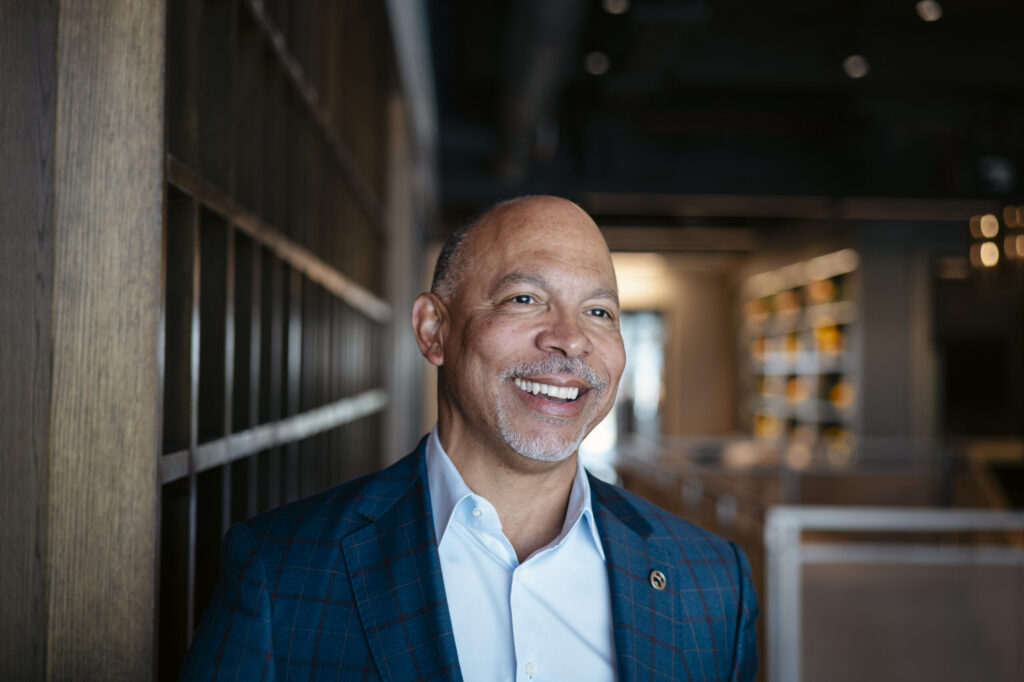
During the ceremonies around the groundbreaking at the Chicago hospital, Advocate Health held a job fair. A man walked 15 blocks to get there in a suit, just to apply.
“There’s countless stories like that,” Woods told me the day after the groundbreaking. “The joy of this gig, if you will, is when you can see that. … That community, they’re so jaded by what systems and hospital systems promised, and they don’t think it’s real until shovels are in the ground, and yesterday shovels were in the ground.”
Woods is still, in some ways, the young man who went to the wrong job fair and wound up a hospital executive.
And here’s maybe the most important point to consider, and it’s one I think that makes him most like McColl: He doesn’t have to be here doing any of this.
Three or four years ago, toward the end of the pandemic, he was weighing a job offer that would’ve taken him away from Charlotte. He brought up the option to a friend and fellow CEO one night over wine. They were near the end of the bottle, and the friend said, “F*** you. You can’t leave. You are going to be the next Hugh McColl to Charlotte. Health care is the next banking for our town. You’d be irresponsible if you left us now.”
Woods then thought about another lesson he’d learned over the years. “Make a difference where your feet are. You can do that anywhere.” So he stayed.
Woods still rejects the McColl comparison. “There’s only one Hugh McColl,” he says. Besides, the more I’ve gotten to know Woods, the more I think that comparison is not the acceptance that drives him.
Every day, Gene Woods wakes up and meditates and thinks about stoicism, then he goes to work trying to solve the biggest issues in health care, a field where he makes about as much money in one day as his sister, a Philadelphia schoolteacher, makes in a year. He thinks about his dad and ancestors and, as he said earlier, “I sometimes wonder what they would have thought.”
No easy answer.
In May, though, Woods invited the CELC to hold its monthly meeting at the Pearl, and Gov. Josh Stein was the guest speaker. Stein was there to talk about state matters and whatever he thought top business leaders should know.
During the meeting, Woods looked over and saw his wife and one of his two adult sons walking in the hallway. He was flummoxed and worried that something was wrong. But then Stein cleared it up.
The governor was there, also, to induct Woods into the Order of the Long Leaf Pine, the state’s highest civilian honor that’s bestowed by the governor.
“It felt less like a recognition,” Woods said, “than sort of being welcomed into the family.”
No matter how big Atrium gets, how many things Woods builds here, or how much money he makes here, there’s probably a part of him that will always be chasing that.
And in that way, he’s as ordinary as anyone who’s ever moved here.
Corrections and clarifications: We clarified the timeline of Atrium’s cancellations of judgments and liens, and added details about its charity care policies to say that people and families under 300% of the federal poverty level receive care at no costs. We also corrected this story to show that:
- Woods started his career in rural Pennsylvania before moving to Petersburg, Virginia, for six years, not four.
- Woods considered majoring in international business, but never formally joined the major.
- Atrium operates under state and federal antitrust regulations.