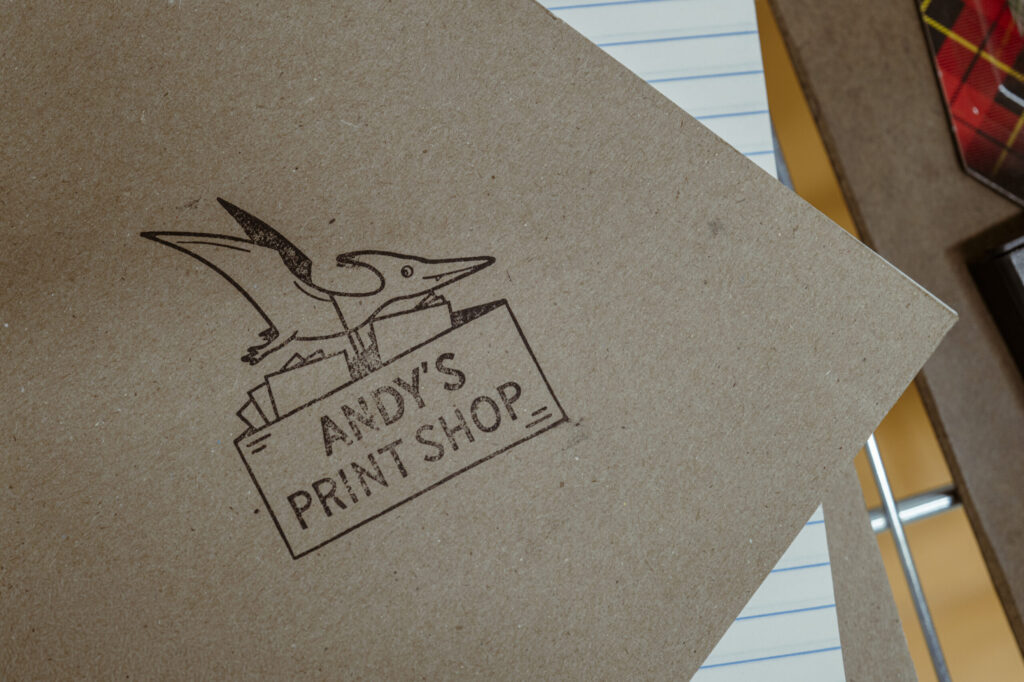
On an annual family vacation to the Outer Banks last summer, Andy Smith drew a sketch of an ancient creature: a pterosaur, long extinct, believed to be the first vertebrates to evolve powered flight.
Smith was the publisher of Charlotte magazine at the time, in charge of the business side of a half-century-old local institution, in an industry that many would classify as endangered. Indeed, the city magazine, owned by out-of-state corporation Morris Media, was weathering a difficult sales year in 2025.
Like many people who work in media, Smith saw the work as a calling. He’d started as a part-time fact-checker in 2013 and climbed to publisher, spending hours flipping through archived editions, cheering for its future, and trying to thread the past to the present.
And like many media folks these days, he was constantly thinking of a “Plan B,” knowing outlets close every week. He’d grown to love the mechanics of magazine-making. That night at the beach, he told his wife, Sara, that he thought he might want to own a local print shop.
He came home intent on getting the magazine back on solid financial footing for the people who worked there. He and his sales team were just finding daylight as they booked business for the new year when, on November 6, his boss in Georgia called him into an urgent Zoom meeting.
“Do I need to prepare anything?” he responded.
No, his boss replied.
“Oh,” he told himself, “this might be a bad call.”
On the line were the head of the company’s magazine division and an HR representative, who delivered the cold news: “We are going to cease operations in Charlotte. … Do you want to tell the staff, or do you want us to do it tomorrow?”
That choice was easy. He called an immediate meeting and told his team.
“The hardest day of my career,” he says now. “I was choking up during it.”
His mind swirled with thoughts rational and irrational. Even now, nearly three months later, no matter how many times I and others have told him it wasn’t his fault, he shoulders the blame so others don’t have to.
Not long after the news broke, though, he reached into a drawer and pulled out the pterosaur sketch.
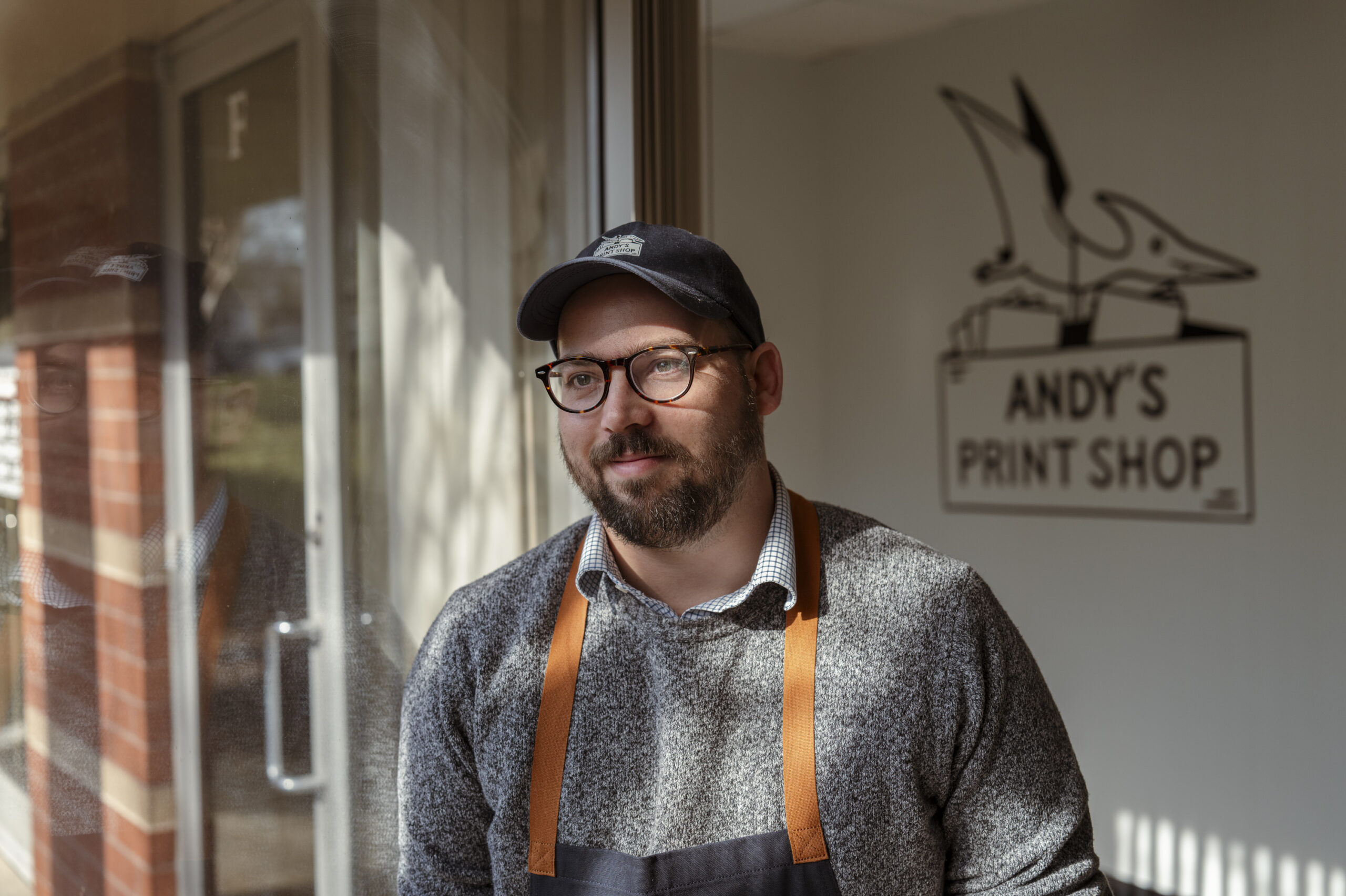
Last week, Smith was putting together tables and chairs in a 1,300-square-foot space on Monroe Road. Andy’s Print Shop, a full-service operation printing products for local businesses and organizations, opens Monday.
Andy’s one of my closest friends here, I should note. But watching him process the past few months and spin the worst day of his career into something better, I realized this was more than another small-business opening.
It’s a story about the media in 2026. About mental health. About career changes. About a kid who emerged from a holler in West Virginia as an arts-loving, comic-book-reading, dinosaur-obsessed adult — and realized that his true calling wasn’t necessarily journalism, but building something for Charlotte.
Others see it, too. Ted Williams, who founded the Charlotte Agenda and sold to Axios for $5 million in 2020, is an investor in Andy’s Print Shop. Put another way: a businessperson who helped define local digital media now co-owns a business that prints things on paper.
In 2026.
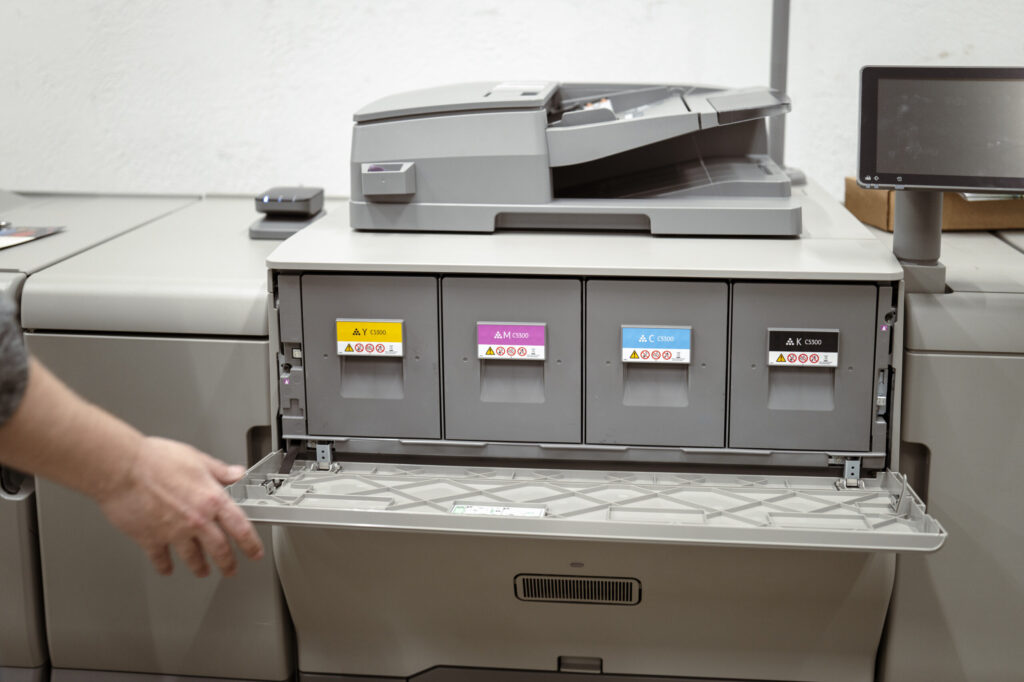
The shop has already lined up opening-day clients. Williams’ investment helped outfit the space with one large printer — and another on the way — that’s capable of handling jobs large and small: magazines, corporate annual reports, church service programs, neighborhood newsletters, trading cards.
“He sees this stuff as both serious and fun,” Smith says of the partnership. “And yeah, I’m a big kid. I’m a big nerd, and so that about him really appeals to me.”
There are several other local print shops in Charlotte, including Minuteman Press, South City Print, and Lake Printing. Smith hopes to complement them and stand out. He’s a one-person local shop who’s done nearly every job in the printing process. He has a work station in the back with two large monitors where he’ll help clients brainstorm and design products in a way that helps them meet their audience.
“I think church programs are like a fun example. It’s quick-use, and people rarely keep them, but they have a complete story, complete arc,” he says. “They do exactly what they were supposed to do.”
One client, he already has locked in.
Three years ago, he began volunteering as the newspaper and yearbook adviser at Shamrock Gardens Elementary, where his two daughters attend school. He meets with the newspaper students twice a month to talk about pitching story ideas, asking permission before taking photos, and the importance of correctly spelling names.
Last month, the staff landed a huge exclusive with the principal. In the interview, the principal was talking about audits, and one kid asked, “Who audits the auditors?” Another wanted to know, “Does being a journalist mean you get into Hornets games for free?”
Smith types up their notes and lays out the once-a-month Dragon Dispatch. He also handles most of the 64-page yearbook, triple-checking names before it goes to print.
He gets as much from the experience as the kids do. After he lost his job, one student told him, “I’m sorry about the magazine. My grandparents loved reading it.”
Moments like that are part of why he’s opening the shop. For as innocently cutting as that comment was, and for all the talk of the death of print, he says he sees something different in the next generation.
“It really means something to them to see their names in print,” he says. “But it also means something [that] the kids who are readers are engaging with it in a way that they wouldn’t if it was a digital-only. It’s a real, special thing. I think it inherently matters more in their brain.”
That’s one reason he has trading cards on his menu of options at Andy’s Print Shop. He’ll do runs as small as a handful for parents and grandparents of youth sports athletes, or larger orders for leagues or other organizations. Not just as templates, but as a canvas for telling their stories in a small space.
“I think we all remember trading cards as these little portals into something we love,” Andy says. “There was something about organizing them, the labor of it almost. … I truly think a blurb on the back of a baseball card is going to give you more than scrolling someone’s entire Wikipedia page.”
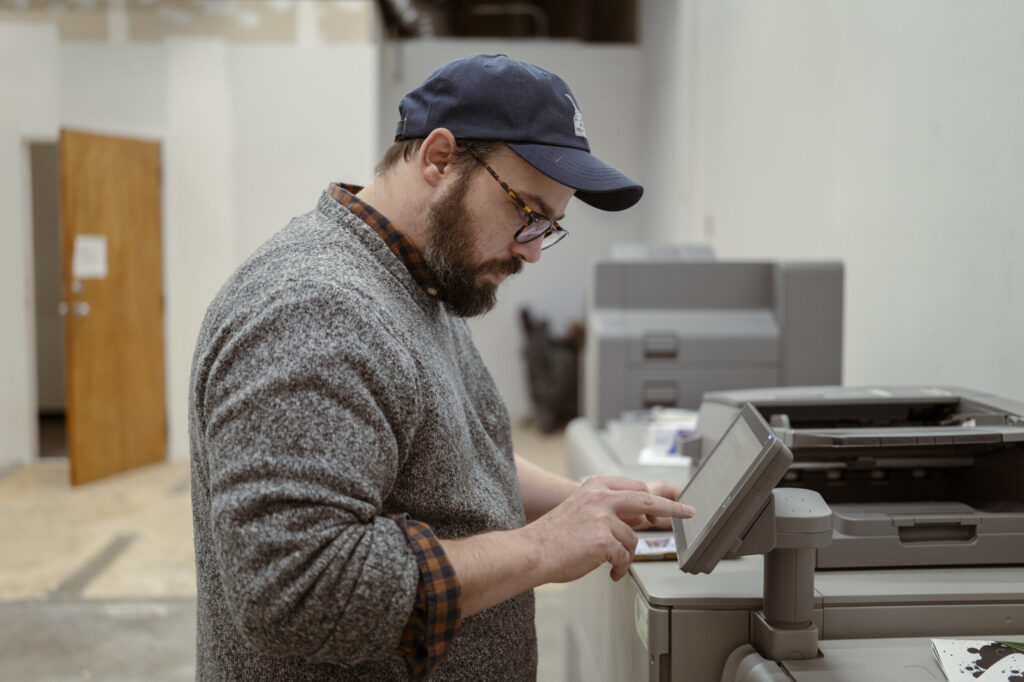
The morning I visited Andy’s shop, I had my annual physical. My blood pressure was a little high.
The doctor asked if I’d been stressed. It was Wednesday during a week when our kids were out of school due to weather, while my wife and I tried to work. So yeah, I told the doctor, as much as I’d like to be like the monks who walked through Charlotte, and as much as I love my family, I suppose it’s possible that my numbers were high from having everyone home while rescheduling meetings and interviews, and while staying somewhat informed on the news here and across this blistered country.
And hand to my heart, the physician said, “As a journalist, you should bring some physical media back into your life.”
I laughed.
“I’m serious,” he said. “It might be good for you.”
I mentioned that to Andy an hour later. Photographer Logan Cyrus was with me, along with his 10-year-old son, who had his own point-and-shoot camera around his neck.
I asked Andy, who just oversaw the closure of our city’s longest-running print magazine, if what my doctor said might be reason enough to believe in his back-to-the-future business.
“I justify it to myself in about 20 different ways,” he said. “I truly, of course, believe in print. But there’s that thing: Scrolling means skimming. And I find I retain things better when I’m holding it. I don’t think it’s old school. … I think that we’re all kind of feeling a call to re-teach ourselves how to read things, even if it’s a map, an article, a brochure.”
All this made me remember how I met Andy. In spring 2013, shortly after I moved to Charlotte to become the editor of Charlotte magazine, my boss handed me a resume someone dropped off at random.
Brown paper, nice stock.
It was from a young journalist named Andy Smith, who’d most recently worked as an editor at the Charleston, West Virginia newspaper. Andy and Sara, an elementary school teacher, had moved here on a whim. We gave him fact-checking assignments. Soon he was arts editor, hauling his infant daughter around to exhibits and performances. Then digital editor, overseeing a website redesign. His invoices grew from one month to the next.
After I left the magazine in 2017, Andy became a full-timer. Three years later, editor. Two years after that, publisher.
How can you not root for someone like that? And what better city for someone willing to keep saying yes? And what better time than now to adapt into a business with a sketch of a prehistoric bird as a logo?
I keep a couple of boxes of career mementos, press badges and notes and favorite clips. Warm memories for later. And it occurred to me while writing this newsletter that in one of those boxes sits a single resume, maybe the last paper resume I ever received as a hiring manager.
It’s brown paper, nice stock.